TOKYO - Tokyo stocks rose on August 10, with the Nikkei 225 closing at 66,376.25, up 1.2%, as investors bought electronics, metals and artificial intelligence-related shares, while fresh signs of a more hawkish Bank of Japan debate kept attention on the yen, bond yields and the timing of the next rate increase.
The broader TOPIX rose 25.68 points, or 0.63%, to 4,100.61, extending the broader market’s recovery after a volatile start to August. The index traded between 4,063.49 and 4,111.35, showing firm demand beyond the Nikkei’s high-priced technology components.
The Tokyo market followed Wall Street higher after weaker U.S. labor data reduced expectations for another near-term Federal Reserve rate increase. The softer jobs backdrop supported risk appetite and helped lift technology shares, while a weaker dollar gave the yen some support.
Nikkei CNBC’s market framing centered on a renewed but more selective return to the AI trade. Investors bought back companies tied to semiconductors, electronic components, optical fiber, data centers and power infrastructure, but the mood remained more disciplined than during the first-half rally.
The market is no longer treating artificial intelligence as a single broad theme. Investors are distinguishing between chipmakers, equipment suppliers, component makers and infrastructure companies that are receiving direct orders from AI investment and companies whose valuations already assume years of uninterrupted demand growth.
Electronics and metals led the advance. Ibiden rose 7.4%, Furukawa Electric climbed 8.8% and Sumitomo Metal Mining gained 5.7%, reflecting renewed demand for companies linked to semiconductor packaging, data-center infrastructure, copper, advanced materials and power systems.
Furukawa Electric and Fujikura have become important second-wave AI names because investors see optical fiber, high-speed communications networks and power-related equipment as essential to data-center expansion. Their performance suggests that the AI trade is broadening beyond the original concentration in chipmakers and semiconductor equipment.
Ibiden’s rise showed continued appetite for companies tied to advanced chip substrates and packaging. As AI chips become more complex, investors are paying more attention to suppliers that help connect processors, memory and power systems inside high-performance computing equipment.
Sumitomo Metal Mining’s gain reflected a wider recovery in nonferrous metals and materials. Demand for copper, nickel and other materials is closely linked to electrification, batteries, data centers, defense, energy infrastructure and factory automation, all of which remain part of Japan’s longer-term investment story.
Tokyo Electron and Advantest were also supported by the stronger technology backdrop, though investors remained cautious after the sharp July correction. Both stocks are central to the Nikkei because of their large index influence and their exposure to global semiconductor capital spending.
Kioxia Holdings remained closely watched after weeks of extreme volatility. The memory-chip maker has become a barometer of confidence in AI servers, high-bandwidth memory and data-center demand. Its recovery has helped stabilize sentiment, but investors remain wary of speculative positioning and the risk of renewed selling if South Korean memory shares weaken.
SoftBank Group remained another key Nikkei driver because of its large index weighting and role as a proxy for global AI investment sentiment. The market is still assessing its aggressive AI strategy, including exposure to OpenAI, robotics and digital infrastructure, as well as the funding demands created by those commitments.
The broader TOPIX gain showed that buying was not limited to technology. Banks, materials, machinery and selected domestic-demand shares also drew support as investors balanced AI enthusiasm with expectations that Japan’s interest-rate environment will continue to normalize.
Financial shares remain tied to BOJ expectations. Higher rates can support bank lending margins and investment income, but rapid moves in bond yields can also create valuation losses and raise concern about the broader economy. That makes the BOJ’s next communication especially important for the sector.
The yen traded around 157.88 to the dollar, stronger than its late-July levels near 164 but still weak by historical standards. The currency remains one of the main forces shaping Tokyo trading after the recent coordinated U.S.-Japan yen-buying intervention.
The intervention changed market behavior by making investors more cautious about aggressive yen selling. However, the underlying interest-rate gap between the United States and Japan continues to limit the yen’s recovery. If U.S. yields remain high and Japan’s policy rate stays at 1%, the currency could again face downward pressure.
The yen’s level has different implications across the market. Exporters benefit when overseas earnings are converted into yen, but households and import-dependent companies face higher costs for fuel, food, materials and consumer goods when the currency is weak.
For households, the stronger yen compared with late July offers some relief, especially when combined with oil prices below the most alarming levels seen last month. However, the yen near 158 still leaves import costs high, and consumers remain sensitive to price increases in food, transport, utilities and everyday services.
The BOJ moved back to the center of the market narrative after the release of the summary of opinions from its July 30-31 meeting. Reuters reported that at least three members of the nine-person board supported a faster or more flexible pace of rate increases to prevent inflation from overshooting the central bank’s 2% target.
The summary strengthened market expectations that the BOJ could raise rates again as early as September. The central bank kept its policy rate at 1% at the July meeting, but board member Hajime Takata dissented in favor of a hike to 1.25%, and the BOJ warned that underlying inflation could exceed target.
The debate reflects a changing inflation picture. BOJ policymakers are increasingly concerned that a weak yen, high import costs, fuel prices linked to Middle East tensions and strong global demand from AI investment could combine to push prices higher.
The central bank is also watching whether companies continue raising prices and wages. If firms become more confident about passing on costs and if wage growth remains firm, the BOJ may judge that Japan has moved closer to a self-sustaining wage-price cycle.
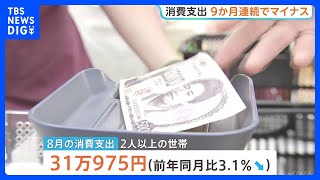
Real wages have recently improved, but household spending remains fragile. Reuters reported last week that June household spending fell unexpectedly, partly because of weather and uncertainty linked to the Middle East conflict. That weakness complicates the BOJ’s decision because higher rates could weigh on consumption even as inflation risks persist.
TV Tokyo’s broader business coverage has continued to focus on this household pressure: higher wages are helping, but families are still cautious because food, fuel, electricity, transport and service prices remain high. The key issue for consumers is not whether inflation is visible in official data, but whether incomes are rising fast enough to cover daily costs.
The government is trying to ease that burden. Prime Minister Sanae Takaichi’s administration has been pursuing household relief measures, including food-related consumption-tax support, while also promoting a long-term growth strategy centered on more than 370 trillion yen in public and private investment through fiscal 2040.
That strategy targets semiconductors, artificial intelligence, energy security, defense, shipbuilding, robotics, space and other strategic sectors. It supports many of the industries leading the stock market, but it also raises questions about fiscal discipline and the effect of higher government spending on long-term interest rates.
Japanese government bond yields remain central to the policy outlook. Shorter-term yields are sensitive to expectations for the next BOJ rate hike, while longer-term yields reflect concern over inflation, fiscal policy and the sustainability of Japan’s public debt.
The BOJ must therefore manage three pressures at once: preventing inflation expectations from moving too high, avoiding another destabilizing slide in the yen and limiting unnecessary volatility in the bond market. That makes its September meeting more important than usual.
Oil prices edged higher on August 10, with Brent crude around $84 a barrel and U.S. crude near $78.50. The increase reflected continued uncertainty over Gulf shipping, including the Strait of Hormuz, after Iran signaled possible conditions for reopening the passage.
For Japan, oil near $84 is manageable compared with July’s surge, but it remains a risk because the country imports most of its energy. Any renewed disruption in Middle Eastern supply routes would quickly feed into import costs, gasoline, electricity and corporate margins.
Lower oil earlier in August had helped stabilize Japanese equities by easing fear of a renewed inflation shock. A fresh rise would be especially problematic if the yen weakens again, because dollar-priced energy imports become more expensive in yen terms.
The global backdrop was generally supportive for equities. Asian markets rose after Wall Street gained on the weaker U.S. jobs report, which reduced concern that the Federal Reserve would need to raise rates again soon. The S&P 500 reached a record, while the Nasdaq advanced as technology shares recovered.
U.S. inflation data due later in the week will be a major test. If inflation is softer than expected, the dollar could weaken further and reduce pressure on the yen. If inflation surprises to the upside, U.S. rate-hike expectations could return, supporting the dollar and complicating the BOJ’s job.
South Korea remained an important reference point for Tokyo’s technology shares. Korean chipmakers Samsung Electronics and SK Hynix were mixed, with some foreign investors shifting money away from big technology names toward defense and other sectors. That limited the strength of the regional semiconductor trade even as Japan’s AI-linked infrastructure names rose.
The main points to watch next are whether the Nikkei can hold above 66,000, whether TOPIX can stay above 4,100, and whether buying in Ibiden, Furukawa Electric, Sumitomo Metal Mining and other AI-infrastructure names broadens into Tokyo Electron, Advantest, Kioxia and SoftBank Group.
Investors will also monitor the yen around 158 to the dollar. A move back toward 160 would test the effect of recent intervention and strengthen expectations of a BOJ rate hike, while a move closer to 155 would ease household inflation pressure but weigh on exporters.
Other key indicators will be the two-year and 10-year JGB yields, Brent crude near $84, U.S. inflation data, South Korean semiconductor shares and upcoming Japanese earnings. August 10 showed that Tokyo’s AI trade can still attract buyers, but the next stage of the rally will depend on whether currency stability, oil prices and BOJ policy expectations remain supportive.
Source: CNBC