TOKYO - Prime Minister Sanae Takaichi’s economic agenda came under fresh pressure on August 18 after weaker-than-expected growth figures exposed the fragility of Japan’s recovery, sharpening the political stakes around the Bank of Japan’s next rate decision, the weak yen, and the government’s plan to cut the consumption tax on food.
Japan’s economy expanded more slowly than expected in the April-June quarter, with softer household and business spending highlighting the difficulty of building a durable recovery while households face high living costs and companies weigh higher borrowing costs. The result complicates Takaichi’s attempt to argue that large-scale investment, tax relief and economic security policies can lift Japan into a stronger growth cycle.
The figures landed at a sensitive moment. Takaichi has made growth the central claim of her administration, promoting a 370 trillion yen public-private investment roadmap through fiscal 2040 and presenting strategic sectors such as artificial intelligence, semiconductors, shipbuilding, energy, space and quantum technology as the foundation of Japan’s next industrial phase.
But the latest growth data points to a more immediate problem. Household spending remains vulnerable, business investment is not yet strong enough to drive confidence, and the weak yen continues to raise the cost of imported food, energy and raw materials. That leaves the government trying to sell a long-term investment strategy while voters judge it by prices and wages now.
The Bank of Japan is becoming the next major political test. Reuters has reported that the BOJ is considering a September rate hike and may move at a faster pace thereafter, reflecting concern that it could fall behind inflation as the weak yen, energy prices and strong global AI-related demand feed price pressures.
The central bank raised its policy rate to 1% in June, the highest level in more than three decades, and kept rates unchanged at its July 30-31 meeting. Its next meeting on September 17 and 18 is now one of the most important events on the political calendar, not only for markets but also for Takaichi’s ability to manage her economic program.
A September hike could support the yen and help reduce import-driven inflation, giving households some relief. But it would also raise borrowing costs for the government, companies and mortgage holders, making Takaichi’s investment and tax-cut agenda harder to finance.
That tension is now the core economic dilemma for the administration. If the BOJ tightens policy too slowly, the yen may weaken again and households could face more pressure from imported inflation. If it tightens too quickly, Japan’s already fragile recovery could lose momentum and the government’s growth strategy could look even harder to deliver.
Bond markets are already signaling concern. Japan’s 10-year government bond yield has risen to its highest level in roughly three decades as investors price in faster BOJ rate hikes and question whether the government can maintain fiscal discipline while pursuing tax relief, defense expansion and strategic industrial investment.
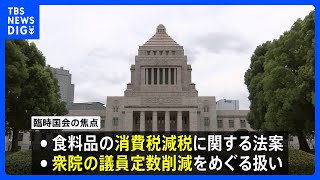
Takaichi’s food-tax cut remains the most visible household-relief measure. The government has approved a plan to reduce the consumption tax on food from 8% to 1% for two years from April 2027, while also providing payments that would effectively cover the remaining 1%. The administration says it will not use deficit-financing bonds to fund the plan, but the measure is still expected to create a revenue shortfall of about 5 trillion yen.
The political value of the policy is clear. Food prices are one of the most direct ways voters experience inflation, and Takaichi needs a concrete answer after her approval rating fell sharply in July. But the delay until April 2027 gives opposition parties an opening to argue that the plan is too slow, while the two-year limit creates a future political risk when the tax rate is restored.
Markets are focused on a different risk: whether the tax cut can be funded without weakening Japan’s fiscal credibility. If investors see the measure as a politically driven response to falling support rather than a disciplined temporary policy, bond yields could rise further and the yen could come under renewed pressure.
The weak yen remains a central political problem despite recent intervention. Japan and the United States carried out a rare coordinated yen-buying operation after the currency fell to 40-year lows, but analysts have warned that intervention alone cannot fix the underlying pressure. Former top currency diplomat Takehiko Furusawa has said further intervention could occur, but that lasting stabilization would require fundamental steps, including faster BOJ rate hikes and credible fiscal policy.
That message places Takaichi in a difficult position. Her political brand is built around active fiscal policy, strategic investment and household relief. But the yen and bond markets are demanding restraint, credibility and confidence that the BOJ will not be held back from tightening when necessary.
The government’s relationship with the BOJ remains politically sensitive. Earlier wording in the economic blueprint raised concern that the administration wanted closer coordination with the central bank to support growth. The final document clarified that specific monetary policy tools belong to the BOJ, but reports that Takaichi asked Governor Kazuo Ueda in May to increase bond purchases if needed have kept questions about central bank independence alive.
The opposition is likely to use the weaker growth data to attack the government from both sides. It can argue that Takaichi’s investment roadmap has not yet translated into stronger demand, while also warning that her tax cuts and spending plans risk unsettling markets. The government will respond that Japan needs both immediate household support and long-term investment to break out of decades of weak growth.
Security and diplomatic issues added to the political pressure around the administration. Defense Minister Shinjiro Koizumi visited Yasukuni Shrine on August 15, the anniversary of Japan’s surrender in World War II, while Takaichi sent a ritual offering. The move drew attention because Yasukuni remains a flashpoint in relations with China and South Korea, where the shrine is viewed as a symbol of Japan’s wartime militarism.
Koizumi’s visit fits the conservative profile of the Takaichi administration and may appeal to parts of the ruling Liberal Democratic Party’s base. But it also risks complicating regional diplomacy at a time when Japan is already facing tensions with China over Taiwan, export controls and security policy.
Russia also became part of the foreign-policy picture after President Vladimir Putin visited one of the disputed islands north of Hokkaido claimed by Japan. Takaichi called the visit unacceptable, saying it hurt the feelings of the Japanese people. The incident reinforced the government’s argument that Japan faces a harsher security environment not only from China and North Korea, but also from Russia.
Those foreign-policy disputes strengthen Takaichi’s case for defense modernization and economic security. They also support the framing of Japan’s latest defense white paper, which links military buildup to industrial development, supply-chain resilience and technological growth. But they could also deepen concern that the administration is expanding defense, tax relief and industrial policy all at once without a fully convincing fiscal explanation.
The August 18 political picture is therefore one of a government being squeezed between weak growth and rising market pressure. Takaichi needs to show voters that relief is coming, reassure investors that fiscal discipline remains intact, and avoid appearing to interfere with the BOJ as it prepares for a possible September rate hike.
The central question is whether Takaichi can still define her administration through growth, or whether the agenda will be overtaken by the yen, bond yields and household inflation. If the government can explain the food-tax funding, keep the yen stable and allow the BOJ to act independently, the weaker GDP data may be treated as a warning rather than a turning point. If markets lose confidence and households see little relief, August could become the moment when Takaichi’s growth strategy moved from promise to political vulnerability.
What To Watch Next
The BOJ’s September 17-18 policy meeting is the next major test, with markets watching whether officials move toward another rate hike after the weaker GDP data and renewed inflation concerns.
The yen remains a key political signal. Further weakness would increase pressure for more intervention and intensify criticism of the government’s economic policy mix.
Bond yields should be watched closely as investors judge whether Takaichi can fund food-tax relief, defense expansion and long-term investment without weakening fiscal credibility.
The government still needs to explain the full funding structure for the food-tax cut, including how it will avoid deficit-financing bonds while covering a revenue shortfall of about 5 trillion yen.
Opposition parties are likely to focus on the gap between Takaichi’s long-term growth promises and the weaker household and business spending shown in the latest GDP figures.
Regional reaction to Koizumi’s Yasukuni visit and Putin’s disputed-island trip could keep security and historical diplomacy in the political debate alongside the economy.