TOKYO - Prime Minister Sanae Takaichi moved on August 28 to contain market concern over her government’s spending plans, saying Japan will aim to cap new government bond issuance at around 40 trillion yen in the fiscal 2027 budget while still pursuing food-tax relief, growth investment and measures to support households facing higher prices.
The pledge is an attempt to reassure investors that the government is not abandoning fiscal discipline even as ministries prepare record budget requests and the administration advances an ambitious economic agenda. Budget requests for fiscal 2027 are expected to exceed 130 trillion yen for a fourth straight record, reflecting rising interest costs, social security pressure, defense needs and a new growth-investment category.
Takaichi told the Yomiuri Shimbun that the government would try to keep new bond issuance near 40 trillion yen, pointing to the fiscal 2025 experience, when stronger tax revenue helped restrain new borrowing. The target is politically important because bond markets have become one of the main constraints on her administration.
The figure is designed to signal discipline, but it does not fully remove fiscal concerns. New bond issuance of around 40 trillion yen would be close to fiscal 2025 levels and above the 32.7 trillion yen planned for fiscal 2026. Economists are likely to view the approach as somewhat expansionary, especially if the initial budget absorbs spending that would normally have appeared later in supplementary budgets.
That makes the budget strategy both a political shield and a market test. Takaichi wants to show that she can fund household relief and strategic investment without allowing borrowing to spiral. Investors want clearer proof that the government can limit debt issuance while still paying for its campaign promises.
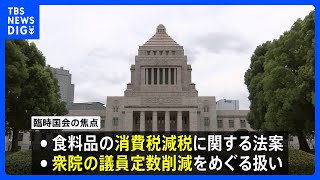
The food-tax cut remains the central fiscal question. The government has approved a plan to reduce the consumption tax on food from 8% to 1% for two years from April 2027, while also providing payments that would effectively cover the remaining 1%. The measure is intended to ease pressure on households struggling with food prices, but it is expected to create a revenue shortfall of around 5 trillion yen.
Takaichi has said the government will avoid deficit-financing bonds and may use foreign exchange reserves and other non-tax sources to help cover the cost. That proposal is likely to attract close scrutiny because Japan holds about $1.3 trillion in foreign reserves, but using them for domestic fiscal purposes could raise questions over currency policy, market operations and long-term budget management.
The food-tax issue has become a defining political test because it connects the concerns of households, markets and the Bank of Japan. Voters want visible relief from rising prices. Bond investors want credible funding. The BOJ wants fiscal policy to avoid adding to inflation pressure or forcing the central bank into a more difficult position.
Tokyo inflation data released around the same time strengthened the case for another BOJ rate hike. Tokyo’s core consumer inflation rose 1.8% in August, marking a third straight monthly increase and moving closer to the BOJ’s 2% target. A narrower index excluding fresh food and fuel reached 2.0%, suggesting that underlying price pressures remain firm.
The inflation data matters politically because the BOJ’s September 17-18 meeting is now a major event for Takaichi’s government. Markets increasingly expect the central bank to raise rates to 1.25%, after it lifted the policy rate to 1% in June and held steady in July.
A rate hike could help support the yen and ease import-driven inflation, but it would also raise borrowing costs for the government, households and companies. That is the central dilemma facing Takaichi’s economic program. Her administration wants investment-friendly conditions and low financing costs, but it also needs the BOJ to maintain credibility on inflation and the yen.
The yen remains an important political signal. Japan and the United States carried out a rare coordinated intervention earlier this month after the currency fell to 40-year lows, but the yen has since weakened again, trading around the mid-155 range against the dollar. The intervention bought time, but it did not settle the underlying issue of interest-rate gaps, fiscal credibility and inflation expectations.
Finance Minister Satsuki Katayama is set to attend the G20 finance leaders’ meeting in Asheville, North Carolina, where currency policy and Japan’s coordination with the United States will be closely watched. BOJ Governor Kazuo Ueda is also expected to attend, creating the possibility of further attention on Japan’s monetary stance and the yen.
Katayama has said Japan’s joint intervention statement with the United States remains strong and that the government’s broader strategy to raise investment and growth will support the yen’s credibility. That message mirrors Takaichi’s argument that long-term growth, not only short-term intervention, is needed to stabilize the currency.
But the market question is whether the government’s policies are strengthening confidence or adding to uncertainty. The administration is promising food-tax relief, a 370 trillion yen public-private investment roadmap through fiscal 2040, defense expansion and a bond-issuance cap. Each part has political logic, but together they require careful financing and communication.
The BOJ’s position is becoming more delicate. Deputy Governor Ryozo Himino has warned that inflation risks are growing and stressed the importance of timely policy adjustment. His comments reinforced expectations that the central bank may need to tighten policy again soon. If the BOJ moves in September, Takaichi will need to show that higher rates do not undermine her growth strategy. If it delays, yen weakness could return as the main political problem.
Japan-China relations added another strand to the day’s political picture. A cross-party group of Japanese lawmakers visited Beijing this week in an effort to ease tensions after Takaichi’s earlier remarks that a Chinese attack on Taiwan could amount to a survival-threatening situation for Japan. The delegation included lawmakers from the ruling Liberal Democratic Party and opposition parties, including Komeito and the Centrist Reform Alliance.
The visit was meant to reopen dialogue after months of strained relations, but reports described difficult exchanges over Taiwan. Chinese officials reiterated that Beijing would not change its position, while Japanese lawmakers stressed the need to keep channels open and protect national interests calmly.
The China talks matter because Takaichi’s security policy and economic strategy are increasingly linked. Her administration has emphasized economic security, supply-chain resilience and defense preparedness, while China has responded strongly to Japan’s Taiwan language and other security moves. If relations deteriorate further, the political cost could show up not only in diplomacy but also in trade, tourism, supply chains and business confidence.
For Takaichi, August 28 therefore brought together the main pressures facing her government. The bond cap was meant to reassure markets. The Tokyo inflation data increased pressure on the BOJ. The G20 meeting raised the stakes for yen diplomacy. The China delegation showed how hard it will be to stabilize regional relations without retreating from her security stance.
The central question is whether Takaichi can make the 40 trillion yen bond cap credible. If investors believe the government can restrain borrowing while funding the food-tax cut and growth investment, the administration may regain some control of the fiscal story. If the cap is seen as optimistic accounting while spending continues to rise, bond yields could climb again and the BOJ may face even greater pressure to tighten.
What To Watch Next
The fiscal 2027 budget process will be the main domestic test, especially whether the government can keep new bond issuance near 40 trillion yen while budget requests exceed 130 trillion yen.
The BOJ’s September 17-18 policy meeting remains the next major monetary and political event, with markets watching whether the central bank raises the policy rate to 1.25%.
The government still needs to explain how the food-tax cut will be funded without deficit-financing bonds, particularly if it uses foreign exchange reserves or other non-tax sources.
Katayama’s G20 meetings will be watched for signs of further U.S.-Japan coordination on the yen after the rare joint intervention earlier this month.
The yen remains a key test of confidence. Renewed weakness could increase pressure for further intervention and sharpen criticism of Takaichi’s fiscal policy.
Japan-China relations should be watched after the cross-party delegation’s Beijing visit produced dialogue but no clear breakthrough over Taiwan.
Bond yields remain the most important market signal for Takaichi’s fiscal agenda. A renewed move toward or above 3% would intensify pressure on both the government and the BOJ.