News On Japan

Japan Land Prices Rise for Fifth Straight Year

TOKYO - Japan's benchmark land prices rose for a fifth consecutive year on average, with commercial land posting stronger gains as demand for hotels and other properties remained firm in major cities, according to figures released by the Ministry of Land, Infrastructure, Transport and Tourism.

The nationwide average price across all land-use categories rose 1.5%, while residential land increased 1.0% and commercial land climbed 2.9%, with the pace of growth in commercial areas accelerating.

The Meidi-Ya Ginza Building in Tokyo's Ginza district remained the country's most expensive commercial site for the 21st consecutive year, valued at 52.5 million yen per square meter.

In the Tokyo metropolitan area, The House Asakusa in Taito Ward recorded the largest increase, with its benchmark land price rising 26.9%.

The pace of land price increases expanded in the Tokyo and Osaka metropolitan areas, while the rate of increase slowed in the Nagoya metropolitan area, as well as in Sapporo and Fukuoka.

The latest land price survey also showed particularly strong gains in Osaka Prefecture, where seven of the 10 commercial sites with the highest rates of increase were located in Osaka City's Nishi Ward.

Residential land prices in Osaka Prefecture rose 3.0%, while commercial land prices climbed 8.8%. It was the first time in 36 years that residential land prices had risen by 3% or more and the first time in seven years that commercial land had gained at least 8%.

The prefecture's most expensive residential site was in Shinpo-incho in Osaka City's Tennoji Ward, an area known for its concentration of educational institutions. The site, which has ranked first for 27 consecutive years, was valued at 874,000 yen per square meter.

It also recorded Osaka Prefecture's highest residential land price increase at 11.2%.

The rise is believed to have been driven in part by so-called "education migration," in which wealthy families from Japan and overseas move to the area to gain access to sought-after educational opportunities.

Naniwa Ward, which had recorded Osaka City's highest rate of land price growth last year as demand for short-term rental accommodation increased, disappeared from the top 10 this year following the suspension of new special-zone minpaku applications.

In the commercial category, the Deka Ebisubashi Building in Osaka City's Chuo Ward returned to the top position for the first time in seven years, replacing the South Building of Grand Front Osaka in Kita Ward.

The Ebisubashi property was valued at 25.8 million yen per square meter, up 7.1%.

The Umekita area around Osaka Station, which has recorded sharp land price increases in recent years, saw growth slow across many locations. The area contains numerous large development sites, making projects particularly exposed to rising construction costs.

By contrast, Nishi Ward accounted for seven of the 10 commercial locations with the largest increases in Osaka Prefecture.

The ward offers convenient access to both Umeda and Namba, and is expected to benefit further from the opening of a new station on the Naniwasuji Line.

An appraiser involved in the survey said future trends will require close attention to the possibility of a further decline in demand for short-term rentals as regulations are tightened, as well as the impact of rising interest rates on property values.

Source: テレ東BIZ

News On Japan
POPULAR NEWS

Typhoon No. 31 (In-fa) has intensified into a very strong storm over the western Pacific, with the Japan Meteorological Agency reporting at 3:45 a.m. on October 27 that the typhoon was nearly stationary near the Marshall Islands, carrying maximum sustained winds of 45 meters per second and gusts reaching 60 meters per second, as forecasts point to a possible approach toward Japan's Ogasawara Islands on October 31.

Travel disruption continued into Tuesday, October 27, as Japan began recovering from heavy rain and rough seas caused by the remnants of Typhoon No. 30, with ferry cancellations confirmed in Nagasaki Prefecture and railway operators monitoring the effects of overnight rainfall in central and eastern Japan.

A controversial penalty shootout decision during the Tokyo qualifiers for Japan's National High School Soccer Championship on October 24 has sparked debate after a team that believed it had secured victory was forced to continue playing and eventually lost, raising questions about whether a hole in the goal net contributed to an incorrect ruling.

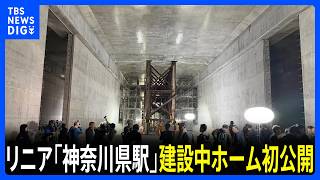
The underground platform of the planned Kanagawa Prefecture Station on Japan's Chuo Shinkansen maglev line was opened to the public for the first time on October 24, offering visitors a rare glimpse of the high-speed railway project under construction in Sagamihara, Kanagawa Prefecture, with demand for the tour exceeding available places by approximately 12 times.

Japanese drone manufacturer Terra Drone has delivered interceptor drones to Ukraine's Ministry of Defense for the first time, prompting Russia to threaten retaliatory measures on October 21, as Japan considers expanding domestic drone production and strengthening its coastal defenses through thousands of unmanned aircraft.

MEDIA CHANNELS
         

MORE Business NEWS

Japan's Nikkei 225 Stock Average extended its decline for a third consecutive trading session on Monday, October 26, as selling in semiconductor and artificial intelligence-related shares continued to weigh on the market, while energy companies attracted buying interest following a surge in global oil prices.

Japan's major retailers are experimenting with new store formats as rising living costs drive demand for cheaper groceries and changing consumer habits force companies to seek new sources of growth, with Don Quijote launching its food-focused Robin Hood discount chain and FamilyMart opening a next-generation flagship store combining convenience shopping with fashion, lifestyle goods and exclusive products.

Japan's financial markets suffered another sharp setback on October 22 as heavy selling in semiconductor and artificial intelligence-related stocks sent the Nikkei 225 down 1,713.40 points, or 2.65%, to 62,907.84, its lowest closing level since July 30.

Japan's trade deficit nearly doubled in the first half of fiscal 2026 to 2.8184 trillion yen, driven largely by surging crude oil prices following turmoil in the Middle East, while the value of oil imports from the United States increased nearly ninefold as Japan sought alternative sources of supply.

A growing wave of cyberattacks across Japan has raised concerns over the possible use of Chinese-developed artificial intelligence in hacking operations, with personal information belonging to tens of thousands of police employees potentially exposed and major companies forced to suspend online services, while cybersecurity experts warn that slow decision-making within Japanese organizations is allowing damage to spread.

Tokyo stocks rebounded on October 21, with the Nikkei 225 closing 545.82 points higher at 64,621.24, a gain of 0.85%, as stronger U.S. equities, renewed buying in technology shares and encouraging Japanese export figures helped the market recover from two consecutive sessions of losses.

Japanese banks and securities firms are moving to stop using facial photographs from driver's licenses to verify customers opening accounts online, following a series of personal information leaks that have raised concerns about fraudulent account applications.

Japan's Nikkei 225 Stock Average closed at 64,075.42 on October 20th, falling 841.28 points, or 1.30%, as renewed selling in semiconductor and artificial intelligence-related shares, rising oil prices and concerns over inflation pushed Tokyo stocks lower for a second consecutive session.