News On Japan

Yen Strengthens Sharply as Intervention Warning Rattles Market

TOKYO - The yen strengthened by more than 1 yen against the dollar in a short period late on September 18 after the Bank of Japan conducted a rate check, a step commonly taken in preparation for possible intervention in the foreign exchange market.

The sharp move began shortly after 11:30 p.m. Japan time. At around 11:40 p.m., the yen started strengthening rapidly, gaining more than 1 yen against the dollar within about an hour and briefly reaching the upper 156 yen range.

Earlier on September 18, the Bank of Japan decided to raise interest rates for the first time in about 31 years. Despite the decision, the yen initially weakened, trading in the 157 yen to 158 yen range against the dollar.

Market participants said the BOJ carried out a rate check as the yen continued to move in the weaker direction following the rate increase.

A rate check involves the government and the Bank of Japan contacting financial institutions to confirm current exchange-rate levels before potentially carrying out direct intervention in the currency market.

The move is widely seen as an attempt to warn market participants against pushing the yen lower after the currency weakened despite the BOJ's historic rate increase.

Source: TBS

News On Japan
POPULAR NEWS

A powerful surge of cold air is expected to sweep across Japan on November 20, bringing heavy snow, strong winds and thunderstorms, with mountainous areas of Hokuriku, Yamagata and Fukushima forecast to receive more than 50 centimeters of snow as winter conditions intensify across the country.

A bear chased a high school student riding a bicycle through a residential neighborhood in Maebashi, Gunma Prefecture, on November 19th, prompting a large-scale police search amid concerns that the animal may be the parent of a cub captured two days earlier.

Japanese Prime Minister Sanae Takaichi held an unusually prolonged handshake with Chinese President Xi Jinping at the APEC summit in Shenzhen on November 19, speaking continuously for about 10 seconds as Xi nodded in response, while Japan sought to influence a historic three-way summit between the leaders of the United States, China and Russia scheduled for later in the day.

Japanese Prime Minister Sanae Takaichi shook hands with Chinese President Xi Jinping at the opening of the Asia-Pacific Economic Cooperation (APEC) summit in Shenzhen on November 18th, marking their first face-to-face encounter in approximately one year, although the brief exchange came after a noticeably subdued welcome for the Japanese leader compared with the elaborate receptions given to other visiting heads of state.

Two aircraft believed to be Russian briefly violated Japanese airspace over Okinoshima Island in Fukuoka Prefecture on November 17th before flying between Okinawa and Taiwan toward the Pacific Ocean, prompting Japan's defense minister to condemn the incursions as a serious violation of national sovereignty.

MEDIA CHANNELS
         

MORE Business NEWS

Japan Tobacco (JT) has announced that it will exclude seven companies involved in its Russian operations from its consolidated financial statements after the Russian government placed the businesses under temporary administration, with the Japanese tobacco giant expecting to record losses of approximately 1.377 trillion yen.

Tokyo stocks closed higher on Thursday, November 19, 2026, with the Nikkei 225 gaining 419.93 points, or 0.71%, to finish at 59,444.21 at the 3:30 p.m. close, extending its rebound for a second consecutive session as expectations surrounding the record-breaking initial public offering of U.S. artificial intelligence developer Anthropic supported selected technology shares, although declines in Nvidia, copper prices and smaller growth stocks exposed continuing weakness across the broader market.

Japan's core machinery orders fell 0.3% in September from the previous month to 1.0662 trillion yen, marking the first decline in two months, although the government maintained its assessment that orders are showing signs of recovery.

Japan's Nikkei 225 rebounded on November 18 after two consecutive days of losses, closing 163.85 points higher, or 0.28%, at 59,024.28 at 3:30 p.m. Tokyo time, although an early rally driven by strong earnings from U.S. chipmaker Nvidia quickly lost momentum, leaving investors cautious about the outlook for artificial intelligence, technology valuations and the broader economy.

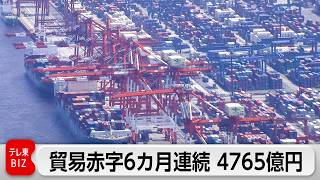
Japan recorded a trade deficit of 476.5 billion yen in October, marking the sixth consecutive month of red ink, as persistently high crude oil prices linked to prolonged instability in the Middle East pushed import costs higher, according to trade statistics released by the Finance Ministry on November 18th.

Japan's Nikkei 225 Stock Average closed at 58,860.43 on Tuesday, November 17, 2026, down 801.59 points, or 1.34%, as of the Tokyo Stock Exchange's 3:30 p.m. close, extending a sharp selloff in technology shares as concerns over artificial intelligence investment, tighter US semiconductor export restrictions and Japan's weakening economic growth prompted investors to reduce risk.

Honda announced on November 16th that it had achieved carbon neutrality at its finished vehicle manufacturing plant in Saitama Prefecture, reducing greenhouse gas emissions, including carbon dioxide, to effectively zero through a combination of electrification and renewable energy.

Japan's benchmark Nikkei 225 Stock Average plunged 1,480.33 points, or 2.42%, to close at 59,662.02 on Monday, November 16, 2026, at 3:30 p.m. Tokyo time, falling back below the psychologically important 60,000 level as renewed selling in artificial intelligence and semiconductor stocks coincided with unexpectedly weak economic growth figures.