News On Japan

Road to Imperial Palace's Otemon Gate Flooded by Typhoon

TOKYO - The road leading to Otemon Gate at Tokyo's Imperial Palace was flooded on September 22 after heavy rain from a typhoon caused water in the surrounding moat to overflow.

Otemon Gate serves as an entrance to the Imperial Palace's East Gardens, a landscaped area that includes the former main and secondary compounds of Edo Castle.

The road is normally used by visitors to the East Gardens, and overflowing water from the moat near Otemon Gate was confirmed on the morning of September 22.

The East Gardens remained open to the public on September 22 despite the flooding.

According to the Imperial Guard, no other typhoon-related damage had been confirmed within the Imperial Palace grounds, and no injuries had been reported.

Source: FNN

News On Japan
POPULAR NEWS

Spanish authorities have confirmed that a Japanese national was among the 69 people killed in a collision between two high-speed trains in central Spain on October 28, while Japanese officials are continuing efforts to establish the identities of victims following the disaster, which also left about 200 people injured.

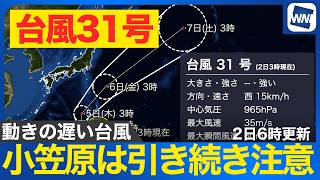
Typhoon No. 31, known internationally as In-fa, was moving slowly westward near the Ogasawara Islands at 15 kilometers per hour as of 6 a.m. on November 2, maintaining strong intensity and threatening to bring high waves, heavy rain and potentially violent winds to the remote island chain south of Tokyo.

Train services remain suspended on part of the JR Soya Line in Hokkaido on November 2 after a limited express train collided with a brown bear and derailed in Nakagawa on the night of October 31, with replacement bus services beginning Monday morning between Asahikawa and Wakkanai.

Tokyo's Shibuya district was crowded with costumed revelers on October 31 as Halloween fell on a Saturday for the first time in six years, prompting the Metropolitan Police Department to deploy hundreds of officers and impose traffic restrictions around the area's famous scramble crossing.

Toyota Motor will begin operating fully autonomous taxis in 2027 through a partnership with U.S. self-driving technology company Waymo, marking a major step in the Japanese automaker's efforts to expand driverless transportation services.

MEDIA CHANNELS
         

MORE Travel NEWS

Tokyo's Shibuya Ward issued 394 fines of 2,000 yen each for littering and street smoking during Halloween celebrations on October 31, while neighboring Shinjuku Ward recorded 498 cases of street drinking and smoking despite efforts to discourage disruptive behavior.

Wild boar damage is spreading across Japan, with farmers reporting destroyed crops and increasing encounters near residential areas as record-breaking autumn rainfall and landslides are believed to have disrupted food supplies in mountain forests, driving more animals into populated areas.

Tokyo's Shibuya district was crowded with costumed revelers on October 31 as Halloween fell on a Saturday for the first time in six years, prompting the Metropolitan Police Department to deploy hundreds of officers and impose traffic restrictions around the area's famous scramble crossing.

Mount Fuji has received its first snowcap of the season, the Japan Meteorological Agency announced on October 30, after temperatures at the summit plunged to minus 9.4 degrees Celsius, marking the arrival of winter conditions on Japan's highest mountain.

Hokkaido University's famous ginkgo avenue in Sapporo has reached its peak autumn color, attracting residents and tourists to the campus ahead of the two-day Hokudai Golden Leaf Festival on October 31 and November 1, an event that drew 35,000 visitors last year.

A spectacular illumination of the Hashigui Rocks, a nationally designated natural monument in Kushimoto, Wakayama Prefecture, is set to begin on October 30, transforming a series of unusual coastal rock formations into a colorful nighttime attraction.

Japan's first major cold spell of the season brought snow, freezing winds and record-low autumn temperatures across the country, with 639 observation points registering their coldest readings of the season on October 29, while forecasts issued that evening indicated that temperatures would recover on October 30 as rain spread across much of the country.

Typhoon No. 31 was located near Minamitorishima Island in the Pacific Ocean, as of 3 a.m. on October 30, and was expected to approach the Ogasawara Islands south of Tokyo over the October 31-November 1 weekend while maintaining very strong intensity, bringing a growing risk of dangerously high waves, powerful swells and extremely rough seas.