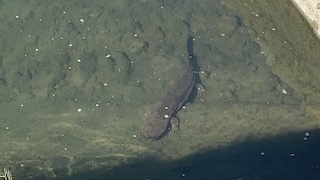
KYOTO - A giant salamander measuring about one meter in length was spotted in Kyoto's Kamo River, providing a rare opportunity to observe one of the world's largest amphibians in the wild, with video footage capturing the enormous creature slowly walking in shallow water near a colorful koi.
The encounter occurred at around 9 a.m. on Sunday in a section of the river approximately one meter deep near Kujo Bridge.
Giant salamanders are among Japan's most extraordinary freshwater animals. The native Japanese giant salamander can grow to around 1.5 meters in length and is one of the world's largest living amphibians. Its broad, flattened head, small eyes and wrinkled skin give it an appearance that has changed relatively little over millions of years of evolution.
Known in Japan as the "osanshouuo," the native species is designated a Special Natural Monument and has been protected under Japanese law since 1952. Giant salamanders generally inhabit rivers and streams, spending much of their time concealed beneath rocks or inside cavities along riverbanks.
Although giant salamanders are known to inhabit Kyoto's river systems, encounters in the wild are relatively uncommon for ordinary visitors. The animals are primarily nocturnal, making a sighting in daylight particularly noteworthy.
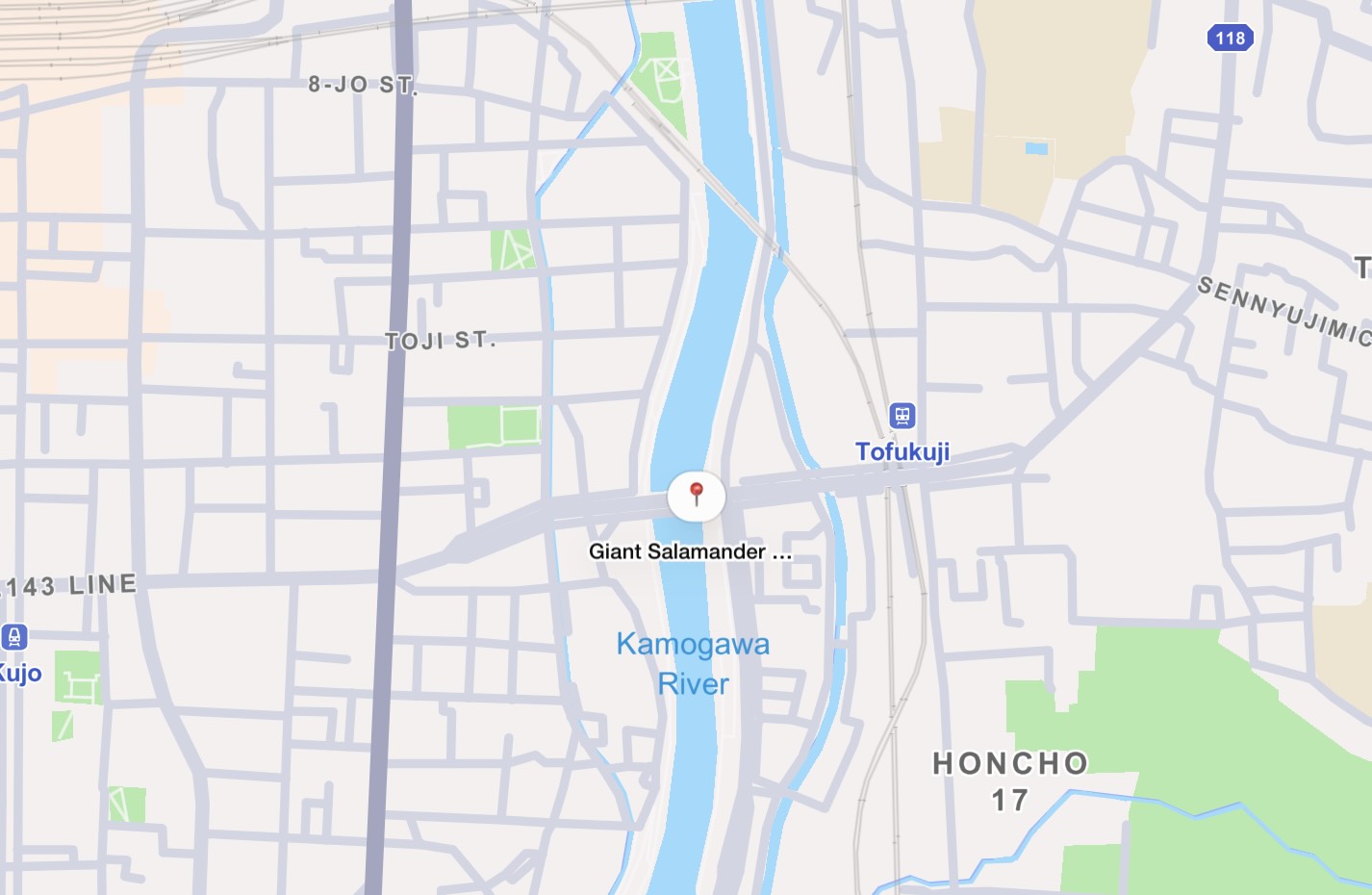
However, the conservation situation in Kyoto is more complicated than it might first appear. The Kamo River is home not only to native Japanese giant salamanders but also to introduced Chinese giant salamanders and hybrids between the two species.
Chinese giant salamanders were brought into Japan decades ago, and some subsequently entered natural waterways. Their ability to interbreed with Japan's native population has become a major conservation concern, particularly in the Kamo River basin.
Research conducted in Kyoto has found that introduced animals and hybrids account for a substantial proportion of the giant salamanders identified in the river system. Scientists have warned that continued hybridization threatens the genetic survival of Japan's native species.
The exact species or genetic background of the salamander filmed near Kujo Bridge has not been established, as distinguishing native animals from introduced species and hybrids can require specialized examination or genetic testing.
The encounter nevertheless offers a remarkable glimpse of the wildlife surviving in Kyoto's urban waterways. While the Kamo River is best known for its riverside walking paths, seasonal scenery and birdlife, its waters also support creatures that most residents and visitors may never see.
Source: Bozobird