
News On Japan

Japan's GDP Ranking Slips to 6th Behind India and UK

TOKYO - Japan is expected to fall from fourth to sixth place in the global economic rankings in 2027, overtaken by India and the United Kingdom, according to the latest economic outlook from the International Monetary Fund (IMF), reflecting sluggish domestic growth and the continued weakness of the yen.

The IMF's latest World Economic Outlook, released on October 12, estimates Japan's nominal gross domestic product (GDP) at $4.3419 trillion in 2026, rising to $4.4676 trillion in 2027.

Japan currently ranks fourth in the world behind the United States, China and Germany. However, the IMF forecasts that India will move into fourth place in 2027, followed by the United Kingdom in fifth, pushing Japan down to sixth.

The projected decline reflects several factors, including Japan's relatively weak economic growth compared with India and the United Kingdom, both of which are expected to expand at faster rates.

The prolonged depreciation of the yen is also a major factor. Because international GDP rankings are calculated in U.S. dollars, a weaker yen reduces the dollar value of Japan's economic output, even when GDP measured in yen increases.

The latest projections represent a significant revision from the IMF's previous outlook in April, when the organization estimated that the United Kingdom would overtake Japan in nominal GDP in 2029.

The expected crossover has now been brought forward by two years to 2027, highlighting Japan's growing difficulty in maintaining its position among the world's largest economies as faster-growing countries expand their economic influence.

Source: TBS

News On Japan
POPULAR NEWS

Japan's first Disney cruise ship will be named "Disney Imagination," with Oriental Land and its partners planning to launch the service in spring 2029, offering a new Disney-themed travel experience departing from Tokyo.

Tokyo's 23 wards have decided to establish a new small-scale public crematorium to address rising fees at privately operated facilities and growing concerns that cremation capacity could become insufficient around 2040 as the city's aging population drives up the number of deaths.

Prime Minister Sanae Takaichi delivered an unusually harsh rebuke of Agriculture, Forestry and Fisheries Minister Kazuo Yana on October 13, describing his claims about cutting road budgets in areas that failed to support him as "inappropriate" and "really lame," while signaling that she would reconsider whether he should remain in office as opposition lawmakers intensified their demands for his dismissal.

Japan is facing a growing wave of cyberattacks as advances in artificial intelligence remove the language barrier that once made Japanese companies difficult targets for overseas hackers, with more than 68 million personal records potentially exposed in a series of security incidents over the past two weeks.

Japan is expected to experience a warmer-than-normal winter as the El Nino phenomenon currently affecting the Pacific Ocean has reached its strongest level on record, with the Japan Meteorological Agency announcing on October 10th that unusually high sea surface temperatures are likely to persist through the coming winter months.

MEDIA CHANNELS
         

MORE Business NEWS

Japan is expected to fall from fourth to sixth place in the global economic rankings in 2027, overtaken by India and the United Kingdom, according to the latest economic outlook from the International Monetary Fund (IMF), reflecting sluggish domestic growth and the continued weakness of the yen.

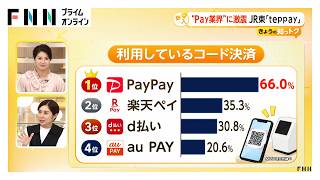
East Japan Railway (JR East) is preparing to enter Japan's fiercely competitive mobile payment market with the launch of teppay on October 20, introducing a new QR code payment service through its Mobile Suica platform and potentially tapping into a customer base of 45 million Suica users.

Japan's Fair Trade Commission plans to issue cease-and-desist orders against six construction companies, including firms affiliated with Japan Railways, over repeated bid-rigging in maintenance contracts for Tokyo's Toei subway network and other railway lines, with five companies facing surcharges totaling approximately 500 million yen.

Japan's domestic corporate goods price index rose 6.8% in September from a year earlier, slowing to below 7% for the first time in four months but remaining at a high level as soaring crude oil prices and growing demand for AI-related materials continued to push up costs, according to data released by the Bank of Japan on October 13.

Tokyo stocks fell sharply on October 13, with the Nikkei 225 closing at 67,778, down 1,253 points, as selling in artificial intelligence and semiconductor-related shares dragged the headline index below 68,000 after a three-day holiday weekend.

Japan's transition away from decades of ultra-low interest rates is placing increasing financial pressure on students, homeowners and property investors, with some university graduates facing more than 1 million yen in additional student loan repayments while rising mortgage costs and record-high apartment prices threaten to slow the country's property market.

Japan is stepping up efforts to reduce its dependence on China for essential medicines and rare earth minerals, with pharmaceutical giant Meiji Seika Pharma working to restart domestic penicillin production after more than three decades and a government-backed research project achieving a breakthrough in extracting rare earth-rich mud from the seabed near Minamitorishima Island.

Corporate bankruptcies caused by labor shortages in Japan reached a record 240 cases in the first half of the current fiscal year, highlighting the growing financial strain on small businesses as Prime Minister Sanae Takaichi pledges to protect household livelihoods through economic growth while pursuing consumption tax cuts that could place additional pressure on the restaurant industry.