News On Japan

Autumn Festivals Continue Across Japan

GIFU - Japan marked the final Sunday of October with traditional autumn events across the country on October 25, including a spectacular water discharge drill at the World Heritage site of Shirakawa-go in Gifu Prefecture, a seasonal salmon feast in Miyagi Prefecture, and a parade of northeastern Japan's most famous festivals in Tokyo, despite widespread rain caused by a stationary autumn rain front.

At 8 a.m., sirens sounded across Shirakawa-go, signaling the simultaneous activation of approximately 60 water cannons installed throughout the village to protect its historic thatched-roof houses from fire.

The annual drill, held ahead of winter when the use of heating equipment and open flames increases, serves to check that the village's firefighting equipment is functioning properly.

As powerful jets of water shot into the air, the traditional gassho-zukuri houses, known for their steeply pitched thatched roofs resembling hands joined in prayer, were enveloped in a dramatic curtain of water.

Tourists gathered at an observation deck overlooking the village to photograph the spectacle, which takes place only once a year.

"It was a very magical and beautiful sight," one visitor said, while another described the experience as entertaining.

The drill has become a seasonal attraction at Shirakawa-go, drawing visitors eager to see the historic settlement transformed by towering streams of water.

Meanwhile, in Natori, Miyagi Prefecture, crowds began gathering before 6 a.m. for a different autumn tradition, forming long lines to enjoy a local specialty made with seasonal salmon.

The attraction was harako meshi, a regional dish consisting of rice topped with autumn salmon and salmon roe. Organizers distributed 2,000 servings free of charge, attracting large numbers of visitors from early morning.

The event came during a particularly difficult year for the autumn salmon industry. Poor catches in 2026 have pushed procurement prices to more than three times their 2025 levels, making the seasonal delicacy considerably more expensive.

Visitors nevertheless enjoyed the traditional meal, with one saying, "You can really taste the salmon, and it's so good you can easily finish it even this early in the morning."

Across eastern and western Japan, the stationary autumn rain front continued to bring cloudy skies and rain to many areas on October 25, leaving much of the country under unsettled weather conditions.

Temperatures, however, rose considerably in some regions. Central Tokyo experienced a sharp rebound from October 24, when the maximum temperature remained below 20 degrees Celsius. The temperature climbed by more than 9 degrees, exceeding 25 degrees Celsius and giving the capital its first summer-like day in three days.

Despite occasional showers, crowds also gathered in Tokyo over the weekend for the Nakano Tohoku Kizuna Festival, an event bringing together representative traditional festivals from all six prefectures of the Tohoku region.

The streets were filled with colorful performances, including the famous Nebuta floats from Aomori Prefecture, the giant straw sandal traditions of Fukushima's Waraji Festival, Yamagata's Hanagasa Festival dances, and the lively Suzume Odori, or Sparrow Dance, from Sendai.

Spectators lined the parade route, taking photographs and watching the regional celebrations even as rain fell intermittently.

"It was incredibly powerful and exciting. It really made me want to visit Aomori," one spectator said.

Another visitor expressed admiration for the performances, saying, "It made me realize just how amazing Japanese culture is."

The events offered a glimpse of Japan's diverse autumn traditions, from the annual protection of centuries-old wooden houses and the enjoyment of seasonal seafood to the preservation of regional festivals, as communities continued their celebrations despite the unsettled weather.

日本各地で秋の風物詩イベントが開催

10月最後の日曜日となった10月25日、日本各地で秋の伝統行事が開催された。岐阜県の世界遺産・白川郷では一斉放水訓練が行われ、宮城県では秋サケを使った郷土料理が振る舞われたほか、東京では東北地方を代表する祭りのパレードが披露された。秋雨前線の停滞により広い範囲で雨となったものの、各地のイベントは多くの人でにぎわった。

日本各地秋季傳統活動登場

10月25日是10月最後一個星期日,日本各地舉行了多項秋季傳統活動。岐阜縣世界遺產白川鄉舉行了大規模同步放水演習,宮城縣免費提供以秋鮭製作的當地鄉土料理,東京都則舉辦了匯集東北地區著名祭典的遊行活動。儘管受到秋雨鋒面滯留影響,日本廣泛地區出現降雨,各地活動仍吸引大批民眾參加。

Source: FNN

News On Japan
POPULAR NEWS

According to the latest weather bureau information issued at 10 p.m. on October 25, Typhoon No. 31 is expected to develop into a very strong storm by October 28 as it moves northwest from the Marshall Islands, with forecasts indicating that it could approach Japan's Ogasawara Islands later in the week, although a direct impact on the country's main island of Honshu is considered unlikely.

The underground platform of the planned Kanagawa Prefecture Station on Japan's Chuo Shinkansen maglev line was opened to the public for the first time on October 24, offering visitors a rare glimpse of the high-speed railway project under construction in Sagamihara, Kanagawa Prefecture, with demand for the tour exceeding available places by approximately 12 times.

Typhoon No. 30 is expected to cause widespread travel disruption across western Japan on Monday, October 26, with railway suspensions, flight delays, ferry cancellations and possible expressway closures threatening the start of the working week. Forecasters are warning that heavy rainfall could affect transportation across a broad area even after the typhoon weakens into an extratropical low-pressure system early Monday.

Japanese drone manufacturer Terra Drone has delivered interceptor drones to Ukraine's Ministry of Defense for the first time, prompting Russia to threaten retaliatory measures on October 21, as Japan considers expanding domestic drone production and strengthening its coastal defenses through thousands of unmanned aircraft.

A critical security flaw discovered in PHP, a programming language used by an estimated 70% of the world's web systems, has triggered widespread disruptions across Japan since October 21, forcing banks, restaurant chains, government agencies and other businesses to suspend online services as a precaution against potential cyberattacks.

MEDIA CHANNELS
         

MORE Travel NEWS

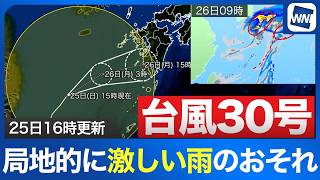
Typhoon No. 30 was rapidly weakening over the East China Sea at 4 p.m. on October 25 and is expected to become an extratropical cyclone by 3 a.m. on October 26, according to the latest weather forecast, although its merger with an autumn rain front could trigger prolonged heavy rainfall across western and eastern Japan, particularly along the Pacific coast and around the Izu Islands.

Japan marked the final Sunday of October with traditional autumn events across the country on October 25, including a spectacular water discharge drill at the World Heritage site of Shirakawa-go in Gifu Prefecture, a seasonal salmon feast in Miyagi Prefecture, and a parade of northeastern Japan's most famous festivals in Tokyo, despite widespread rain caused by a stationary autumn rain front.

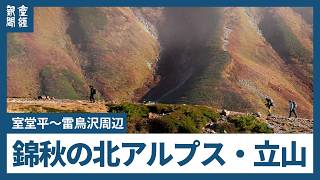
The Northern Alps in central Japan have entered the height of their autumn colors, with the alpine landscape around Tateyama's Murodo Plateau in Toyama Prefecture offering spectacular views of red and yellow vegetation, rugged mountain ridges and the rare Japanese rock ptarmigan, a protected bird species whose survival depends on the delicate balance of the mountain ecosystem.

Motorcycle owners across Japan can now choose their preferred license plate numbers under a new system introduced by the Ministry of Land, Infrastructure, Transport and Tourism on October 19th, with popular numbers allocated by lottery and applications costing between 2,500 and 3,000 yen.

Temperatures fell to their lowest levels of the season across much of Japan on the morning of October 18, with Rikubetsu in Hokkaido recording minus 4.3 degrees Celsius, the country's lowest temperature so far this autumn, before sunshine brought warmer conditions during the day and some areas experienced unseasonably hot weather.

Kyoto City expects revenue from its accommodation tax to more than double to approximately 13.2 billion yen this fiscal year following a substantial increase in the maximum nightly levy to 10,000 yen, as the city seeks to address overtourism and ease the pressure that millions of visitors place on residents and public infrastructure.

The Nada Fighting Festival, known for its spectacular collisions between massive portable shrines weighing around two tons, drew large crowds to Himeji, Hyogo Prefecture, on October 15, as participants repeatedly slammed the heavy structures into one another in a traditional ritual believed to please the gods.

The El Niño phenomenon developing in the Pacific Ocean has reached its strongest level since records began in 1949, with sea surface temperatures off Peru rising 4 degrees Celsius above normal in September, the Japan Meteorological Agency announced on October 9, raising concerns about extreme weather worldwide and the prospect of an unusually warm winter in Japan.