News On Japan

Japan to Buy Back 2 Million Barrels of UAE Crude for National Oil Reserves

TOKYO - Japan has begun replenishing its national oil reserves following the release of approximately 90 million barrels in response to worsening tensions in the Middle East, with trading house Mitsui & Co. winning the first procurement contract for 2 million barrels of crude oil from the United Arab Emirates, expected to arrive in November.

The purchase marks Japan's first replenishment of its strategic petroleum reserves since attacks on Iran in February triggered a deterioration in the Middle East security situation and prompted the government to release emergency oil supplies beginning in March.

The Japan Organization for Metals and Energy Security (JOGMEC), an independent administrative agency responsible for managing the country's strategic petroleum reserves, conducted the first round of competitive bidding in September.

According to government officials, major Japanese trading company Mitsui & Co. secured the contract to procure 2 million barrels of UAE-produced crude oil for the national stockpile.

The shipment, equivalent to approximately one day's domestic oil consumption in Japan, is scheduled to arrive in November and will be transferred to the Shibushi National Petroleum Stockpiling Base in Kagoshima Prefecture.

The government has released approximately 90 million barrels from its national reserves since March to stabilize oil supplies following the escalation of tensions in the Middle East. The latest purchase represents the first step toward rebuilding those depleted reserves.

Funding for the procurement will come from profits generated through the earlier sale of oil from the national stockpile, allowing the government to finance the replenishment using proceeds from the emergency releases.

The initial purchase accounts for roughly 2.2% of the approximately 90 million barrels released since March, indicating that rebuilding Japan's strategic reserves will require further procurement if the government intends to replace the full amount withdrawn.

The decision to begin replenishing the reserves marks a shift from emergency releases toward restoring Japan's energy security buffer, which serves as a safeguard against disruptions to crude oil imports, particularly those originating in the Middle East.

Source: TBS

News On Japan
POPULAR NEWS

A magnitude 5.7 earthquake struck Kumamoto Prefecture in southwestern Japan at around 2:22 a.m. on November 19th, registering a maximum seismic intensity of lower 5 on Japan's seven-point scale and shaking a wide area of Kyushu, with experts warning that further strong earthquakes could occur near a fault system affected by the devastating Kumamoto earthquake in July.

Japanese Prime Minister Sanae Takaichi held approximately 30 minutes of talks with Russian President Vladimir Putin on the evening of November 18 during her visit to China for the APEC summit, marking the first direct dialogue between the leaders of Japan and Russia since Moscow launched its invasion of Ukraine in 2022.

Japanese Prime Minister Sanae Takaichi shook hands with Chinese President Xi Jinping at the opening of the Asia-Pacific Economic Cooperation (APEC) summit in Shenzhen on November 18th, marking their first face-to-face encounter in approximately one year, although the brief exchange came after a noticeably subdued welcome for the Japanese leader compared with the elaborate receptions given to other visiting heads of state.

Two aircraft believed to be Russian briefly violated Japanese airspace over Okinoshima Island in Fukuoka Prefecture on November 17th before flying between Okinawa and Taiwan toward the Pacific Ocean, prompting Japan's defense minister to condemn the incursions as a serious violation of national sovereignty.

Japan's Fugaku supercomputer has been temporarily shut down following unauthorized external access to a system used to connect to the facility, raising concerns that user information may have been leaked, the Riken research institute announced on November 16th.

MEDIA CHANNELS
         

MORE Business NEWS

Japan's Nikkei 225 rebounded on November 18 after two consecutive days of losses, closing 163.85 points higher, or 0.28%, at 59,024.28 at 3:30 p.m. Tokyo time, although an early rally driven by strong earnings from U.S. chipmaker Nvidia quickly lost momentum, leaving investors cautious about the outlook for artificial intelligence, technology valuations and the broader economy.

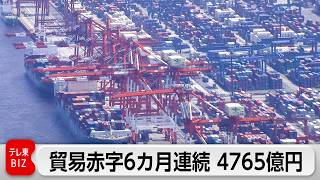
Japan recorded a trade deficit of 476.5 billion yen in October, marking the sixth consecutive month of red ink, as persistently high crude oil prices linked to prolonged instability in the Middle East pushed import costs higher, according to trade statistics released by the Finance Ministry on November 18th.

Japan's Nikkei 225 Stock Average closed at 58,860.43 on Tuesday, November 17, 2026, down 801.59 points, or 1.34%, as of the Tokyo Stock Exchange's 3:30 p.m. close, extending a sharp selloff in technology shares as concerns over artificial intelligence investment, tighter US semiconductor export restrictions and Japan's weakening economic growth prompted investors to reduce risk.

Honda announced on November 16th that it had achieved carbon neutrality at its finished vehicle manufacturing plant in Saitama Prefecture, reducing greenhouse gas emissions, including carbon dioxide, to effectively zero through a combination of electrification and renewable energy.

Japan's benchmark Nikkei 225 Stock Average plunged 1,480.33 points, or 2.42%, to close at 59,662.02 on Monday, November 16, 2026, at 3:30 p.m. Tokyo time, falling back below the psychologically important 60,000 level as renewed selling in artificial intelligence and semiconductor stocks coincided with unexpectedly weak economic growth figures.

Japan faces a decisive week for its economic outlook from November 16 to November 20, 2026, with new figures on economic growth, inflation, exports, tourism and business investment expected to reveal whether domestic demand is holding up against rising living costs, a weakening yen and uncertainty over global trade, while a wave of stronger-than-expected corporate earnings has provided fresh evidence of resilience across the economy.

The Hands Shibuya store, a longtime landmark in one of Tokyo's busiest shopping districts, will close on November 15 after 48 years in business, marking the end of nearly half a century of retail history as the store holds a final clearance sale offering discounts of up to 80% on cosmetics and other products.

A Japanese startup founded at Osaka University is preparing to begin clinical trials of a brain-computer interface in 2027, aiming to enable patients with severe physical disabilities to communicate and operate electronic devices using only their thoughts, with commercialization targeted for around 2030.