



The powerful earthquake that struck Kumamoto Prefecture on July 28 was caused by essentially the same mechanism as the devastating earthquakes that hit the region 10 years ago, according to a leading seismologist, who warned residents to prepare for strong aftershocks and take precautions against heatstroke even during the night.

Multiple rare earth elements essential for high-tech products have been confirmed in mud extracted from the deep seabed off Minamitorishima, Japan's easternmost island.
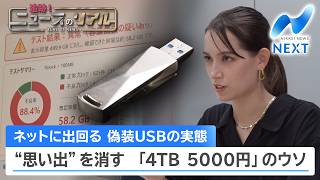
Low-cost USB drives advertised online with enormous storage capacities are exposing users to the risk of lost data, malware infections and information theft, with tests finding that some products contain only a fraction of the memory shown on their labels.

Ammonia, commonly associated with its pungent odor and its presence in urine, is gaining recognition as one of humanity's most important inventions and a potential foundation for a new energy system that could reduce the world's dependence on oil.

The Japan Aerospace Exploration Agency conducted a ground firing test of the second-stage engine for its Epsilon S small solid-fuel rocket at the Tanegashima Space Center in Kagoshima Prefecture on July 23.

PorMedTec, a Meiji University startup, has begun producing genetically modified pigs for a clinical trial that could start in Japan in 2028 and transplant pig kidneys into patients with kidney failure.

Japan is moving closer to testing technology designed to generate solar power in space and transmit the electricity wirelessly to Earth, with researchers now conducting final checks on a flight model for an upcoming satellite experiment.

Fires involving lithium-ion batteries, including those used in mobile battery packs, are occurring at a record pace in Japan this year, with 179 incidents reported by the end of May, according to the Tokyo Fire Department.