News On Japan

Komeito’s Exit Triggers Fierce Battle Over Japan’s Next Prime Minister

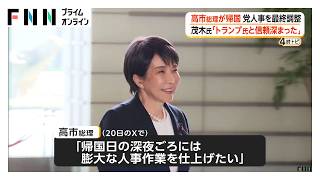
TOKYO, Oct 12 (News On Japan) - The abrupt collapse of the long-standing Liberal Democratic Party (LDP)–Komeito coalition ahead of the upcoming prime ministerial vote has thrown Japanese politics into flux, complicating the path for Takaichi to take office and intensifying behind-the-scenes maneuvering among all major parties. Takaichi, who visited the Constitutional Democratic Party (CDP) headquarters earlier this week, was met with criticism over remarks describing an opposition figure as “damaged goods,” a sign of heightened tensions just two days before Komeito’s dramatic departure from the coalition.

Hopes within the LDP of bringing the Democratic Party for the People (DPP) into a new alliance to secure a lower house majority have been dashed, as the DPP signaled skepticism over joining a coalition that “would not function meaningfully.” With the LDP holding 196 seats on its own and the CDP controlling 148, opposition parties argue that a united front among the top three opposition groups could surpass the ruling party’s numbers. The CDP has even suggested backing DPP leader Tamaki as prime minister in a joint opposition strategy. Tamaki, in turn, has expressed readiness to serve if chosen, though he stressed the need for policy alignment before any partnership could form.

Japan Innovation Party leaders echoed the call for deeper consensus on policy priorities, warning that cooperation without shared principles would be difficult. Even Komeito — now in opposition — has not ruled out cooperating with opposition forces on specific policies, though it remains unlikely to support a non-LDP prime ministerial candidate outright given its history of joint policymaking with the LDP. The party also emphasized that resolving the “politics and money” scandals that contributed to the coalition’s collapse is essential for regaining public trust.

Political analysts say three main scenarios now loom: the LDP could delay the prime ministerial vote while seeking a new coalition partner; opposition parties could unite to seize power, potentially elevating Tamaki to the premiership; or Takaichi could form a minority government, possibly calling a snap election after passing a supplementary budget. Any of these outcomes would leave Japan facing a period of political instability and legislative gridlock.

Commentators warn that the upheaval has exposed deeper issues in Japan’s democracy. Only 0.7% of the electorate participated in the LDP leadership vote that elevated Takaichi — despite her finishing third in the initial parliamentary ballot — highlighting the outsized influence of party factions. Critics suggest that her “Japan is back” slogan signals a return to the Abe-era policies of aggressive monetary easing and corporate stimulus, raising questions about whether such an agenda serves the public interest amid stagnant wages, demographic decline, and fiscal strain.

The scandals surrounding the Unification Church, the Moritomo Gakuen document falsification case, and the return of controversial figures linked to past political wrongdoing have further eroded trust, fueling Komeito’s frustration. With pressing challenges such as social security reform, foreign policy strategy, and support for a struggling middle class still unresolved, commentators argue that Japan is at a turning point. The question now is whether a new era of cooperative, citizen-driven democracy can emerge from the current turmoil — or whether entrenched political dynamics will once again prevail.

Source: TBS

News On Japan
POPULAR NEWS

A strong winter-pattern pressure system drove the season’s coldest air across the country on November 18th, making snow and rain more likely along the Japan Sea coast while bringing heavy snow and blizzard conditions to parts of northern Japan, with temperatures falling sharply nationwide and even areas that see sunshine experiencing a biting northerly wind.

The Japanese Embassy in Beijing urged Japanese nationals in China on November 18th to take extra precautions for their personal safety as the Chinese government intensifies its opposition to Prime Minister Takai’s recent comments regarding a potential Taiwan contingency, prompting the embassy to send a warning email later in the evening.

A reporting team found itself face to face with a bear while investigating the sharp rise in bear-related incidents that has left 13 people dead this year.

Sakurajima erupted in the early hours on October (date not provided in source), sending a plume of ash soaring to 4,400 meters above the crater, the first time it has exceeded 4,000 meters since October last year, with volcanic rocks reaching as far as the sixth station on the mountainside as the volcano continued erupting intermittently throughout the morning and caused ash to fall over Kagoshima Airport, where a thin layer accumulated on aircraft.

Japan Airlines (JAL) has introduced a new policy starting November 13th allowing its cabin crew and ground staff who serve customers at airports to wear sneakers during work hours.

MEDIA CHANNELS
         

MORE Politics NEWS

Hong Kong authorities have urged residents to exercise caution when traveling to Japan, calling attention to what they describe as growing safety concerns. The advisory, issued on October 15th, warns citizens to stay alert during visits to Japan.

China’s Ministry of Foreign Affairs issued a travel advisory on November 14th, urging Chinese citizens to avoid visiting Japan for the time being, citing “serious safety risks” to Chinese nationals following Prime Minister Takaichi’s remarks on a potential Taiwan contingency.

Russia’s Foreign Ministry announced on November 11th that it has decided to impose an indefinite entry ban on 30 Japanese nationals as a countermeasure against what it called Japan’s “hostile policies” following Russia’s invasion of Ukraine.

NHK Party leader Takashi Tachibana was arrested in the early hours of November 9th on suspicion of defamation in connection with false statements he spread on social media regarding a former Hyogo prefectural assembly member.

The government is moving to include the use of “okome-ken,” or rice vouchers, in its upcoming package of economic measures. The vouchers can be used to purchase rice and other food items and have already been distributed by several municipalities as part of local initiatives to offset rising living costs.

Hyogo Prefectural Police arrested NHK Party leader Tachibana Takashi on November 9th on suspicion of defamation, alleging that he repeatedly made false statements about a former Hyogo prefectural assembly member who has since passed away.

The Budget Committee of the House of Representatives opened on November 7th, with Prime Minister Takaichi facing her first full-scale debate since taking office.

The worsening string of bear incidents across Akita Prefecture has prompted the deployment of the Ground Self-Defense Force to assist in countermeasures. On November 5th, fifteen members of the 21st Infantry Regiment based at the Akita garrison were sent to Kazuno City, where they began support activities such as transporting box traps for capturing bears.