News On Japan

AI Wearables Move Toward Everyday Use

An international supply chain exhibition in Beijing has put artificial intelligence at the center of its program this year, with manufacturers and semiconductor companies from around the world showcasing products aimed at practical use, including AI-equipped smart glasses that could reduce the need to look at a smartphone.

The Supply Chain Expo, now underway in the Chinese capital, introduced a dedicated AI exhibition area for the first time this year. Major companies including Nvidia and Alibaba are among the exhibitors, reflecting the growing focus on AI as a core part of future consumer and industrial products.

One of the most eye-catching displays was a large glasses-shaped installation surrounded by rows of eyewear. The products on show were smart glasses equipped with AI functions, allowing users to view video and use smartphone apps through the glasses.

The smart glasses can display map apps and translation apps, enabling users to access information without looking down at a mobile phone.

A representative of Hangzhou Qiuguo Jihua, a company developing smart glasses, said the device is designed to serve as a daily assistant. "Smart glasses will become an assistant in your life and help solve all kinds of difficulties you face in daily living," the representative said.

Sales of smart glasses in China reached 1.454 million units last year and are expected to more than double this year. Hangzhou Qiuguo Jihua plans to begin selling its product in September, but the company said production remains a challenge.

"There are some obstacles in production capacity," the representative said. "For example, the supply of semiconductors has not caught up."

Major Chinese IT companies are rushing to develop and produce semiconductors for AI applications, but supply has yet to meet demand.

The exhibition has also drawn major overseas semiconductor companies, including Nvidia and Intel of the United States and South Korea's SK Group. As AI products move rapidly toward practical use and demand expands in China, companies from around the world are seeking a foothold in the Chinese market.

Source: TBS

News On Japan
POPULAR NEWS

Two typhoons moving across the Pacific southeast of Japan are expected to remain well away from the Japanese mainland, but powerful swells could bring rough seas to a wide stretch of the country's Pacific coastline throughout the three-day holiday weekend, according to forecasts updated at 3 a.m. on October 10.

A series of cyberattacks has disrupted business operations and exposed millions of customer records across Japan, with a ransomware attack on a cloud service provider affecting 495 companies and local governments nationwide, while convenience store operator Lawson has disclosed a separate breach involving more than 2.15 million personal information records.

Japan's first 360-degree projection mapping show will open at the Osaka City Museum of Fine Arts on October 10, transforming the historic building into an immersive world of light, music, and seasonal imagery, with organizers hoping the attraction will also help stimulate the city's nighttime economy.

Tokyo University of Science professor emeritus Kenzo Soai has been awarded this year's Nobel Prize in Chemistry together with French chemist Henri B. Kagan for discoveries that transformed scientists' understanding of how chemical reactions can favor one of two mirror-image forms of a molecule.

The US military suspended activities by all forces stationed in Okinawa for 48 hours from noon on October 7, an unusual measure following the arrest of a US Marine in connection with a robbery and murder case that has renewed scrutiny of crimes involving American service members.

MEDIA CHANNELS
         

MORE Web3 NEWS

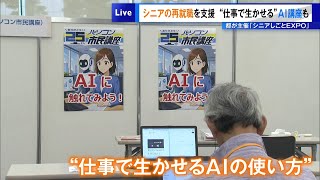
Tokyo hosted an employment support event for older workers on October 6, offering job consultations, interviews, hands-on work experience and training in artificial intelligence as the number of people aged 65 and over in the workforce continues to rise.

The ransomware group Qilin, accused of carrying out repeated cyberattacks against companies including Asahi Group Holdings, has warned that attacks targeting Japanese companies and government agencies could increase after a suspected core member was detained in Osaka and extradited to Germany.

Kawasaki Heavy Industries has unveiled a prototype next-generation shipbuilding robot that can climb vertically along ship hulls, part of an effort to use physical AI to address labor shortages and preserve skilled manufacturing techniques.

Panasonic Holdings is pushing ahead with one of the most sweeping restructurings in its 108-year history, cutting about 12,000 jobs, selling major businesses and reorganizing operations as the Japanese electronics group seeks to build new sources of growth around artificial intelligence, data centers and recurring service revenue.

A Tokyo court has recognized the commercial rights of performers over their voices for the first time, ruling that unauthorized use of AI-generated voices resembling those of celebrities can constitute an infringement of publicity rights in a landmark lawsuit brought by popular voice actor Kenjiro Tsuda against the operator of TikTok.

The Asia-Pacific gaming market has been having a pretty serious moment.

Tokyo Metro has launched a trial using artificial intelligence and floor projections to guide passengers toward less crowded train cars, introducing a new approach to easing congestion on subway platforms.

When a friend leans across a loud izakaya table to tell you something, where do your eyes go?