News On Japan

AI Will Change the Way Countries Are Run, Says Mirai Leader

TOKYO - Artificial intelligence could bring changes equal to or greater than the Industrial Revolution, reshaping the role of government, society and policymaking, Mirai party leader Takahiro Anno said in an interview broadcast on July 26.

Anno said the world remains at the very beginning of the AI revolution, with generative AI making it possible to obtain intelligence capable of reasoning at low cost.

"We have become able to procure thinking intelligence cheaply," Anno said. "As a result, the nature of the nation and society will change, affecting policies across a wide range of fields."

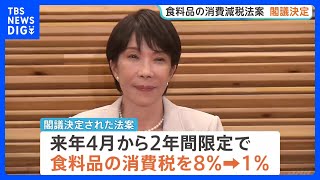
Anno also reiterated his opposition to reducing the consumption tax and called on Prime Minister Sanae Takaichi to reconsider her position.

"One way to take responsibility is to fulfill an election pledge, but it is also the prime minister's duty to take responsibility by putting people's livelihoods first," Anno said. "I would like her to change course decisively."

Source: テレ東BIZ

News On Japan
POPULAR NEWS

Temples that have long shaped Japanese life and culture are increasingly closing and being put up for sale as falling numbers of parishioners and a shortage of successors leave many religious institutions unable to continue operating.

Typhoon No. 13, which formed on the afternoon of July 27, is expected to intensify rapidly into a violent storm as it draws in clusters of highly developed clouds, though forecasts remain sharply divided over whether it will eventually approach Japan.

UNESCO has formally added the Asuka-Fujiwara capital sites in Nara Prefecture to its World Cultural Heritage list, bringing the number of World Heritage properties in Japan to 27.

The Sumida River Fireworks Festival, a summer tradition in Tokyo's historic downtown districts, was held across Taito and Sumida wards on July 25, with about 20,000 fireworks lighting up the night sky following a day of intense heat.

Multiple rare earth elements essential for high-tech products have been confirmed in mud extracted from the deep seabed off Minamitorishima, Japan's easternmost island.

MEDIA CHANNELS
         

MORE Politics NEWS

Prime Minister Sanae Takaichi entered the final week of July facing the sharpest political test of her administration so far, as a fall in public support exposed growing unease over the weak yen, rising living costs and doubts about whether her growth strategy can reassure both households and financial markets.

Artificial intelligence could bring changes equal to or greater than the Industrial Revolution, reshaping the role of government, society and policymaking, Mirai party leader Takahiro Anno said in an interview broadcast on July 26.

The Trump administration imposed new additional tariffs on Japan and 59 other countries and regions at 1:01 p.m. Japan time, shortly after President Donald Trump praised Shohei Ohtani and Yoshinobu Yamamoto during a White House ceremony honoring the Los Angeles Dodgers.

Japan's parliament enacted legislation on July 24 to establish a secondary capital capable of maintaining legislative and administrative functions if Tokyo is struck by a major disaster, while also seeking to reduce the excessive concentration of population and economic activity in the capital.

Prime Minister Sanae Takaichi entered the final full day of the extended Diet session on July 24 facing pressure from both parliament and financial markets, as opposition parties prepared to question her in Budget Committee deliberations while the ruling bloc sought to complete legislation central to its coalition with the Japan Innovation Party.

A Russian military intelligence officer accused of posing as an airline employee in Tokyo while overseeing the smuggling of high-tech equipment needed to sustain Russia's invasion of Ukraine left Japan after his activities were reported by The New York Times.

Prime Minister Sanae Takaichi’s economic agenda faced another market test on July 23 as the yen remained near its weakest level in about 40 years, forcing the government to keep warning of possible currency action while investors increasingly expected the Bank of Japan to raise interest rates again before the end of the year.

Prime Minister Sanae Takaichi’s economic agenda came under sharper pressure on July 22 as the yen fell to its weakest level in about 40 years, forcing the government to warn of possible currency action while the Bank of Japan signaled growing concern that inflation risks could require faster interest-rate hikes.