
News On Japan

Japan Retail Bond Rates Hit Record Levels as Yields Rise

TOKYO - Interest rates on Japanese government bonds for individual investors offered in September have risen to record-high levels, with the 10-year floating-rate bond reaching 1.95%, according to figures announced on September 2.

The rate on the 10-year floating-rate bond increased by 0.08 percentage point from August to 1.95%.

The five-year fixed-rate bond rose by 0.18 percentage point to 2.24%, while the three-year fixed-rate bond climbed by 0.25 percentage point to 1.96%.

Source: テレ東BIZ

News On Japan
POPULAR NEWS

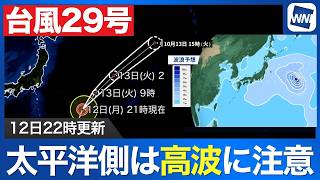
Typhoon No. 29 was moving northward over waters east of Japan at strong intensity as of 10 p.m. on October 12th, with forecasts indicating that the storm will continue moving away from the country and transition into an extratropical cyclone on October 13th, although high waves generated by the typhoon could pose a growing threat along the Pacific coast of northern Japan.

Japan is facing a growing wave of cyberattacks as advances in artificial intelligence remove the language barrier that once made Japanese companies difficult targets for overseas hackers, with more than 68 million personal records potentially exposed in a series of security incidents over the past two weeks.

Japan is expected to experience a warmer-than-normal winter as the El Nino phenomenon currently affecting the Pacific Ocean has reached its strongest level on record, with the Japan Meteorological Agency announcing on October 10th that unusually high sea surface temperatures are likely to persist through the coming winter months.

The Otsu Festival, one of Shiga Prefecture's three major traditional festivals, was held in Otsu City on October 11th, featuring a procession of 13 elaborately decorated floats carrying traditional mechanical puppets through the streets, following the festival's addition to UNESCO's Intangible Cultural Heritage list in December last year.

A series of cyberattacks has disrupted business operations and exposed millions of customer records across Japan, with a ransomware attack on a cloud service provider affecting 495 companies and local governments nationwide, while convenience store operator Lawson has disclosed a separate breach involving more than 2.15 million personal information records.

MEDIA CHANNELS
         

MORE Business NEWS

Japan's transition away from decades of ultra-low interest rates is placing increasing financial pressure on students, homeowners and property investors, with some university graduates facing more than 1 million yen in additional student loan repayments while rising mortgage costs and record-high apartment prices threaten to slow the country's property market.

Japan is stepping up efforts to reduce its dependence on China for essential medicines and rare earth minerals, with pharmaceutical giant Meiji Seika Pharma working to restart domestic penicillin production after more than three decades and a government-backed research project achieving a breakthrough in extracting rare earth-rich mud from the seabed near Minamitorishima Island.

Corporate bankruptcies caused by labor shortages in Japan reached a record 240 cases in the first half of the current fiscal year, highlighting the growing financial strain on small businesses as Prime Minister Sanae Takaichi pledges to protect household livelihoods through economic growth while pursuing consumption tax cuts that could place additional pressure on the restaurant industry.

Tokyo stocks fell sharply on June 26 as investors locked in profits from Japan’s record-setting AI-driven rally, with SoftBank Group and chip-related shares leading a broad retreat after reports that OpenAI may delay its initial public offering.

Japan recorded a current account surplus of 4.062 trillion yen in August, an increase of 12% from a year earlier, driven primarily by a sharp rise in income from overseas investments, even as higher crude oil prices pushed the country's trade balance into deficit.

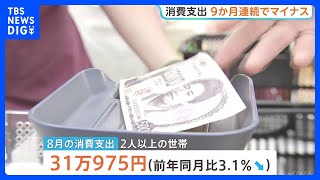
Household spending in Japan fell 3.1% in August from a year earlier, marking the ninth consecutive month of decline as rising food prices continued to weigh on consumer budgets, according to the latest household expenditure survey released by the Ministry of Internal Affairs and Communications on October 9.

Tokyo stocks ended nearly unchanged on August 12, with the Nikkei 225 at 66,988.82, as gains in energy and financial shares offset weakness in electronics and pharmaceuticals while investors weighed higher crude oil prices, a weaker yen and growing expectations for another Bank of Japan rate increase.

Japan is entering a more difficult phase in its cybersecurity challenge, as a succession of major data breaches and ransomware attacks exposes weaknesses not only in corporate IT systems but also in supplier networks, governance structures and operational resilience.