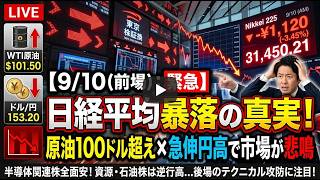
TOKYO - Tokyo stocks edged lower on September 10, with the Nikkei 225 closing at 65,143, down 0.19%, as gains in selected semiconductor and electronic-component shares faded under pressure from oil above $100, rising global bond yields and expectations that the Bank of Japan may raise rates next week.
The broader TOPIX slipped 0.09% to 4,046.64, showing that the market lacked broad conviction even though some AI and technology-related shares continued to attract buying. The Nikkei was higher for much of the session and rose as much as 0.8% before losing momentum into the close.
The day’s trading followed the pattern seen repeatedly in recent weeks: investors were willing to buy companies tied to artificial intelligence, semiconductors, electronic components and data-center infrastructure, but macro pressure from oil, currencies and interest rates prevented a sustained advance.
The Nikkei opened lower after global markets weakened on renewed inflation concerns. At one stage in the morning, the index was down more than 700 points and briefly approached the 64,400 range, with decliners far outnumbering gainers across the Prime Market. It later recovered as buying returned to selected technology names, but the rebound lacked enough breadth to lift the full market.
The early selloff reflected heavy caution before U.S. inflation data, next week’s Federal Reserve meeting and the Bank of Japan’s September 17-18 policy meeting. Investors were also reacting to Brent crude holding above $100 a barrel after escalating attacks on shipping in the Middle East.
Oil was the dominant global risk. Brent crude remained above $100 after Iran and the United States launched their largest attacks on shipping since their six-month conflict began. Iran said it had attacked 10 ships near the Strait of Hormuz after the United States sank five Iranian oil tankers, while Washington warned Tehran against further escalation.
For Japan, oil above $100 is a major inflation threat because the country imports most of its energy. Higher crude prices feed into gasoline, electricity, aviation fuel, shipping, logistics, chemicals and manufacturing costs. The pressure is especially severe when the yen remains historically weak, even after its sharp September rebound.
The yen traded around the 153 range against the dollar, close to seven-month highs, after strengthening about 4% so far in September. The currency’s rebound has been driven by expectations for faster BOJ tightening, traders unwinding short-yen positions and signs that Japanese investors may repatriate overseas capital.
A stronger yen helps reduce imported inflation pressure and gives households some relief, but it also creates headwinds for exporters. Automakers, machinery makers, precision-equipment companies and electronics exporters had benefited from the dollar near 160 earlier in the summer, and the move toward 153 has forced investors to reassess earnings assumptions.
The currency move has therefore changed the market’s balance. In July and August, investors worried that yen weakness would worsen inflation, invite intervention and force the BOJ to tighten. In September, the concern has shifted to whether the yen’s sudden strength could hurt exporters and trigger further unwinding of carry trades.
The yen carry trade remains a major global risk. Investors who borrowed cheaply in yen to buy higher-yielding assets overseas face losses when the yen strengthens and Japanese yields rise. A disorderly unwind can force selling across equities, bonds and currencies.
Bank of Japan policy was the main domestic focus. BOJ board member Kazuyuki Masu said the central bank may eventually be forced to raise interest rates rapidly if inflation accelerates, given that Japan’s financial conditions remain loose.
Masu’s remarks reinforced expectations that the BOJ will raise its policy rate from 1% to 1.25% at the September 17-18 meeting. Reuters reported that analysts now expect the BOJ to reach 1.75% in the second quarter of 2027, earlier than previously forecast, as price pressures broaden and concerns over the yen persist.
The BOJ kept rates unchanged at its July 30-31 meeting, but board member Hajime Takata dissented in favor of raising the policy rate to 1.25%. Since then, Tokyo inflation, producer prices, stronger wages, revised GDP figures and currency volatility have all strengthened the case for another increase.
The central question for investors is no longer only whether the BOJ will raise rates in September. It is whether Governor Kazuo Ueda signals a one-off adjustment or a faster normalization path that could continue into December and 2027.
A September hike is largely priced in, but guidance matters. If the BOJ sounds too cautious, the yen could weaken again and imported inflation pressure could return. If it sounds too hawkish, JGB yields could rise further and pressure equities, mortgages, corporate borrowing and government finances.
Japanese government bond yields remain near multi-decade highs. The 10-year JGB yield recently moved above 3% for the first time since 1996, while shorter-dated yields have risen as markets price in further BOJ tightening.
Higher yields support banks by improving lending margins and investment income, but they pressure growth shares by raising the discount rate applied to future earnings. They also increase debt-servicing costs for the government, making fiscal policy a larger issue for equity investors.
The bond-market pressure comes as Prime Minister Sanae Takaichi’s administration faces record-scale budget demands, cost-of-living pressure and a long-term industrial strategy centered on strategic investment. Markets are watching whether fiscal expansion can be contained as borrowing costs rise.
The government’s investment strategy calls for more than 370 trillion yen in public and private spending through fiscal 2040, with priority areas including semiconductors, artificial intelligence, energy security, defense, shipbuilding, robotics, space and economic security.
That strategy supports many of the companies investors continue to favor, including semiconductor-equipment makers, materials suppliers, power-system companies, data-center infrastructure firms and advanced manufacturers. However, higher yields make the funding question more important.
The Finance Ministry’s budget process remains closely watched after ministries submitted large requests for the next fiscal year. Rising assumed interest rates mean higher projected debt-service costs, reducing the fiscal room available for household relief, defense spending and growth investment.
For households, the market story remains tied to prices. Wages have improved, and July real wages posted their strongest rise in years, but consumers continue to face high costs for groceries, gasoline, electricity, transport and services.
The stronger yen may help slow import-driven inflation, but oil above $100 threatens to offset much of that relief. If crude prices stay high, energy and logistics costs will continue flowing through to food, utilities and consumer goods.
TV Tokyo’s broader business themes remain central to the market. Companies are still deciding how much of higher labor, energy, logistics and materials costs can be passed on to customers, while households judge the economy by whether wage gains cover daily expenses.
Businesses with pricing power, strong brands, stable demand or exposure to long-term investment remain better positioned. Firms without pricing power remain vulnerable if oil, wages and import costs rise faster than sales.
The September 10 market showed that investors are still selective rather than broadly bearish. Some AI and semiconductor-related shares rose despite the weak headline indexes, indicating that confidence in the technology cycle has not disappeared.
Furukawa Electric was the largest percentage gainer in the Nikkei, rising 12.63%. The stock’s strength reflected renewed buying in data-center infrastructure names tied to optical fiber, cables, high-speed communications and AI-related power demand.
Tokai Carbon rose 9.27% to its highest close since October 2018, supported by buying in materials and component-related shares. Fujikura gained 8.07%, extending its role as a key second-wave AI infrastructure name.
Fujikura and Furukawa Electric have become important gauges of whether the AI theme is broadening beyond semiconductor equipment and memory into the physical infrastructure needed for large data centers. Demand for optical fiber, high-speed networks, power systems and advanced cables remains a major structural story.
Murata Manufacturing, Taiyo Yuden and other electronic-component shares also remained closely watched. These companies are tied to servers, communications equipment, electric vehicles, advanced devices and industrial electronics, giving them exposure to both AI and broader technology demand.
Kioxia Holdings continued to serve as a barometer for memory-sector confidence. The company is closely tied to high-bandwidth memory, AI servers and data-center storage demand, but its shares have been highly volatile since July as investors reassess the memory cycle and speculative positioning.
Advantest and Tokyo Electron remained central to the Nikkei’s direction. Advantest is one of Japan’s most direct beneficiaries of advanced AI chip testing, while Tokyo Electron is a key supplier of semiconductor manufacturing equipment. Both are sensitive to U.S. technology sentiment and global bond yields.
SoftBank Group remained another major swing factor because of its large Nikkei weighting and exposure to OpenAI, Arm, robotics, digital infrastructure and other AI themes. Investors continue to weigh its long-term growth potential against funding costs and the scale of capital required for its AI strategy.
The September 10 session again showed that the AI trade is no longer moving as one simple block. Investors are rewarding some infrastructure and component names while taking profits or staying cautious toward more expensive or crowded semiconductor shares.
On the weaker side, construction, retail and some defensive shares weighed on the market. Other products, nonferrous metals, construction, retail and precision instruments were among the weaker sectors during the morning session, while oil and coal products, air transport, services, mining and electric and gas shares showed relative strength.
Energy-related shares benefited from high oil prices, but the broader market treated crude above $100 as a negative. Higher oil may support resource companies, but it hurts most of the Japanese economy by raising costs for households and businesses.
Air transport’s relative firmness showed that investors were not simply selling every energy-sensitive sector, but airlines remain vulnerable if crude stays above $100. Fuel costs are one of the largest expenses for carriers, and sustained high oil prices can pressure margins unless fares rise.
The global backdrop was cautious. Asian shares fell as investors reacted to higher oil prices and renewed pressure in bond markets. MSCI’s broadest index of Asia-Pacific shares outside Japan fell 0.7%, while Japan’s Nikkei and South Korea’s Kospi also dipped.
South Korea remains an important reference point for Tokyo. Overseas investors increasingly treat Japanese chip-equipment makers, South Korean memory producers, Taiwanese foundries and U.S. AI shares as one connected technology trade. When Seoul weakens, Tokyo’s semiconductor complex often struggles.
The September 10 session was also shaped by the approach of U.S. inflation data. The U.S. producer price index was due later in the day, followed by consumer prices on September 11. These figures will heavily influence expectations for the Federal Reserve’s September 15-16 policy meeting.
Markets were pricing a meaningful chance of a September Fed rate increase after stronger labor data and persistent inflation concerns. Higher U.S. rates would support the dollar and could slow the yen’s rally, but they would also pressure global growth stocks and high-valuation technology shares.
A softer U.S. inflation reading could have the opposite effect: lower U.S. yields, stronger yen pressure and support for growth shares. For Japan, the result is complicated. Lower yields help technology stocks, but a stronger yen can hurt exporters.
The European Central Bank was also expected to raise rates later on September 10, adding to the global central-bank focus. Investors are increasingly operating in a world where several major central banks are either tightening or warning that inflation remains too strong.
That matters for Japan because global yields affect domestic yields, currency flows and equity valuations. The BOJ is no longer operating in isolation. Its September decision will be judged against moves by the Fed, ECB and other central banks.
Japan’s economy is showing signs of resilience. Revised April-June GDP was upgraded earlier this week, and real wages rose strongly in July. The Reuters Tankan also showed large manufacturers’ sentiment improving to its highest level since December 2021, supported by semiconductor and data-center demand.
Those data strengthen the BOJ’s argument that the economy can absorb another rate hike. However, private consumption remains uneven, and higher oil prices could quickly erode household purchasing power.
The market is therefore caught between two readings of the same data. Stronger wages and resilient corporate sentiment support equities in the long run, but they also increase the likelihood of tighter monetary policy in the short run.
What to watch next: whether the Nikkei can hold above 65,000, whether TOPIX stabilizes near 4,050, and whether the rebound in AI infrastructure names such as Furukawa Electric and Fujikura continues.
Investors will also monitor Advantest, Tokyo Electron, SoftBank Group, Kioxia, Murata Manufacturing and Taiyo Yuden for signs of whether the AI trade can withstand oil above $100 and rising rate expectations.
The yen around 153 to the dollar remains a key market signal. Further appreciation would ease imported inflation but pressure exporters and carry trades. A reversal toward 156 or 160 would support exporters but revive inflation and intervention concerns.
The BOJ meeting on September 17-18 is the most important domestic event. A 25-basis-point hike is widely expected, but the pace of later increases will matter more for markets than the September move itself.
Oil above $100 is the biggest immediate inflation risk. If crude stays near this level or rises further, Japan’s household and corporate cost pressures could worsen even with a stronger yen.
Other key factors will be U.S. PPI and CPI data, the September 15-16 Federal Reserve meeting, ECB policy guidance, Middle East shipping risks, JGB yields and any comments from BOJ Governor Ueda or Finance Minister Katayama.
September 10 showed that Tokyo’s market remains highly sensitive to macro pressure. AI and data-center infrastructure shares can still attract buying, but oil above $100, a stronger yen, rising bond yields and the prospect of faster BOJ tightening are making investors less willing to chase the broader market higher.