TOKYO - Prime Minister Sanae Takaichi faced renewed political pressure on October 19 as fresh opinion polls showed declining public support following a ministerial resignation, while her government signaled it could issue additional bonds to finance a planned two-year consumption tax exemption on food beginning in April 2027.
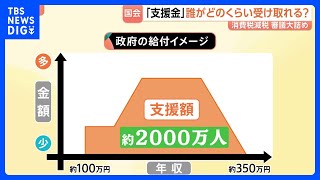
Takaichi told parliament on Monday that the government would not completely rule out issuing bonds to cover the cost of eliminating the current 8% consumption tax on food and beverages. The measure is intended to reduce household expenses as inflation continues to place pressure on consumers, but questions remain over how the government will replace the lost tax revenue.
The prime minister said her administration would seek to reduce government debt relative to gross domestic product through spending reviews and careful management of bond issuance. Her remarks reflected the difficulty of delivering tax relief while maintaining confidence in Japan's public finances, with rising government bond yields adding to concerns about borrowing costs.
The debate comes as the Bank of Japan moves toward further normalization of monetary policy. Governor Kazuo Ueda told parliament that underlying inflation was approaching the central bank's 2% target, highlighting the challenge of balancing interest rates, government spending and household purchasing power.
Takaichi's fiscal agenda is unfolding against a more difficult political backdrop following the resignation of Agriculture Minister Kazuo Yana on October 14. Yana stepped down after controversy over remarks suggesting that municipalities failing to support him politically could face reductions in road construction funding. The remarks prompted allegations of improper political pressure and raised questions about the prime minister's judgment in appointing him.
A Kyodo News survey conducted on October 17 and 18 put cabinet approval at 49.1%, the lowest since Takaichi took office in October 2025. The survey found that 57.7% of respondents believed the decision to replace Yana had come too late, while 81.5% considered his resignation appropriate.
A separate ANN survey released on October 19 showed approval falling 11.2 percentage points from September to 47.1%, with disapproval rising to 33.3%. The poll found that 76% considered Yana's resignation necessary, while 43% approved of Takaichi's handling of the affair and 38% disapproved.
However, a Fuji News Network poll released the same day reported cabinet approval at 62.6%, up from 61.6% in September, illustrating substantial differences between surveys. The contrasting results complicate efforts to measure the political impact of the controversy, although the ministerial resignation attracted widespread criticism across the polls.
The government's political position is also affected by the balance of power in parliament. Although the Liberal Democratic Party holds a two-thirds majority in the House of Representatives following its February election victory, its coalition with the Japan Innovation Party lacks a majority in the House of Councillors. This requires negotiations with opposition lawmakers to advance legislation, including the proposed food tax exemption.
The relationship between economic policy and fiscal discipline remains particularly sensitive. Government spending commitments, defense expenditure and the planned tax reduction are creating competing demands on the national budget. The administration has begun reviewing special-purpose government funds to identify possible savings, while maintaining its commitment to economic growth and investment.
Foreign relations also featured in political developments on October 19, when Takaichi made a privately funded ritual offering to Yasukuni Shrine during its autumn festival but refrained from visiting in person. LDP General Council Chairman Hiroshi Kajiyama delivered the offering on her behalf.
More than 70 lawmakers from several parties, including the LDP, Japan Innovation Party, Democratic Party for the People and Sanseito, visited the shrine together. Land, Infrastructure, Transport and Tourism Minister Tatsunori Ibayashi was among those who attended, becoming the second cabinet minister to visit during the festival.
Yasukuni Shrine honors Japan's war dead, including convicted Class-A war criminals, and visits by senior political figures have repeatedly caused diplomatic tensions with China and South Korea. Takaichi's decision not to visit personally was reported as reflecting consideration for relations with the two neighboring countries.
Relations with China remain another concern for the administration. The ANN survey found that 55% of respondents believed Takaichi should make efforts to improve relations with Beijing, compared with 35% who considered such efforts unnecessary.
Attention is also turning to the forthcoming Asia-Pacific Economic Cooperation meetings in China, which could provide an opportunity for renewed diplomatic engagement. Takaichi has indicated that she intends to attend the summit if parliamentary scheduling allows, although relations between Tokyo and Beijing remain strained.
With the government approaching the first anniversary of Takaichi's appointment as prime minister, parliamentary debate is increasingly focused on the administration's handling of ministerial accountability, the cost of living and the long-term sustainability of public spending. The next major test will be securing legislative support for the consumption tax reduction while addressing concerns about the government's fiscal plans.