News On Japan

Nearly 30% of Large Japanese Companies Report Data Leaks

TOKYO - Nearly one in three large companies in Japan have experienced a data leak or a suspected breach, according to a survey released by Teikoku Databank on October 19th, highlighting growing concerns over corporate information security as unauthorized access incidents continue to affect businesses across the country.

The survey found that 16.2% of companies overall reported having experienced an information leak or an incident in which a leak was suspected. Among large companies, the proportion rose to 30.2%. The figures include incidents caused by human error as well as cyberattacks.

The findings also revealed significant gaps in companies' ability to detect security incidents. A total of 14.8% of businesses, particularly small and medium-sized enterprises, said they did not know whether any information had been leaked.

Several respondents cited a lack of specialist personnel as the reason for their uncertainty, indicating that some businesses may be unable to identify breaches even when they occur.

Teikoku Databank emphasized the importance of establishing systems capable of detecting information leaks, particularly among small and medium-sized companies that may lack dedicated cybersecurity expertise.

The research suggests that preventing unauthorized access is only part of the challenge, with businesses also needing effective monitoring and detection systems to ensure that potential information leaks do not go unnoticed.

Source: FNN

News On Japan
POPULAR NEWS

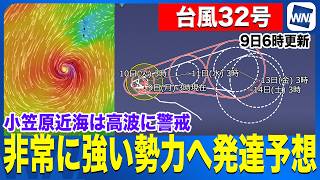
As of 6 a.m. on November 9, Typhoon No. 32 was moving northwest over waters south of Japan and north of Okinotorishima, with forecasts indicating it would intensify into a very strong typhoon by early November 10 before approaching the Ogasawara Islands later in the week.

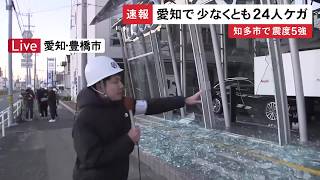
A magnitude 5.7 earthquake struck central Japan early on November 8th, registering an upper 5 on Japan's seismic intensity scale in Aichi Prefecture and injuring at least 21 people, while damaging buildings and disrupting Shinkansen and conventional railway services across the region.

The Tokaido Shinkansen resumed normal-speed operations across its entire route at 8:57 a.m. on November 8th after a magnitude 5.7 earthquake disrupted rail services across central Japan, with JR Central reporting delays to 29 bullet trains affecting approximately 17,000 passengers, while Meitetsu restored services across its entire network by 9:15 a.m. following widespread morning suspensions.

Russian President Vladimir Putin has signed a decree placing the Russian operations of Japan Tobacco (JT) under the temporary management of a local company, effectively stripping the Japanese tobacco giant of control over its business in the country and prompting a formal protest from Tokyo demanding that the measure be immediately withdrawn.

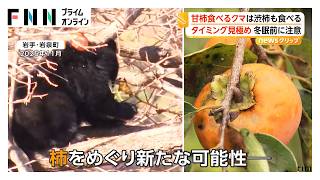
Bears preparing for winter hibernation may be able to determine when astringent persimmons have lost their bitterness and become suitable to eat, according to research by the University of Hyogo, which suggests that prioritizing the removal of sweet persimmon trees could help prevent bears from entering residential areas.

MEDIA CHANNELS
         

MORE Business NEWS

Japan's stock market is expected to open higher on Monday, November 9, after the Nikkei 225 plunged 9.25% last week to close at 57,434.77 on Friday, November 6, with a rebound in US technology shares and stronger overnight futures pointing to an initial recovery, although investors face another potentially volatile week dominated by inflation data, corporate earnings and uncertainty over the outlook for artificial intelligence investment.

Nissan Motor is stepping up efforts to revive its struggling business through new vehicle development, sweeping cost reductions and an overhaul of its sales strategy, as President and CEO Ivan Espinosa seeks to restore the Japanese automaker's competitiveness following consecutive years of massive losses.

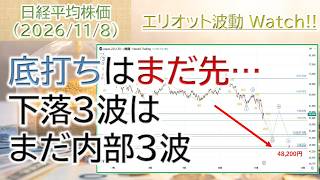
Japan's benchmark Nikkei 225 index plunged 3,643 points, or 5.96%, to close at 57,435 on Friday, November 6, 2026, marking its fifth consecutive daily decline and one of the largest point losses in its history, as a global selloff in technology stocks spread across the Tokyo market and raised concerns about the sustainability of artificial intelligence investment and corporate valuations.

Municipalities across Japan are raising the cost of designated garbage bags as waste disposal expenses increase, with one town in Hokkaido proposing a 4.5-fold price hike from 385 yen to 1,735 yen for a pack of 10 bags, while growing pressure on incineration facilities is prompting debate over whether more cities should introduce paid household garbage collection.

Japan's inflation-adjusted wages rose 2.2% in September from a year earlier, marking the ninth consecutive month of growth and the longest sustained increase in about a decade, as slower price increases helped boost workers' purchasing power.

Tokyo stocks suffered a sharp sell-off on November 6 as growing concerns over a slowdown in artificial intelligence investment sent the Nikkei 225 plunging more than 4,300 points at one stage, pushing the benchmark below the psychologically important 60,000 level following a sweeping Democratic victory in the U.S. midterm elections.

Sony Group reported a record net profit of 791.7 billion yen for the six months from April to September 2026, up 38% from a year earlier, driven by strong performance in its film business, including the worldwide success of a new installment in the Spider-Man franchise.

Tokyo's Nikkei 225 Stock Average closed at 61,077.90 on Thursday, November 5, falling 1,110.73 points, or 1.79%, from the previous session in its fourth consecutive daily decline, as heavy selling in semiconductor and artificial intelligence-related shares dragged the benchmark to its lowest closing level in about five and a half months, despite gains across much of the broader market.