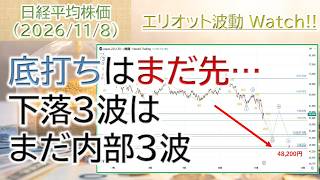
TOKYO - Japan's Nikkei 225 Stock Average closed at 64,075.42 on October 20th, falling 841.28 points, or 1.30%, as renewed selling in semiconductor and artificial intelligence-related shares, rising oil prices and concerns over inflation pushed Tokyo stocks lower for a second consecutive session.
The broader TOPIX index declined 58.27 points, or 1.43%, to 4,009.21, reflecting widespread selling across the market. Trading volume on the Tokyo Stock Exchange reached approximately 2.15 billion shares, with investors reducing exposure to technology and industrial stocks as uncertainty over corporate earnings and global interest rates continued to weigh on sentiment.
Selling pressure was concentrated in semiconductor manufacturers, electronic component suppliers and companies associated with the rapid expansion of artificial intelligence infrastructure. Investors have become increasingly cautious about whether the large capital expenditures being made by technology companies will translate into sustainable earnings growth.
The weakness in Japanese technology shares came despite a rebound in U.S. semiconductor and AI-related stocks overnight. Wall Street's Nasdaq index rose on October 19th, supported by renewed buying in major technology companies, but the recovery failed to generate similar enthusiasm in Asian markets.
South Korean technology shares also suffered substantial losses, reinforcing concerns that investors are reassessing valuations across the global semiconductor supply chain. Japan's Kioxia Holdings was among the companies affected by the regional retreat, while weakness in semiconductor materials and equipment stocks added to the Nikkei's losses.
Among individual Japanese companies, Resonac Holdings fell 10.80%, Fujikura declined 6.47%, and silicon wafer manufacturer SUMCO lost 6.30%. SoftBank Group also came under selling pressure as investors reconsidered the earnings outlook for businesses closely linked to artificial intelligence investment.
The decline was not limited to technology companies. Transportation, communications and other sectors also faced selling pressure, suggesting that concerns over higher energy costs and economic conditions were spreading beyond the companies that had driven much of the market's earlier gains.
A number of stocks nevertheless advanced against the broader decline. Entertainment company Toho gained 4.93%, while medical equipment manufacturer Terumo rose 2.84% and optical equipment maker Olympus added 2.67%, highlighting continued selective buying in companies with less direct exposure to the semiconductor investment cycle.
Higher crude oil prices presented another challenge for Japanese equities. International oil benchmarks remained elevated, with Brent crude trading around $110 a barrel, raising concerns about additional cost pressures for Japanese businesses.
As an economy heavily dependent on imported energy, Japan is particularly vulnerable to sustained increases in oil prices. Higher fuel and transportation costs can squeeze corporate profit margins while adding to household living expenses, potentially weakening consumer spending.
The combination of expensive energy, persistent inflation and uncertainty surrounding interest rates has complicated the outlook for companies preparing to report earnings in the coming weeks.
Monetary policy was another focus for investors following reports that the Bank of Japan may raise its inflation forecasts at its next policy meeting on October 30th. The central bank increased its benchmark interest rate to 1.25% in September, the highest level in 31 years, and is widely expected to leave rates unchanged this month while maintaining the possibility of further tightening.
The Bank of Japan has been balancing the need to contain inflation against the risk that higher borrowing costs could undermine economic growth. Rising energy prices have complicated that task, increasing the likelihood that inflation will remain elevated for longer than previously anticipated.
Government bond markets provided some relief during the session. Strong demand at an auction of 20-year Japanese government bonds helped push the yield down by approximately six basis points to 3.71%. The auction attracted bids equivalent to 5.84 times the amount offered, compared with 4.01 times at the previous sale, suggesting that investors remain willing to buy Japanese debt despite uncertainty over fiscal policy and interest rates.
In foreign exchange trading, the yen strengthened modestly against the U.S. dollar, moving toward 158.1 yen. The currency's recovery reflected the stronger government bond auction and a slight weakening of the dollar in international markets.
A stronger yen generally increases pressure on Japanese exporters by reducing the value of overseas earnings when converted into yen, although it can also help contain the cost of imported energy and raw materials.
Japan's steelmakers attracted selective buying as U.S. steel prices climbed toward their highest levels in approximately four and a half years. Nippon Steel and JFE Holdings were among the companies drawing investor attention, providing some support for the materials sector despite the broader market decline.
Beyond the stock market, Japan's efforts to strengthen its semiconductor industry remained a major business issue. Tokyo is preparing substantial investments in advanced manufacturing and technology, although concerns are growing over how much of the proposed spending will support domestic production rather than overseas industrial development.
Under an investment agreement with the United States, Japan has pledged $550 billion in U.S. projects, including potential investment of up to $21 billion in two semiconductor manufacturing facilities in New York in cooperation with GlobalFoundries. The arrangement has raised questions over whether Japan can simultaneously strengthen its domestic semiconductor industry and meet its overseas investment commitments.
The country's industrial supply chains also face growing uncertainty over access to critical rare earth materials. Restrictions on Chinese exports have created concerns about possible shortages of yttrium, a material used in aerospace equipment, vehicle manufacturing and semiconductor production.
Japanese officials have been seeking closer coordination with the United States to secure supplies, reflecting the increasing importance of economic security in industrial policy. Any prolonged disruption could affect production costs and investment decisions across several major manufacturing sectors.
The latest decline in Tokyo stocks extends a sharp correction from the Nikkei's October 6th closing level of 70,683.98, leaving the benchmark more than 6,600 points below that level in just two weeks. The retreat illustrates how quickly investor expectations have shifted after a period of strong gains led by artificial intelligence, semiconductor manufacturing and technology investment.
Attention is now turning to forthcoming corporate earnings, movements in oil prices and the Bank of Japan's October 30th meeting, with investors looking for clearer evidence that Japanese companies can maintain profit growth despite rising costs, higher interest rates and increasingly selective global demand for technology shares.