TOKYO - Japanese telecommunications giant KDDI announced on October 28 that it will invest 30 billion yen in physical artificial intelligence by fiscal 2030, aiming to deploy more than 1,000 autonomous robots across retail, logistics and manufacturing facilities as Japan searches for solutions to its worsening labor shortage.
Physical AI refers to technology that enables robots and other machines to perceive their surroundings, make decisions and perform physical tasks without requiring detailed instructions for every movement. Unlike conventional industrial robots programmed to repeat specific operations, these systems use artificial intelligence to respond to changing conditions in real-world environments.
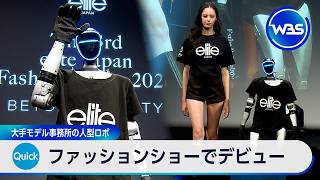
At a demonstration of the technology, a humanoid robot responded to a verbal request for a product by walking independently toward a shelf, identifying a package of cookies and using its fingers to grasp and retrieve it. The robot determined how to complete the task through its own assessment of the surroundings rather than simply following a predetermined sequence of movements.
KDDI has established a new company dedicated to physical AI, covering everything from research and development to the practical introduction of robotic systems at commercial and industrial facilities.
KDDI President Hiroji Matsuda outlined the scale of the initiative, saying the company plans to invest 30 billion yen in research and development, assemble a team of 300 specialists and supply more than 1,000 robots to retail, logistics and manufacturing operations by fiscal 2030.
The company is targeting workplaces where labor shortages have made it increasingly difficult to maintain daily operations. Potential applications include restocking shelves at convenience stores, packaging products at factories and performing repetitive handling tasks at logistics facilities.
The goal is to develop robots capable of carrying out multiple connected activities rather than performing only one narrowly defined operation.
Yuya Soneoka, president of ELYZA Robotics, highlighted this capability, saying, "One of the key features is that the robot can perform an entire sequence of tasks."
A central element of KDDI's strategy is the computing infrastructure needed to train and continually improve autonomous machines.
In January, the company launched one of Japan's largest AI-specialized data centers in Sakai, Osaka Prefecture. The facility will support the development of physical AI systems by processing information collected from robots operating in real-world environments.
Matsuda explained that the company intends to establish a continuous cycle of practical operation, data collection and AI training using the facility's graphics processing units, or GPUs, which provide the computing power needed to develop advanced artificial intelligence models.
"We will operate in Sakai and learn in Sakai," Matsuda said, explaining that practical data gathered from robotic operations will be used to train and develop AI models through the data center's GPUs, allowing the systems to undergo continuous improvements until they become reliable enough for everyday commercial use.
The approach is designed to help robots learn from actual working conditions, including unexpected obstacles, variations in product placement and the increasingly complex series of movements required in shops, warehouses and factories.
Japan's shrinking working-age population has intensified pressure on businesses to automate labor-intensive operations, particularly in retail distribution, manufacturing and logistics, where securing sufficient workers has become a persistent challenge.
While conventional automation has already been widely introduced in manufacturing, deploying robots in convenience stores and other environments where layouts, products and human activity constantly change presents considerably greater technical difficulties.
Physical AI aims to overcome these limitations by combining advanced machine learning with robotic movement, allowing machines to interpret situations and adapt their actions without requiring constant human supervision.
KDDI's investment represents a move beyond its traditional telecommunications business into the emerging market for intelligent robotic systems, combining AI development, computing infrastructure and practical deployment.
Whether the technology can operate reliably and economically outside controlled demonstrations remains a major question. However, the company's plan to introduce more than 1,000 robots by fiscal 2030 marks a significant effort to bring autonomous machines into everyday workplaces, potentially changing how Japan's convenience stores, logistics centers and factories operate in an era of chronic labor shortages.
Source: TBS