News On Japan

AI Cameras Can Now Spot Bears, Detect Falls and Warn of Flooding

NAGOYA - Surveillance cameras are entering a new era in which artificial intelligence can detect dangerous situations, alert authorities and even issue evacuation warnings automatically, with the latest technology showcased at an exhibition in Nagoya on November 18.

The exhibition brought together camera manufacturer Axis Communications and six technology partners to demonstrate advanced AI-powered monitoring systems designed for applications ranging from wildlife detection and medical care to industrial safety and disaster prevention.

One system uses AI to identify wild animals, including bears and wild boars, and automatically notify administrators when they are detected. The technology could help communities respond more quickly to wildlife entering residential areas, where encounters with bears have become an increasing concern.

Another camera demonstrated the ability to detect when a person has fallen, displaying an alert identifying the location of the incident. The system is designed for hospitals, nursing care facilities and factories, allowing staff working elsewhere to receive immediate notifications when something unusual occurs.

Disaster prevention was another major focus, particularly following the record-breaking torrential rainfall that struck Nagoya in September.

A river monitoring system demonstrated how an ordinary surveillance camera could be transformed into an automated flood warning device through AI technology.

Conventional river monitoring relies heavily on people watching camera footage and checking water levels to determine whether warnings or evacuation advisories are necessary. AI-equipped cameras can instead analyze river conditions continuously and automatically initiate responses when water reaches predetermined danger levels.

According to a developer involved in the demonstration, the system can issue an alert when a river reaches a warning threshold and automatically trigger an evacuation advisory when water rises to a level indicating a serious risk of flooding.

The technology can also be connected to speakers installed near rivers, allowing authorities to broadcast warnings telling people to stay away from dangerous areas without requiring someone to be physically present.

Similar systems have already been introduced in Taiwan and France, while demonstration projects are underway in Japan, including in Takasaki, Gunma Prefecture.

Developers say the technology could significantly reduce the burden on local authorities and emergency personnel, particularly during heavy rainfall when conditions can deteriorate rapidly and simultaneous monitoring of multiple rivers becomes difficult.

The exhibition also highlighted a broader shift in the surveillance industry, with cameras increasingly moving beyond their traditional role of recording images toward actively identifying abnormalities and initiating responses.

"We believe we are now in a transitional period from conventional surveillance cameras to AI-equipped cameras," a representative said.

As AI technology continues to advance, developers expect intelligent monitoring systems to become increasingly common across a wide range of workplaces and public facilities, extending beyond cameras to other equipment used in everyday safety management and disaster prevention.

Source: 東海テレビ ニュースONE

News On Japan
POPULAR NEWS

Japanese Prime Minister Sanae Takaichi joined U.S. President Donald Trump and the leaders of Australia and India for a Quad summit in Manila on November 17th, where Trump described the four countries' relationships as among the world's most important partnerships and drew attention to Takaichi's toughness during an exchange with reporters.

Two aircraft believed to be Russian briefly violated Japanese airspace over Okinoshima Island in Fukuoka Prefecture on November 17th before flying between Okinawa and Taiwan toward the Pacific Ocean, prompting Japan's defense minister to condemn the incursions as a serious violation of national sovereignty.

Japan's Fugaku supercomputer has been temporarily shut down following unauthorized external access to a system used to connect to the facility, raising concerns that user information may have been leaked, the Riken research institute announced on November 16th.

A 42-year-old man has been arrested on suspicion of murdering former fashion model Kanako Kawabata, 36, who was found dead in her apartment in Tokyo's Ikebukuro district in July, with investigators believing she was repeatedly beaten across her body, leaving her with severe head injuries and multiple fractured ribs.

A historic guest hall at Kodaiji Temple in Kyoto, closely associated with Nene, the wife of warlord Toyotomi Hideyoshi, has been reconstructed for the first time in approximately 240 years, restoring a lavish space once used by Hideyoshi to entertain feudal lords.

MEDIA CHANNELS
         

MORE Web3 NEWS

Surveillance cameras are entering a new era in which artificial intelligence can detect dangerous situations, alert authorities and even issue evacuation warnings automatically, with the latest technology showcased at an exhibition in Nagoya on November 18.

Kazuki Yokoyama, a 28-year-old entrepreneur from Niigata Prefecture, has been named among Forbes Japan's 30 Under 30 for 2026, earning recognition for an innovative business model that combines artificial intelligence with the acquisition and revitalization of small manufacturing companies struggling with labor shortages and a lack of successors.

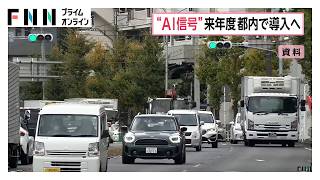
Tokyo is preparing to introduce artificial intelligence-based traffic signal control across the metropolitan area as early as fiscal 2027, using technology that predicts congestion 30 minutes in advance and adjusts traffic light timing to improve traffic flow.

Election posters featuring AI-generated faces that did not resemble the actual candidates have sparked controversy in Amagasaki, Hyogo Prefecture, after a former prefectural assembly member acknowledged that four candidates in a November 15th city council by-election had used artificial images rather than their own photographs, exposing gaps in Japan's election laws and raising questions about the use of public funds.

A humanoid robot signed to the Japanese subsidiary of Elite World, one of the world's largest modeling agencies, made its runway debut at a fashion show in Tokyo on November 16th, walking alongside human models in a presentation exploring the coexistence of humans and robots.

NTT announced on November 16th that it has developed proprietary artificial intelligence technology capable of securely identifying vulnerabilities in software programs, aiming to strengthen defenses against cyberattacks that increasingly exploit AI.

The rapid development of generative AI and AI agents is accelerating adoption across Japan's corporate sector, but a survey on the use of AI and data in businesses found that only 16.4% of respondents reported achieving clear results, highlighting a substantial gap between expectations and measurable business outcomes.

A Telegram channel often starts as a side experiment on the founder's own phone and becomes the main sales line within a year.