News On Japan

Osaka's Tsutenkaku Tower Celebrates 70th Anniversary

OSAKA - Osaka's iconic Tsutenkaku Tower celebrated the 70th anniversary of its reopening on October 28, marking seven decades since the landmark was rebuilt in 1956 as a symbol of the city's postwar recovery, while new attractions continue to draw visitors to the surrounding Shinsekai entertainment district.

The current tower, the second to stand at the site, reached its 70th birthday with commemorative merchandise, special admission offers and anniversary gifts for visitors. The milestone is known in Japan as "koki," a traditional celebration of reaching the age of 70.

From October 28 to October 30, visitors presenting a commuter pass issued by the Nankai Group can enter the observation deck free of charge, with admission limited to 1,000 people each day. The tower is also distributing commemorative magnetic sheets bearing a special 70th anniversary logo to the first 100,000 visitors.

The celebrations attracted tourists from across Japan, including a visitor from Miyagi Prefecture who described the tower as a remarkable symbol of Osaka.

Tsutenkaku's history stretches back more than a century to 1912, when the original tower was constructed with a design inspired by Paris's Arc de Triomphe and Eiffel Tower. Standing 75 meters tall, it was celebrated as the tallest structure of its kind in East Asia at the time and quickly became one of Osaka's most popular attractions.

The original tower also featured a gondola system connecting it to the neighboring Luna Park amusement park, which introduced visitors to entertainment facilities considered cutting-edge for the era. Attractions included a high-speed rotating disc ride and a roller-skating rink, still a rarity in Japan at the time.

The area's collection of unfamiliar and futuristic attractions helped establish its identity as Shinsekai, meaning "New World," reflecting the excitement surrounding what was then an unprecedented entertainment destination.

However, the original Tsutenkaku disappeared in 1943 after a fire broke out at a movie theater directly beneath the structure. The damaged tower was subsequently dismantled during World War II, leaving the district without its most recognizable landmark.

Following the war, local residents campaigned to restore the tower as part of Osaka's reconstruction. Their efforts culminated in the completion of the second Tsutenkaku in 1956, restoring a familiar symbol to the Shinsekai skyline and helping revive the surrounding neighborhood.

The tower has remained a major tourist attraction ever since, adapting to changing visitor preferences while preserving its historical significance.

One of its most successful recent additions is the Tower Slider, a 60-meter-long slide introduced in 2022 that sends visitors on a high-speed descent through a tube attached to the tower.

The attraction has helped generate renewed interest in Tsutenkaku, drawing thrill-seekers alongside tourists visiting the observation deck and surrounding shopping streets.

The slide's speed and illuminated interior have become part of its appeal, although the experience can prove more intimidating than visitors initially expect. During an anniversary demonstration, a television reporter who had confidently approached the ride became increasingly nervous after hearing screams from other participants.

The descent proved faster than anticipated, with the reporter emerging surprised by the speed and impressed by the colorful lighting inside the slide.

Reflecting on the experience, he compared the sensation to Tsutenkaku's seven decades of history, describing it as a journey that somehow felt both long and short.

Seventy years after its reconstruction, Tsutenkaku continues to combine its role as a historical landmark with new entertainment experiences, maintaining its place at the center of Shinsekai as Osaka's tourism industry evolves.

Source: YOMIURI

News On Japan
POPULAR NEWS

Japan is bracing for violent winds, blizzards and heavy snowfall from November 19 as a rapidly intensifying low-pressure system brings winter storm conditions to the Sea of Japan coast, with northern regions facing the greatest risk through the three-day holiday weekend and snow potentially reaching mountainous areas of the Kanto region.

A magnitude 5.7 earthquake struck Kumamoto Prefecture in southwestern Japan at around 2:22 a.m. on November 19th, registering a maximum seismic intensity of lower 5 on Japan's seven-point scale and shaking a wide area of Kyushu, with experts warning that further strong earthquakes could occur near a fault system affected by the devastating Kumamoto earthquake in July.

Japanese Prime Minister Sanae Takaichi held an unusually prolonged handshake with Chinese President Xi Jinping at the APEC summit in Shenzhen on November 19, speaking continuously for about 10 seconds as Xi nodded in response, while Japan sought to influence a historic three-way summit between the leaders of the United States, China and Russia scheduled for later in the day.

Japanese Prime Minister Sanae Takaichi shook hands with Chinese President Xi Jinping at the opening of the Asia-Pacific Economic Cooperation (APEC) summit in Shenzhen on November 18th, marking their first face-to-face encounter in approximately one year, although the brief exchange came after a noticeably subdued welcome for the Japanese leader compared with the elaborate receptions given to other visiting heads of state.

Two aircraft believed to be Russian briefly violated Japanese airspace over Okinoshima Island in Fukuoka Prefecture on November 17th before flying between Okinawa and Taiwan toward the Pacific Ocean, prompting Japan's defense minister to condemn the incursions as a serious violation of national sovereignty.

MEDIA CHANNELS
         

MORE Travel NEWS

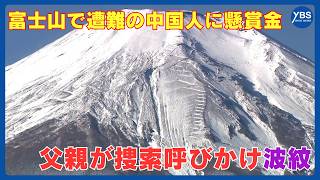
The father of a Chinese man who went missing while climbing Mount Fuji has offered a reward of approximately 12 million yen to anyone who finds his son alive, raising concerns that the substantial payment could encourage unauthorized climbers to enter the mountain during its closed season and interfere with official rescue operations.

A series of bear sightings in a residential area of Maebashi, Gunma Prefecture, on November 17th left one man injured and prompted the closure of 70 schools, while a deer spotted wandering through a neighborhood in Tokyo's Katsushika Ward was captured later in the day.

A historic guest hall at Kodaiji Temple in Kyoto, closely associated with Nene, the wife of warlord Toyotomi Hideyoshi, has been reconstructed for the first time in approximately 240 years, restoring a lavish space once used by Hideyoshi to entertain feudal lords.

JR Hokkaido has completed its new Red Star sightseeing train and unveiled its luxurious interior ahead of the start of services in early February 2027, when the four-car train is scheduled to begin operating on routes connecting Sapporo with Abashiri and Kushiro with Shiretoko-Shari in eastern Hokkaido.

Keisei Electric Railway has suspended online seat reservations for its Skyliner express service connecting central Tokyo with Narita Airport after a cyberattack potentially exposed up to 3.37 million personal information records, with no indication of when the booking system will resume operations.

Osaka Castle was illuminated in purple on November 15 to mark World Prematurity Day, raising awareness of babies born prematurely and the challenges faced by their families while showing support for medical professionals involved in their care.

Japan's tourism industry is undergoing a major shift one year after China urged its citizens to avoid traveling to Japan, with Chinese visitor numbers falling sharply and businesses in Osaka struggling to recover lost revenue, while Kyoto has successfully attracted more Western tourists through a strategy aimed at reducing its dependence on the Chinese market.

Two shrine maidens performed an elegant dance holding branches of red maple leaves in front of Nachi Falls at the World Heritage-listed Kumano Nachi Taisha shrine in Nachikatsuura, Wakayama Prefecture, on November 14, as part of an annual autumn festival expressing gratitude for the blessings of nature.