News On Japan

Record-high Bankruptcies in Japan's Food Industry

TOKYO - Japan's restaurant industry is facing a growing divide between major chains capable of adjusting their pricing strategies and smaller operators struggling to survive, with restaurant bankruptcies reaching a 30-year high as rising costs, labor shortages and declining consumer spending put pressure on businesses.

Udon restaurant chain Marugame Seimen lowered prices on five popular menu items on November 25, including its regular-sized kake udon, which fell from 440 yen to 390 yen. The move is partly aimed at preempting a potential decline in dining out following the government's planned consumption tax reduction on food products.

Conveyor-belt sushi chain Kura Sushi will raise prices on 22 menu items, including tuna and salmon, from November 27, while lowering prices on 34 items, including side dishes and beverages.

Italian-style family restaurant chain Saizeriya raised prices on approximately 80% of its menu on October 29, while reducing prices on selected items, including draft beer.

Industry experts say the strategy of simultaneously raising and lowering prices is designed to increase customer traffic while improving profitability through higher average spending per customer.

Offering selected items at lower prices can also improve a company's image by giving consumers the impression that businesses are making efforts to keep dining affordable despite rising operating costs.

Experts warn, however, that Japan's restaurant industry is increasingly becoming divided into three distinct groups.

The first consists of companies such as Saizeriya and McDonald's, whose strong brand recognition enables them to attract customers even after raising prices. The second includes operators such as Marugame Seimen, which use customer data to identify products for targeted price reductions to attract more diners.

The third group consists of businesses unable to adopt either strategy effectively, particularly independently operated restaurants that lack the financial resources, brand recognition and customer data available to major chains.

Bankruptcies in Japan's food service industry reached 514 in the first half of fiscal 2026, covering April through September, the highest level in 30 years. Rising ingredient and operating costs, combined with persistent labor shortages, have placed increasing pressure on restaurant operators.

Consumers are also feeling the effects of inflation, with consumption expenditure declining for 10 consecutive months. Survey data showed that 57.6% of respondents were cutting back on dining out because of rising prices.

Under the government's planned consumption tax reduction, the tax rate on food and beverages will be lowered to 1% from April 2027 for a two-year period, while the rate on restaurant meals will remain unchanged at 10%.

The disparity could further encourage consumers to prepare meals at home rather than dine out, placing additional pressure on restaurants already struggling to maintain customer numbers and profitability.

Prime Minister Sanae Takaichi has indicated that the government will consider measures to support the restaurant industry, including premium shopping vouchers and a possible revival of the Go To Eat dining subsidy program.

With the outlook for inflation remaining uncertain and the planned tax reduction limited to two years, attention is turning to how the government will finance and implement specific support measures to prevent further deterioration in the restaurant industry.

Source: YOMIURI

News On Japan
POPULAR NEWS

Japan is debating whether to introduce nuclear-powered submarines costing an estimated 1 trillion yen each as the government moves toward revising three key national security documents by the end of December, potentially marking a historic departure from the country's longstanding policy of restricting nuclear energy to peaceful purposes.

A 70-year-old man was fatally stabbed while working at a bicycle parking lot near a railway station in Fukuoka City on November 25th, with police later arresting a 49-year-old man on suspicion of assault in a separate incident and investigating his possible involvement in the killing.

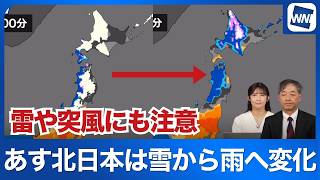
Heavy snowfall blanketed northern Japan on November 25th, with the Japan Meteorological Agency's 5 p.m. forecast indicating that snow would increasingly turn to rain across Hokkaido and Tohoku on Thursday, bringing the risk of thunderstorms and hail ahead of a weekend when many of Japan's major ski resorts are scheduled to open for the 2026-2027 winter season.

Japan's aviation industry is facing a looming pilot shortage known as the "2030 problem," with a wave of retirements threatening to reduce regional flight services and seat availability at a time when record numbers of overseas visitors are driving demand for air travel.

As autumn foliage reaches its peak across Japan's Kansai region, businesses are capitalizing on the seasonal influx of tourists, with a Kyoto rickshaw driver generating daily sales of 120,000 yen, handmade maple leaf tempura selling out within an hour in Osaka, and sightseeing vehicles at Osaka Castle Park attracting 20% more passengers than usual.

MEDIA CHANNELS
         

MORE Business NEWS

Japan's restaurant industry is facing a growing divide between major chains capable of adjusting their pricing strategies and smaller operators struggling to survive, with restaurant bankruptcies reaching a 30-year high as rising costs, labor shortages and declining consumer spending put pressure on businesses.

Japan's Nikkei Stock Average plunged 1,633 points, or 2.78%, to close at 57,012 on Wednesday, November 25, as renewed selling of artificial intelligence and semiconductor stocks erased much of the previous day's rally, while concerns over additional U.S. tariffs and unexpectedly strong domestic service-sector inflation added to uncertainty surrounding Japan's economic outlook.

Rakuten Securities announced on November 24 that asset balances held in approximately 1.68 million customer accounts had been exposed in a personal information breach, while leaked records relating to customers' self-reported annual income and assets did not contain specific monetary amounts.

日本には、贈り物をめぐる独自の作法がある。旅から戻るたびに配る「お土産」、夏に感謝を伝える「お中元」、年の瀬に届ける「お歳暮」。

Tokyo stocks rebounded sharply on November 24, with the Nikkei 225 Stock Average closing at 58,644.63 as of 3:30 p.m., up 2,207.98 points, or 3.91%, from Friday's close, as investors rushed back into artificial intelligence and semiconductor-related shares following a dramatic recovery on Wall Street.

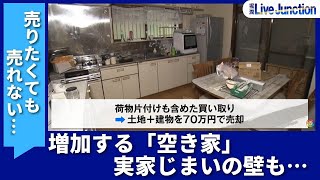
Japan's growing number of vacant homes has highlighted the difficulties families face in selling inherited properties, prompting private companies and local governments to work together to repurpose unwanted houses in line with regional needs.

Japan's annual Year-End Jumbo Lottery went on sale on November 24, offering a combined prize of 1 billion yen for the first-prize winning ticket and tickets with adjacent numbers, drawing large crowds from early morning at a lottery outlet in Tokyo's Ginza district.

Recently, videos documenting the daily lives of Japanese salarymen have been attracting millions of views on YouTube. But why are these videos attracting so many viewers, especially from the West? What is it about Japanese salarymen, compared to office workers in other Asian countries, that makes their lives so fascinating?