



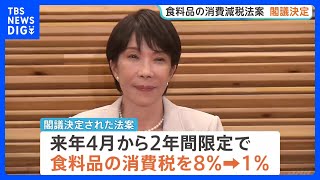
The Japanese government has approved a bill to reduce the consumption tax on food from 8% to 1% for two years beginning in April 2027, while pledging to finance the measure without issuing deficit-covering government bonds, although it has yet to specify how it will cover the estimated 10 trillion yen cost.

Japan's Maritime Self-Defense Force unveiled its latest submarine, the Shogei, at a launch ceremony in Kobe on October 8, featuring improved detection capabilities and quieter onboard systems following construction at a cost of approximately 80.5 billion yen.

The US military suspended activities by all forces stationed in Okinawa for 48 hours from noon on October 7, an unusual measure following the arrest of a US Marine in connection with a robbery and murder case that has renewed scrutiny of crimes involving American service members.

Prime Minister Sanae Takaichi defended her plan to cut the consumption tax on food and provide support payments to workers in the House of Representatives on October 7, seeking to keep household relief at the center of her autumn Diet agenda while markets continue to test the government’s fiscal credibility.

Prime Minister Sanae Takaichi has delivered her second policy speech since taking office, placing economic growth and investment at the center of her agenda as her government enters a critical period dominated by plans to cut the consumption tax on food, controversy surrounding Agriculture Minister Yanagi, and a packed diplomatic schedule in November.

Prime Minister Sanae Takaichi has strongly condemned the arrest of a U.S. Marine on suspicion of robbery and murder at a hotel in Naha, Okinawa, describing the crime as "extremely brutal and vicious," while Foreign Minister Toshimitsu Motegi summoned U.S. Ambassador to Japan George Glass to lodge a formal protest and demand measures to prevent similar incidents.