News On Japan

Is Japan's Tap Water Safe? The Unavoidable Challenges of PFAS

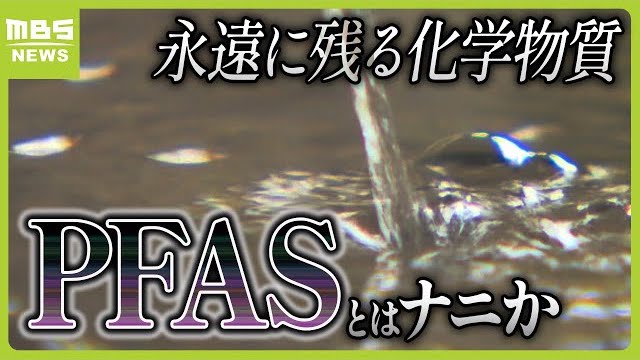
TOKYO - The Japanese government has requested all water utility companies to report the results of water quality tests by the end of September regarding the organic fluorine compound "PFAS." But what exactly is PFAS, and is Japan's tap water safe? Based on interviews with Koji Harada, an associate professor at Kyoto University, we delve into the topic.
Is Japan's Tap Water Safe? The Unavoidable Challenges of PFAS

PFAS is a term unfamiliar to many, but it refers to a group of over 4,700 synthetic chemicals created by humans, not found in nature. These chemicals have been used for various applications, such as non-stick coatings on frying pans and water repellents for clothing. Although not all PFAS are harmful, two types, PFOS and PFOA, are known to pose health risks and are banned by international treaties. However, many others remain under scrutiny.

One of the primary concerns with PFAS is their persistence in the environment and the human body. PFAS do not break down easily, with some taking up to 100 years to reduce by half. This persistence means they can accumulate in the body over time, potentially leading to health issues such as reduced birth weight and decreased vaccine efficacy. The Japanese Food Safety Commission has indicated that these chemicals might affect cholesterol levels and arterial health, similar to findings in other countries.

Despite the potential health risks, PFAS are still detected in various environments, including water sources worldwide. The chemicals can spread through water and air, reaching distant locations. This widespread presence has led to global efforts to address and regulate PFAS use and disposal.

In Japan, recent guidelines have set a safe daily intake limit for PFOS and PFOA at 20 nanograms per kilogram of body weight. For a person weighing 60 kilograms, this translates to a maximum of 1,200 nanograms per day. The government has also established a target concentration for drinking water at 50 nanograms per liter, which is relatively higher than the limits set by Germany and the United States.

To mitigate exposure, consumers are advised to check water quality reports from their local water utilities and consider using water filters. However, boiling water is ineffective against PFAS, and only certain types of activated carbon filters can reduce these chemicals.

The issue of PFAS contamination highlights the challenges in balancing industrial benefits with environmental and public health. As more data emerges, stricter regulations and safer alternatives are likely to be developed. In the meantime, public awareness and precautionary measures are essential to safeguard health and the environment.

Source: MBS

News On Japan
POPULAR NEWS

Typhoon No. 7 (Mekkhala) was continuing north with very strong intensity as of 6 p.m. on June 22, with forecasters warning that a rainy-season front already stalled near Japan and a newly formed tropical depression to the south could combine to increase the risk of heavy rain in western and eastern Japan while making the typhoon’s track after the weekend highly uncertain. The immediate concern is not only the typhoon itself, but the way its warm, moist air is expected to interact with the rainy-season front near Japan. Even if the main body of the storm remains some distance away, moisture drawn northward around the typhoon could flow into the front and make rain clouds more active, creating conditions for heavy rain or prolonged rainfall.

Japan will begin a new system on June 23 to sell paint and thinner directly from manufacturers to construction firms and other businesses, aiming to ease supply bottlenecks and curb price increases as worsening conditions in the Middle East make such materials harder to obtain.

Three bear cubs were spotted climbing a tree in Hirogawa, Wakayama Prefecture, on the morning of June 22, prompting the town to put up warning signs and call on residents to stay alert, although no injuries or damage have been reported.

Mosquitoes are appearing earlier than usual this year, raising fears of a major summer outbreak as experts warn that warm May weather and repeated light rain have created ideal breeding conditions across residential areas.

Bear attacks and sightings are increasing across Japan, with multiple people injured on June 17 and experts warning that bears are becoming more accustomed to human environments, potentially leading to more dangerous and unpredictable encounters in the years ahead.

MEDIA CHANNELS
         

MORE Sci-Tech NEWS

The KAGRA gravitational-wave research facility in Kamioka, Hida, Gifu Prefecture, was opened to the public on June 20 for the first special viewing in nine years, giving 200 visitors a rare chance to tour the underground observatory with Nobel laureate Takaaki Kajita.

Mosquitoes are appearing earlier than usual this year, raising fears of a major summer outbreak as experts warn that warm May weather and repeated light rain have created ideal breeding conditions across residential areas.

New cases of hand, foot and mouth disease in Fukuoka Prefecture remained at alert level for the third consecutive week, prompting the prefectural government to urge residents to take preventive measures against the infection, which spreads through droplets and physical contact.

A Japanese startup is seeking to transform manufacturing inspections with a world-first lighting technology that eliminates reflected light, making previously hidden defects, contaminants, and irregularities visible to the human eye.

You likely interact with Japanese innovation daily without realizing it. Walk through any modern facility, and you encounter systems where hardware and software fuse flawlessly.

Toyota Motor will establish a next-generation technology research hub on the site of a former leisure complex in Toyota City, Aichi Prefecture, as part of its efforts to accelerate innovation in future mobility and related fields.

Japan's H3 Rocket No. 6 lifted off from the Tanegashima Space Center in Kagoshima Prefecture at 9:53 a.m. on June 12, marking the first launch in about six months since the failure of H3 Rocket No. 8 and a critical step toward the full resumption of operational flights.

Weeds, often seen as symbols of toughness and perseverance, may in fact survive not because they are strong, but because they have developed highly efficient strategies that avoid unnecessary competition and maximize their chances of reproduction, according to recent research.