News On Japan

Alleged abuse of national health insurance system sparks probe into foreign patients

Jul 16, 2018 (Japan Times) - The government has launched a nationwide probe into allegations that foreign residents are abusing the public health insurance system, according to sources familiar with the matter.

The Health, Labor and Welfare Ministry is checking with municipalities to investigate cases involving foreign visitors who inappropriately acquired residential status to make themselves eligible for public health insurance so they can skirt costly medical fees, the sources said.

The ministry will compile the findings this autumn and discuss prevention steps. The insurance system was not originally designed to take into account a time when foreign people would be receiving medical services.

Japan had about 2.56 million foreign residents at the end of 2017, a number that has climbed every year since 2013, according to the Justice Ministry. Nearly half are Chinese and South Koreans, at 29 percent 18 percent, respectively, with Vietnamese and Filipinos following at 10 percent each.

The national health insurance program requires that policyholders shoulder 30 percent of their medical costs, in principle. The remainder is covered by the policy, which is funded by the payment of monthly premiums.

By taking advantage of the benefits of a special Japanese scheme for exorbitant medical bills that caps the size of monthly payments, policyholders can reduce the cost of expensive treatments by several tens of thousands of yen a month.

A Chinese man in his 60s made himself one such beneficiary of the scheme.

Shortly after coming to Japan, the man visited a hospital in Tokyo last summer, accompanied by his son, who resides here. The man was listed as a dependent, thus entitling him to health insurance benefits.

After undergoing surgery and postoperative chemotherapy, his medical bill came to ¥3 million. But thanks to the special scheme, he only paid ¥80,000 and promptly returned to China, leaving the insurance system to pay the rest.

Experts believe such practices, whereby people who have never paid insurance premiums can receive expensive medical treatment on the cheap, hurt the public health insurance system.

News On Japan
POPULAR NEWS

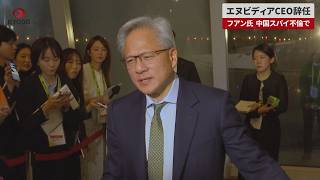
The resignation of Nvidia CEO Jensen Huang on November 12 following allegations involving a woman suspected of links to Chinese intelligence has raised concerns in Japan over the potential impact on semiconductor investment, financial markets and the yen, as uncertainty surrounding the American AI chipmaker threatens to disrupt the global technology industry.

Japan launched a new national disaster management agency on November 2nd to strengthen its response to major emergencies, just days before a powerful earthquake struck Aichi Prefecture, injuring 24 people and renewing concerns over the possibility of a catastrophic Nankai Trough earthquake.

Russia's Foreign Ministry on November 11 defended the government's unilateral decision to place the local subsidiary of Japan Tobacco (JT) under the management of a Russian company, describing the move as a countermeasure against what it called Japan's "blatantly hostile actions."

East Japan Railway (JR East) announced on November 10th that it will introduce touch-free ticket gates at 40 stations, including every station on Tokyo's Yamanote Line, from spring 2028, allowing passengers using Mobile Suica to pass through without taking their smartphones out of their pockets or bags.

Japan's Children and Families Agency unveiled its first national guidelines on November 10th for parental involvement in children's internet use, dividing those aged 0 to 18 into six developmental stages as the government considers tighter regulations on social media platforms to protect young people from online bullying, exploitation, and other growing risks.

MEDIA CHANNELS
         

MORE Society NEWS

An anti-organized crime convention was held in Osaka City, bringing together police, government officials, and business representatives to reaffirm their commitment to eliminating organized crime groups, as authorities warned that shrinking yakuza organizations are increasingly cooperating with loosely organized criminal networks involved in fraud and robbery.

Tokyo police have raided two establishments in Shinjuku's Kabukicho entertainment district suspected of repeatedly overcharging customers brought in by foreign street touts, with investigators believing the businesses were targeting international tourists visiting Japan.

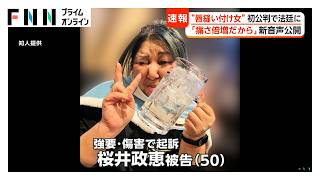
A 50-year-old woman accused of forcing her housemate to sew her own lips shut with a needle and thread admitted all charges at her first court hearing on November 11th, as prosecutors played disturbing audio recordings of the threats used to coerce the victim during an incident in Koga, Ibaraki Prefecture, in June 2026.

A 26-year-old woman from Nagoya has been arrested on suspicion of defrauding men by encouraging them to develop romantic feelings for her before repeatedly requesting money, with 13 men reporting losses totaling approximately 30 million yen in a scheme resembling the notorious "Itadaki Joshi" romance fraud case.

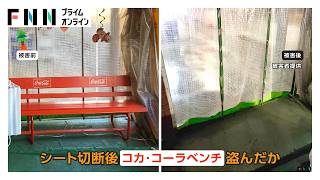
A rare red Coca-Cola bench was stolen from outside a prepared-food shop in Nagareyama, Chiba Prefecture, in the early hours of October 24th, with the owner suspecting the thieves intended to resell the collectible item to enthusiasts after similar benches were found listed online for as much as 180,000 yen.

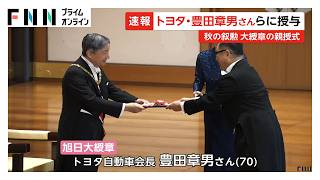
Emperor Naruhito presented prestigious Grand Cordon decorations to Toyota Motor Chairman Akio Toyoda and other recipients of Japan's autumn honors at a ceremony held at the Imperial Palace on November 10th, recognizing their longstanding contributions to the country and society.

A 26-year-old yakuza member suspected of sending young women he met in Tokyo's Kabukicho entertainment district to Cambodia to work as telephone scammers has been arrested for the eighth time, this time on suspicion of conspiring with two women to defraud a man in his 30s of 9.5 million yen.

A 31-year-old Chinese national has been arrested in Tokyo on suspicion of operating an illegal mobile phone base station that forced more than 10,000 smartphones onto a 2G network in less than two hours, allowing phishing messages to be sent to unsuspecting users in busy shopping districts including Ginza, Shinjuku and Shibuya.