News On Japan

At long last, 11-member Pacific trade deal takes effect

Dec 30, 2018 (Japan Times) - The 11-member Comprehensive and Progressive Agreement for Trans-Pacific Partnership trade pact entered into force on Sunday, creating a free trade area covering more than a tenth of the global economy.

The trade deal, signed in March, will cut tariffs on agriculture and industrial products, ease investment restrictions and enhance protection of intellectual property.

The 11 countries hope that the CPTPP will serve as a counter to growing protectionism as China and the United States engage in a trade war.

The U.S. had been a member of the original pact but Washington withdrew just days into the administration of President Donald Trump.

Australia, Canada, Japan, Mexico, New Zealand and Singapore became the first six members to ratify the pact, setting the stage for its entry into force.

Vietnam is expected to complete its domestic procedures in January.

The CPTPP accounts for 13 percent of the world’s gross domestic product and provides access to an economic bloc of 500 million people.

The participating nations will scrap tariffs on most products.

Japan, for its part, will eliminate import duties on 95 percent of items, with some key sectors such as rice and beef continuing to receive a certain level of protection.

Still, consumers will be able to buy imported beef and other food items at much cheaper prices while manufacturers can boost exports with the elimination of tariffs.

Automakers, for example, will see Canada reducing its 6.1 percent tariff on imported passenger cars to zero in five years.

Source: ANNnewsCH

News On Japan
POPULAR NEWS

The resignation of Nvidia CEO Jensen Huang on November 12 following allegations involving a woman suspected of links to Chinese intelligence has raised concerns in Japan over the potential impact on semiconductor investment, financial markets and the yen, as uncertainty surrounding the American AI chipmaker threatens to disrupt the global technology industry.

Japan launched a new national disaster management agency on November 2nd to strengthen its response to major emergencies, just days before a powerful earthquake struck Aichi Prefecture, injuring 24 people and renewing concerns over the possibility of a catastrophic Nankai Trough earthquake.

Russia's Foreign Ministry on November 11 defended the government's unilateral decision to place the local subsidiary of Japan Tobacco (JT) under the management of a Russian company, describing the move as a countermeasure against what it called Japan's "blatantly hostile actions."

East Japan Railway (JR East) announced on November 10th that it will introduce touch-free ticket gates at 40 stations, including every station on Tokyo's Yamanote Line, from spring 2028, allowing passengers using Mobile Suica to pass through without taking their smartphones out of their pockets or bags.

Japan's Children and Families Agency unveiled its first national guidelines on November 10th for parental involvement in children's internet use, dividing those aged 0 to 18 into six developmental stages as the government considers tighter regulations on social media platforms to protect young people from online bullying, exploitation, and other growing risks.

MEDIA CHANNELS
         

MORE Society NEWS

An anti-organized crime convention was held in Osaka City, bringing together police, government officials, and business representatives to reaffirm their commitment to eliminating organized crime groups, as authorities warned that shrinking yakuza organizations are increasingly cooperating with loosely organized criminal networks involved in fraud and robbery.

Tokyo police have raided two establishments in Shinjuku's Kabukicho entertainment district suspected of repeatedly overcharging customers brought in by foreign street touts, with investigators believing the businesses were targeting international tourists visiting Japan.

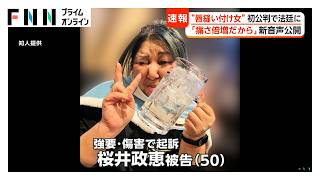
A 50-year-old woman accused of forcing her housemate to sew her own lips shut with a needle and thread admitted all charges at her first court hearing on November 11th, as prosecutors played disturbing audio recordings of the threats used to coerce the victim during an incident in Koga, Ibaraki Prefecture, in June 2026.

A 26-year-old woman from Nagoya has been arrested on suspicion of defrauding men by encouraging them to develop romantic feelings for her before repeatedly requesting money, with 13 men reporting losses totaling approximately 30 million yen in a scheme resembling the notorious "Itadaki Joshi" romance fraud case.

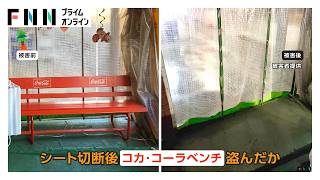
A rare red Coca-Cola bench was stolen from outside a prepared-food shop in Nagareyama, Chiba Prefecture, in the early hours of October 24th, with the owner suspecting the thieves intended to resell the collectible item to enthusiasts after similar benches were found listed online for as much as 180,000 yen.

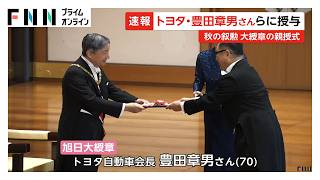
Emperor Naruhito presented prestigious Grand Cordon decorations to Toyota Motor Chairman Akio Toyoda and other recipients of Japan's autumn honors at a ceremony held at the Imperial Palace on November 10th, recognizing their longstanding contributions to the country and society.

A 26-year-old yakuza member suspected of sending young women he met in Tokyo's Kabukicho entertainment district to Cambodia to work as telephone scammers has been arrested for the eighth time, this time on suspicion of conspiring with two women to defraud a man in his 30s of 9.5 million yen.

A 31-year-old Chinese national has been arrested in Tokyo on suspicion of operating an illegal mobile phone base station that forced more than 10,000 smartphones onto a 2G network in less than two hours, allowing phishing messages to be sent to unsuspecting users in busy shopping districts including Ginza, Shinjuku and Shibuya.