News On Japan

Japan auto companies triple Mexican pay rather than move to US

Jun 28, 2020 (Nikkei) - The new North American free trade agreement that goes into effect Wednesday was touted by U.S. President Donald Trump as an engine of American job creation. But Japan's automakers are largely opting instead to keep operations in place and pay Mexican workers more or even just pay tariffs.

The US-Mexico-Canada Agreement requires 40% or more of parts for each passenger vehicle be manufactured by workers who are paid at least $16 per hour as a condition to make them tariff free in the region. Trump hailed that feature as a way to boost production in the U.S., which has a higher hourly rate than Mexico.

However, this looks to be wishful thinking. The ratio of US-Canada parts among Mexican-assembled vehicles sold in the U.S. was 13.5% in 2018, according to the U.S. Department of Transportation Highway Traffic Safety Administration. Trump's theory was that U.S. production would inevitably increase to meet the 40% requirement, but Japanese automakers, which had already positioned their production bases according to the old NAFTA regime, are not simply willing to pull up stakes and redeploy.

One reason is the cost of moving production. Honda Motor-affiliated parts maker Keihin will raise the hourly wage of employees at a factory in Mexico to $16 by next month -- triple the average rate of a parts factory in Mexico, but still cheaper than making a move. Because the pandemic has hurt earnings, the cost of the moving production will likely be too burdensome over the foreseeable future.

Auto component maker Piolax, will also raise the hourly wage at its Mexican plant to $16 within the year. The company is also installing robots to mitigate rising labor costs, President Yukihiko Shimazu said.

Toyota Motor, which built a new plant in Mexico in 2015, is not finding it easy to change plans either. The new plant started full-scale production of pickup trucks in February. The trucks are popular in the U.S. and would be subject to a 25% tariff if they do not meet the content requirements of the USMCA. But if Toyota does not operate the factory, it cannot recover its investment.

News On Japan
POPULAR NEWS

Northern Japan experienced record-breaking cold on the morning of November 11th, with temperatures plunging to minus 20.2 degrees Celsius in Horokanai, Hokkaido, marking the first time in Japan's recorded history that temperatures have fallen below minus 20 degrees during the first half of November.

East Japan Railway (JR East) announced on November 10th that it will introduce touch-free ticket gates at 40 stations, including every station on Tokyo's Yamanote Line, from spring 2028, allowing passengers using Mobile Suica to pass through without taking their smartphones out of their pockets or bags.

Japan's Children and Families Agency unveiled its first national guidelines on November 10th for parental involvement in children's internet use, dividing those aged 0 to 18 into six developmental stages as the government considers tighter regulations on social media platforms to protect young people from online bullying, exploitation, and other growing risks.

As of 3 a.m. on Wednesday, November 11, Typhoon No. 32 was moving east-northeast over waters east of Chichijima in the Ogasawara Islands, gradually heading away from the Japanese archipelago after passing near the island between late Tuesday night and early Wednesday morning.

Odakyu Electric Railway unveiled images of its next-generation Romancecar limited express train on November 10, revealing a striking blue-green design featuring enormous circular windows that will allow passengers to enjoy panoramic views from ceiling to floor when the new trains enter service in March 2029.

MEDIA CHANNELS
         

MORE Society NEWS

A 26-year-old woman from Nagoya has been arrested on suspicion of defrauding men by encouraging them to develop romantic feelings for her before repeatedly requesting money, with 13 men reporting losses totaling approximately 30 million yen in a scheme resembling the notorious "Itadaki Joshi" romance fraud case.

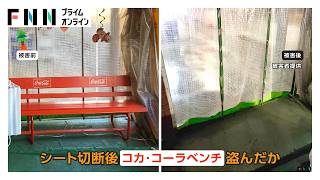
A rare red Coca-Cola bench was stolen from outside a prepared-food shop in Nagareyama, Chiba Prefecture, in the early hours of October 24th, with the owner suspecting the thieves intended to resell the collectible item to enthusiasts after similar benches were found listed online for as much as 180,000 yen.

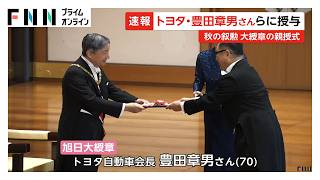
Emperor Naruhito presented prestigious Grand Cordon decorations to Toyota Motor Chairman Akio Toyoda and other recipients of Japan's autumn honors at a ceremony held at the Imperial Palace on November 10th, recognizing their longstanding contributions to the country and society.

A 26-year-old yakuza member suspected of sending young women he met in Tokyo's Kabukicho entertainment district to Cambodia to work as telephone scammers has been arrested for the eighth time, this time on suspicion of conspiring with two women to defraud a man in his 30s of 9.5 million yen.

A 31-year-old Chinese national has been arrested in Tokyo on suspicion of operating an illegal mobile phone base station that forced more than 10,000 smartphones onto a 2G network in less than two hours, allowing phishing messages to be sent to unsuspecting users in busy shopping districts including Ginza, Shinjuku and Shibuya.

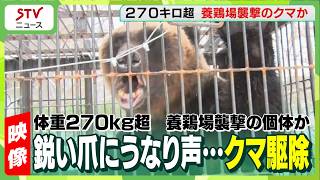
A male bear weighing approximately 270 kilograms was killed by hunters in Iwamizawa, Hokkaido, on November 8th after being caught in a box trap, with local hunters suspecting it was responsible for a series of attacks on a nearby poultry farm that left more than 100 chickens and ducks dead since August.

Princess Aiko, the only daughter of Emperor Naruhito and Empress Masako, attended an event in Tokyo aimed at raising awareness and encouraging support for crime victims and their families, becoming the first member of the Imperial Family to participate in the gathering.

Police across Japan are struggling to contain a rapidly spreading social media trend known as "Shorinji Racing," in which children and teenagers shout "Shorinji" outside police stations and police boxes before running away, with Osaka police recording approximately 280 related incidents and taking around 50 minors aged between 7 and 16 into protective custody or questioning them.