News On Japan

The Dangers of 'Kotatsu' Fires: What You Need to Check Now to Protect Your Life

TOKYO, Jan 22 (News On Japan) - Kotatsu, a traditional Japanese heating appliance, is generally considered safe as it does not use direct flames or gas. However, fatal accidents occur every year. Here are some tips to use kotatsu safely.
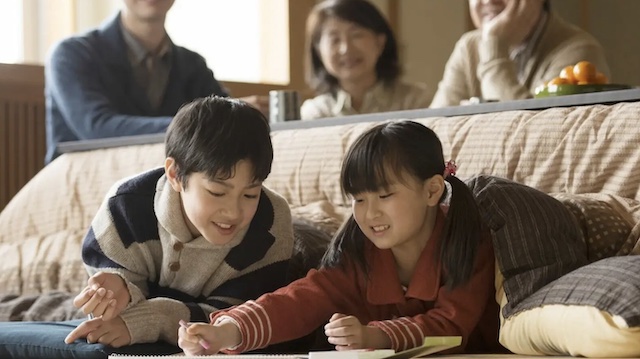
Q: Is it true that people can die from using a kotatsu? Q: "I use my kotatsu throughout the winter. I've been told that kotatsus can be dangerous if not used safely, even though I think they are much safer than stoves or heaters. What should I be cautious about?"

A: Every year, there are fires that result in fatalities. Do not become complacent with familiarity, and make sure to check how you use it. Although kotatsu is a highly safe and convenient heating appliance, it's important to be aware of the dangers it poses, such as "low-temperature burns," "dehydration," and "accidents."

Infants, the elderly, and even adults who fall asleep in a kotatsu after drinking alcohol are at risk of low-temperature burns and dehydration. The potential for accidents is often overlooked, but injuries and accidents can occur if the tabletop shifts, the cord gets tangled, or the kotatsu futon accidentally covers someone's face.

Tragically, there are indeed people who lose their lives every year. The most critical concern is residential fires caused by kotatsu. Between fiscal year 2004 and 2009, there were 179 accidents related to kotatsu, resulting in 27 deaths. Reports indicate that 70% of the deceased were over 60 years old (according to a report by the National Institute of Technology and Evaluation (NITE), Tokyo). The Consumer Affairs Agency's report for fiscal year 2021 on "Number of Fires by Type and Cause" shows that out of the building fires in one year, 47 were caused by kotatsu.

It may be basic, but because a fire can be life-threatening, it's crucial not to be overconfident in its safety and to check if you're using it safely. Ensure the following:

- No cushions or clothing are inside the kotatsu. - No furniture is pressing down on the kotatsu's power cord. - The kotatsu heater is not collecting dust. - The power is not left on when the kotatsu is not in use.

Adhering to these safe usage practices is essential. Deaths caused by kotatsu can be prevented by avoiding fires.

Source: MDPR

News On Japan
POPULAR NEWS

Kyoto City significantly raised its lodging tax from March 1st, increasing the maximum charge per person per night from 1,000 yen to as much as 10,000 yen, in a move aimed at tackling overtourism and funding the preservation of cultural assets, even as questions remain about its impact on visitors and the local economy.

A former emergency responder and foreign tourists worked together to rescue a woman in her 80s who was trapped inside an overturned light vehicle in Hakuba Village, Nagano Prefecture.

Tokyo Metro and Toshiba have launched Japan’s first demonstration test allowing passengers to pass through ticket gates without touching them by using their smartphones’ Bluetooth function.

The admission fee for the World Heritage-listed Himeji Castle in Himeji, Hyogo Prefecture, was revised on March 1st for the first time in 11 years, introducing a dual pricing system that significantly raises costs for visitors from outside the city.

An eight-year-old Australian girl died after a snowmobile overturned in Hakuba Village, Nagano Prefecture, at around 11 a.m. on February 28th, with authorities investigating the cause of the accident.

MEDIA CHANNELS
         

MORE Education NEWS

With company information sessions for university students set to graduate next spring opening in March, Japan’s job-hunting season has entered full swing, once again unfolding under what is widely seen as a candidate-driven seller’s market.

Murai Masayoshi, known professionally as Muramasa and described as a Reiwa-era ukiyo-e artist, has drawn attention for his distinctive “ukiyo-e-style portraits” that depict contemporary figures in the manner of Japan’s Edo period.

In the Keihoku district on the northern edge of Kyoto City, a free school operating out of a former elementary school has become a sanctuary for children who struggle to attend regular classes, offering not only a second chance at learning but also a place of emotional safety for both students and their parents.

A proposed ordinance in Otsu, western Japan, that would effectively lower salaries for public kindergarten teachers by aligning them with the lower pay scale of nursery staff has drawn strong backlash, with a citizens’ group submitting more than 8,000 signatures to the Otsu City Council chair on February 26th calling for a review of the plan.

The financial burden of Japan’s competitive junior high school entrance exams is coming under renewed scrutiny, with a popular manga series offering a lens through which to examine whether the process delivers value for families willing to spend heavily in pursuit of academic success.

In recent years, awareness of reproductive health has expanded significantly across Japan.

In this professional critique, I demonstrate how subtle changes in shadow, color temperature, and value contrast can transform flat shapes into convincing three-dimensional form. (Watercolor by Shibasaki)

Around 16,500 students travel to Ireland each year to study English. In this report, 34 students from Immaculate Heart University in Kagoshima, Japan, spend a month in Dublin attending classes at the Language Centre of Ireland on Grafton Street , the third group from their university to do so. (TRNGL)