



Japan's expansion of effectively free high school tuition is giving families greater freedom to choose between public and private schools, but the policy is also accelerating a shift toward private education, leaving many public schools short of students and raising concerns that new forms of educational inequality are emerging.

Tokyo's Adachi Ward will begin testing a digital screening system in September to identify students at risk of suicide, as schools strengthen prevention efforts during the period following the summer vacation, when child suicides are particularly high.

A total of 348 recruits who joined the Japan Maritime Self-Defense Force in April completed about five months of basic training in Maizuru and departed for units across Japan after a graduation ceremony.

A series of cases involving foreign substances being placed in personal water bottles at workplaces and schools has raised concerns over drink safety in Japan, driving demand for bottles that can only be opened using a registered fingerprint and prompting schools to strengthen measures against tampering.

A photo exhibition documenting the devastation caused by the 2024 Noto Peninsula earthquake and subsequent heavy rain disasters is being held in Osaka.

An unofficial website that allows South Koreans to check whether their ancestors were considered collaborators during Japan's colonial rule is rapidly gaining users, fueling online scrutiny of family histories and attacks on descendants even as public sentiment toward Japan has reached its highest level since surveys began.
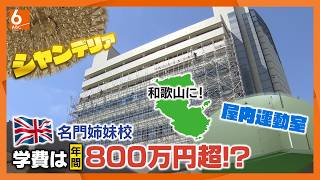
A Japanese sister school of Britain's prestigious Gordonstoun School, whose alumni include King Charles III and his father Prince Philip, is scheduled to open in Wakayama city in September 2027 as a fully residential international school charging annual tuition of about 8 million to 10 million yen.

As Japan's summer vacation enters its final weeks, concern is growing over an "experience gap" that leaves children from single-parent and financially struggling households with fewer opportunities for travel, leisure and other activities that can shape their development.