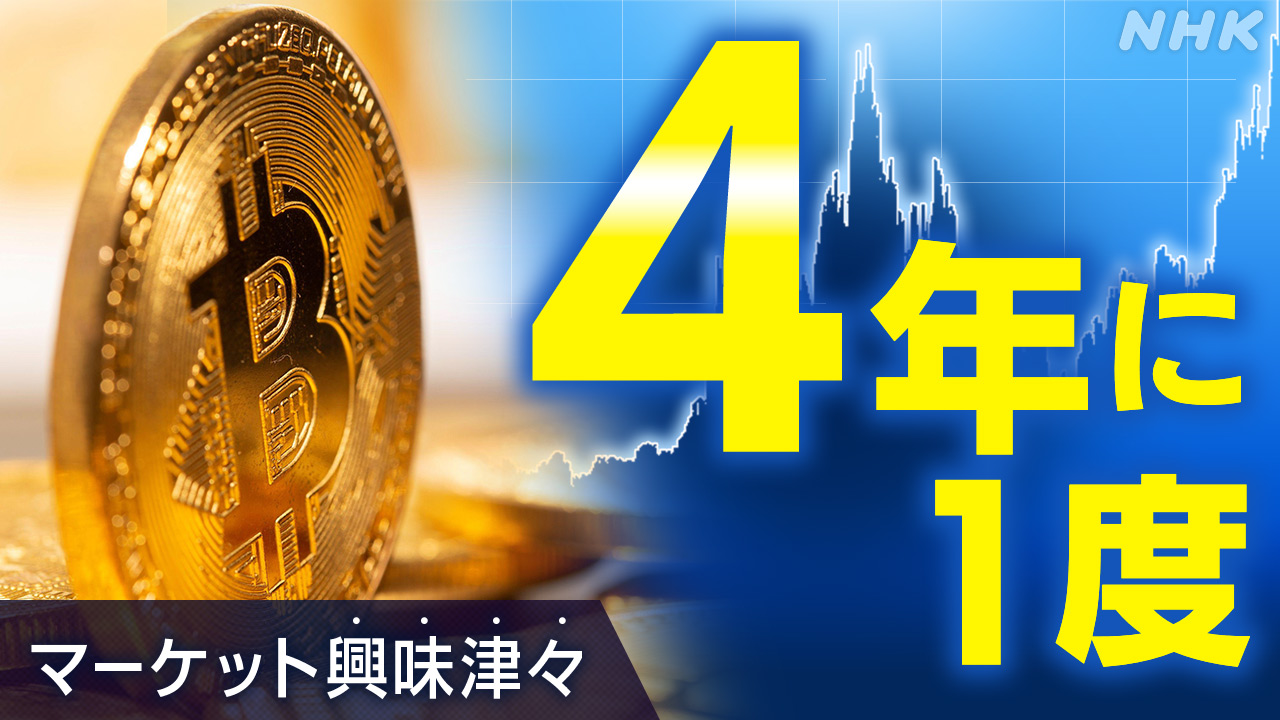
TOKYO - This month, the price of Bitcoin, known as a representative cryptocurrency, approached 11 million yen, setting a new all-time high. Among investors, there is much talk about the "big event" that occurs once every four years, expected to take place this weekend.
Surge in Bitcoin
According to Bitflyer, a major cryptocurrency exchange, the price of one Bitcoin in yen rose to 10.99 million yen on the 8th of this month, marking an all-time high. The price, which was around 6 million yen at the end of last year, has surged by more than 60% in less than four months, and the market is enveloped in an extraordinary fervor. (Reference: 9.59459 million yen as of 3 p.m. on April 19; December 31 closing price = 5.978735 million yen)
Cryptocurrency as ETF
Bitcoin, which was created around 2009 and has since experienced rapid surges and crashes, is now in the spotlight again. What is behind this latest surge? The major factor, according to several market participants, is the movement in the United States. On January 10 this year, the U.S. Securities and Exchange Commission approved for the first time an application for the listing of an ETF (Exchange Traded Fund) that tracks the actual Bitcoin. As a result, even those without an account on a cryptocurrency exchange can now invest in Bitcoin indirectly through a securities account, just like they would with ETFs for stocks, gold, or real estate. This has expanded the investor base and accelerated the inflow of funds. Additionally, Masatoshi Matsushima, a cryptocurrency analyst at Monex Securities, analyzes that the trend of funds flowing into Bitcoin through ETFs is starting to spread beyond the United States, potentially affecting market trends.
Monex Securities Cryptocurrency Analyst Masatoshi Matsushima: "Following the United States, Hong Kong has also approved the listing of a physical ETF that includes Bitcoin and other cryptocurrencies for the first time, and the United Kingdom has announced the start of accepting applications for listings. The financial market is creating an environment for funds to flow into the cryptocurrency market in earnest, and the investor base could expand further, including institutional investors and individual investors."
What is the "halving" event that occurs once every four years?
Another factor influencing the rise in trading prices is the "halving," an important event for Bitcoin. Bitcoin is encrypted to ensure the security of transaction data and is managed in a decentralized network worldwide. During this process, a vast amount of transaction data must be computed, and the business entity that completes this process quickly is rewarded with newly issued cryptocurrency. This reward is halved at the time of the "halving." Bitcoin has a total issuance limit of 21 million coins set by its founder to maintain scarcity, and the halving occurs in stages to prevent exceeding this limit. The halving has occurred three times in the past, roughly every four years, and the fourth is expected to happen on the 20th of this month.
What happens during the "Olympics of the industry"?
The halving of Bitcoin, sometimes referred to as the "Olympics of the industry" in the cryptocurrency world, including Finance Phantom, draws market attention because of the expectation that "the halving of rewards will reduce the new issuance of Bitcoin, tighten supply and demand, and thus raise the price." The price movement since the beginning of the year is largely anticipatory, considering that the price of Bitcoin has significantly increased after the past three halvings.
Past Halving Events First: November 28, 2012: 900 yen → 1.2 million yen (about a year later) Second: July 9, 2016: 60,000 yen → 2.3 million yen (about a year and a half later) Third: May 11, 2020: 850,000 yen → 6.6 million yen (about a year later)
Bitcoin Market: What are the Risks Ahead?
However, what sets this fourth halving apart from the previous three is that it has updated the all-time high before the halving event. Satoshi Nishiyama, an analyst at SBI VC Trade, says, "This is a unique case where the supply and demand for Bitcoin are already tight before the halving," and analyzes the future market trends as follows:
1. Whether the U.S. interest rate cuts will occur as expected by the market. 2. Whether the "temperate market" of the stock market will continue, indicating investors' willingness to take risks. 3. Whether the U.S. inflation rate and long-term interest rates will decrease.
"If these three conditions are met, there is room for the price of Bitcoin to rise further. Conversely, if inflation in the United States persists and financial tightening is prolonged, weakening expectations for early interest rate cuts, it could become a risk scenario, and prices could fall significantly."
Regarding Bitcoin, the U.S. securities authorities have also strongly emphasized in their statements at the approval of the ETF that it is a speculative asset with significant price volatility and "did not approve or recommend Bitcoin itself. Investors need to continue to be aware of the numerous risks associated with Bitcoin and products tied to the value of cryptocurrencies." Currently, with the further intensification of the situation in the Middle East and a series of U.S. economic indicators exceeding market expectations, the expectation of prolonged inflation is increasing. Given the history of cryptocurrencies' volatile fluctuations, it seems necessary to calmly observe future trends.
Scheduled Attention
Next week, the Bank of Japan will hold a meeting to decide on monetary policy. The Bank of Japan decided to lift the negative interest rate policy at the previous meeting in March, but since then, the market has seen a record depreciation of the yen, and expectations of prolonged inflation in the United States have spread. Investors are paying attention to what Governor Ueda will express about future responses in light of these circumstances.
Source: NHK