News On Japan

Sake Makers Run Out of Bottles

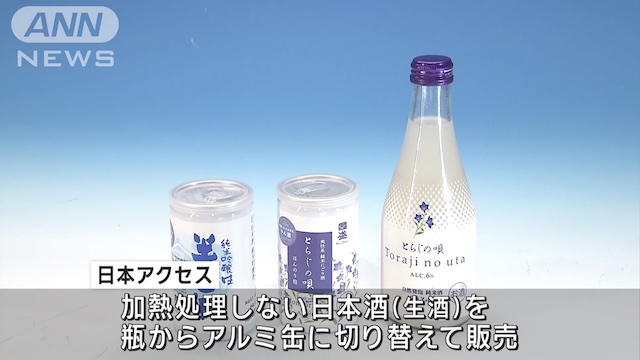
TOKYO - As demand for sake rebounds both domestically and internationally, a major shortage of sake bottles has prompted a leading food wholesaler to begin selling the beverage in cans instead of bottles.
Sake Makers Run Out of Bottles

The annual shipment of bottles used for sake was 65.4 million units in 2019, but this number dropped to 46.53 million by 2022, leading to the current shortage. The decline in bottle availability is due in part to reduced demand in settings such as pubs and taverns during the COVID-19 pandemic, which led some bottle manufacturers to halt production. Additionally, an increase in exports has contributed to fewer bottles being recycled.

Japan Access, a major food wholesaler, has started switching some of its sake from glass bottles to aluminum cans. With an aluminum can recycling rate exceeding 90%, this shift could potentially spread to other companies in the industry.

Source: ANN

News On Japan
POPULAR NEWS

A powerful magnitude 7.1 earthquake struck Kumamoto Prefecture at around 4:27 p.m. on July 28, registering the highest level of 7 on Japan's seismic intensity scale and prompting a tsunami advisory for coastal areas.

Typhoon No. 13 is forecast to move north at violent strength through the weekend, while torrential rain, sudden thunderstorms and dangerous heat threaten wide areas of Japan on July 28.

Authorities in Laos have detained 51 foreign nationals, including five Japanese men and women, on suspicion of involvement in an online fraud operation selling furniture and home appliances.

Temples that have long shaped Japanese life and culture are increasingly closing and being put up for sale as falling numbers of parishioners and a shortage of successors leave many religious institutions unable to continue operating.

Typhoon No. 13, which formed on the afternoon of July 27, is expected to intensify rapidly into a violent storm as it draws in clusters of highly developed clouds, though forecasts remain sharply divided over whether it will eventually approach Japan.

MEDIA CHANNELS
         

MORE Business NEWS

The Nikkei Stock Average plunged 2,566.27 yen, or 3.9%, to close at 62,364.92 on July 28 as a sharp fall in South Korean stocks and growing concerns over intensifying competition in the global semiconductor industry triggered heavy selling in artificial intelligence and chip-related shares.

Negotiations over Japan's minimum wage for the current fiscal year have entered their final stage, with a national guideline likely to be set in the upper 1,100-yen range per hour and a government panel expected to reach a conclusion this week.

Japan is unlikely to end its heavy reliance on Middle East crude oil, even as geopolitical tensions expose the risks of depending on the region for more than 90% of its imports, leaving the country to pursue a gradual mix of diversification, electrification, renewable energy and technological innovation.

Tokyo stocks rebounded on July 27, with the Nikkei 225 closing at 64,931.19, up 320.04 points, or 0.50%, as easing concern over the Middle East conflict supported broad buying across domestic-demand and value shares, although semiconductor weakness continued to cap the market’s recovery.

Honda Motor and Nissan Motor have entered final-stage negotiations to jointly develop an operating system that will serve as the core software for their next-generation vehicles, with an agreement targeted by the end of August.

Japanese investors may be starting to redirect money from semiconductor and memory-related stocks toward automakers and other value shares, as concerns grow that soaring memory prices, increased Chinese production and the search for cheaper suppliers could weaken the technology rally.

Japanese business leaders voiced concern over new additional tariffs imposed by the administration of U.S. President Donald Trump, warning that the measures could damage global manufacturing and undermine free trade.

Buying car insurance can already feel complicated without also worrying about whether you have the “right” payment method.