News On Japan

AI's 'Remarkable Evolution': GPT-4 and Veo Experts Warn of Potential Fake Videos

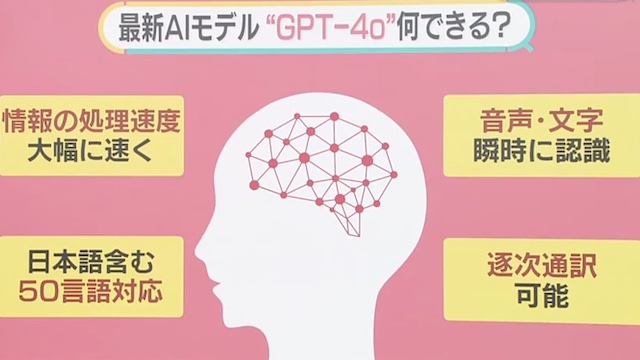
TOKYO - The race to develop advanced AI technology is intensifying, with companies like OpenAI and Google unveiling models packed with the latest innovations. These new AI systems can engage in conversations with human-like smoothness and generate high-quality videos from a single command. While this evolution shows no signs of slowing down, it also brings the alarming potential for the spread of fake information.
AI's 'Remarkable Evolution': GPT-4 and Veo Experts Warn of Potential Fake Videos

The advancements in AI technology are rapidly transforming various industries. OpenAI’s GPT-4 and Google's Veo are at the forefront of this revolution, showcasing abilities that were once thought to be science fiction. These models can not only understand and generate human language with remarkable fluency but also create realistic videos and images from text prompts.

However, the ease with which these AI systems can produce convincing content has raised significant concerns. Experts warn that the same technology that enables creative and educational applications can also be misused to create fake videos that are indistinguishable from real ones. This capability could be exploited to spread misinformation, manipulate public opinion, and undermine trust in digital media.

“With a single command, these AI models can generate high-resolution videos that look incredibly real,” said one expert. “The potential for misuse is enormous, and we need to develop strategies to counteract the spread of fake information.”

As AI continues to evolve, it is crucial for developers, policymakers, and the public to address these challenges. Ensuring the responsible use of AI and implementing robust measures to detect and combat fake content will be essential in navigating the future of this powerful technology.

Source: 日テレNEWS

News On Japan
POPULAR NEWS

The family of James "Weston" Higginbotham, a 20-year-old Auburn University student who disappeared during a family vacation in Japan, announced on June 7th that he has been found dead after a volunteer search-and-rescue group located his body in a mountainous area outside Kyoto, bringing a week-long multinational search to a tragic end.

Japan's Meteorological Agency announced on June 7th that the rainy season is believed to have begun in the Tokai and Kanto-Koshin regions, marking the seasonal shift to wetter weather across a broad area of the country.

Expectations for Japan are unusually high heading into the 2026 World Cup, with the team now aiming not merely to reach the knockout stage but to finally break through the Round of 16 and advance to the quarterfinals for the first time.

Residents in Nara Prefecture are celebrating after UNESCO's advisory body recommended the archaeological complex known as the Asuka-Fujiwara Ancient Capitals for inscription as a World Heritage site, bringing the historic birthplace of Japan's ancient state one step closer to international recognition.

A tropical depression is expected to move northward this weekend and could bring another round of heavy rain to parts of Japan, following a week in which Typhoon Jangmi (Typhoon No. 6) caused significant rainfall and left some areas vulnerable to further weather-related damage.

MEDIA CHANNELS
         

MORE Web3 NEWS

Hitachi has signed an agreement granting it access to "Claude Mythos," the latest artificial intelligence model developed by U.S.-based AI company Anthropic, sources revealed on June 5th.

Gamification is shaking up the way people spend their spare time online, turning passive visits into active adventures.

The latest film by Hirokazu Kore-eda, Sheep in the Box, opened in Japan on May 29th after being screened in the Competition section at the Cannes Film Festival, bringing to the screen a near-future story about a grieving couple who welcome into their home a humanoid modeled on their deceased seven-year-old son.

Former Digital Minister Masaaki Taira, who oversees cybersecurity and artificial intelligence policy within the ruling Liberal Democratic Party, said Japan still has opportunities to compete in the rapidly evolving AI sector, despite the dominance of major U.S. and Chinese developers.

Generative artificial intelligence is rapidly becoming part of everyday life, helping people with everything from studying and work-related tasks to choosing travel destinations and seeking relationship advice, raising questions about how society should engage with a technology that is evolving faster than ever.

The Japanese government revealed on May 29th that U.S.-based OpenAI has granted access to its latest artificial intelligence technology to a select group of major financial institutions in Japan.

Anthropic's newly developed AI system, Claude Mythos, is forcing companies to rethink cybersecurity as it dramatically accelerates the discovery of software vulnerabilities while simultaneously raising concerns about how attackers could exploit the technology.

Fujitsu announced its long-term management vision through fiscal 2035, unveiling plans to invest approximately 3 trillion yen over the next decade in growth businesses centered on artificial intelligence, quantum technologies, and other advanced fields as it seeks to significantly boost profitability.