News On Japan

Volatile Nikkei Leaves New Investors Anxious

TOKYO - The stock market and yen have experienced intense fluctuations in recent days, leading to mixed opinions on whether to buy or sell.

The Nikkei 225 stock average has been highly volatile, with a brief drop of over 900 yen on the 7th, followed by a sharp rise of more than 1,100 yen, ending the day 414 yen higher than the 6th at 35,089 yen.

On the 5th, the Nikkei recorded its largest drop in history with a closing base decrease of 4,451 yen, surpassing the infamous "Black Monday" crash of 1987.

The next day, the Nikkei saw a dramatic recovery, briefly rising over 3,400 yen and achieving the largest one-day gain in its history by the close.

NISA (Tax-Free Small Investment System) users voiced their concerns:

"I am involved in NISA and was very anxious about the sharp decline, unsure whether to be happy about the subsequent rise."

"I feel like I'm being manipulated; it's hard to tell if these fluctuations are normal."

This year, many individuals made their investment debut with the government's new NISA initiative, but some have already given up.

Posts on X (formerly Twitter) reflect the turmoil:

"Everyone around me is panicking. What should I do?"

"I quickly cut my losses with the new NISA."

"I'm quitting the new NISA. I feel betrayed by the government."

Amidst this roller-coaster-like volatility and investor panic, the government remains firm.

Chief Cabinet Secretary Matsuno stated, "Regarding the new NISA, even amid market fluctuations like this, we urge people to remain calm and consider the importance of long-term, diversified investment."

Source: ANN

News On Japan
POPULAR NEWS

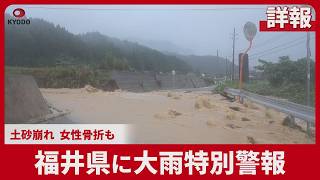
Record rainfall caused 19 rivers to overflow across Fukui Prefecture, flooding roads and homes, triggering landslides and temporarily forcing authorities to issue the highest-level heavy rain emergency warning from early Sunday morning.

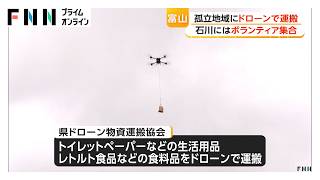
Drones were used to deliver food and daily necessities to an isolated mountain community in Himi City, Toyama Prefecture, on August 30 after torrential rain triggered a landslide that cut off road access, while volunteers continued flood recovery work in neighboring Ishikawa Prefecture.

Two typhoons east of Japan were moving northward on August 30, with Typhoon No. 23 (Banlan) overtaking Typhoon No. 22 (Artau), although neither storm is expected to have a direct impact on Japan.

A 9-minute, 13-second drone video filmed inside Aeon Mall Kumamoto two days after the deadly explosion has provided a detailed view of the destruction, showing collapsed ceilings, heavy dust and widespread damage that may have affected between one-third and nearly half of the shopping center.

Strong Typhoon No. 18 was moving northwest through the East China Sea on the night of August 26, gradually pulling away from Okinawa and the Amami Islands as lingering rain, strong winds and high waves were expected to ease. As of 9 p.m. on August 26, the typhoon was over waters north-northwest of Kume Island and moving northwest.

MEDIA CHANNELS
         

MORE Business NEWS

Toyota Motor plans to introduce passenger vehicles equipped with advanced automated driving technology from 2028, allowing drivers to travel with almost no manual operation, including taking their hands off the steering wheel on ordinary roads.

Consumer prices in central Tokyo rose 1.8% in August from a year earlier, with the pace of inflation accelerating for a third consecutive month as higher food prices continued to put upward pressure on household costs.

Tokyo stocks rose on August 28, with the Nikkei 225 closing at 66,405.56, up 273.58 points, or 0.41%, as information-technology, software, automaker and selected semiconductor-related shares gained after a U.S. technology rally, while investors remained cautious before Federal Reserve Chair Kevin Warsh’s Jackson Hole speech.

Japan's toy market continues to expand despite the country's declining number of children, reaching a record 1.1664 trillion yen in fiscal 2025 as manufacturers increasingly target adults and introduce products reflecting social issues ranging from sustainability to investment.

Tokyo stocks slipped on August 27, with the Nikkei 225 closing at 66,131.98, down 130.18 points, as early buying in artificial intelligence and semiconductor-related shares following Nvidia’s strong earnings forecast faded into profit-taking, while the broader TOPIX edged higher for a sixth straight session.

Seven-Eleven Japan and Yamato Transport announced on August 26 that they will introduce self-service shipping machines allowing customers to send parcels without lining up at a staffed checkout counter.

Tokyo stocks rose on August 26, with the Nikkei 225 closing at 66,262.16, up 405.73 points, or 0.62%, as investors bought back selected semiconductor and financial shares, although trading was thin ahead of Nvidia’s earnings and uncertainty remained over artificial intelligence valuations, the yen and Bank of Japan policy.

Tokyo stocks fell on August 25, with the Nikkei 225 closing at 64,980.53, down 0.8%, as investors sold semiconductor and electronics shares ahead of Nvidia’s earnings while a weak yen, elevated bond yields and renewed U.S. pressure on Iran kept risk appetite subdued.