News On Japan

Japan and Italy Sign Supply Chain Pact, Expand Space Cooperation

ROME - Prime Minister Sanae Takaichi and Italian Prime Minister Giorgia Meloni announced new agreements on supply chain resilience and space cooperation following a summit meeting in Italy on June 15th, as the two countries pledged closer coordination on economic security and international affairs ahead of the G7 Summit.

Speaking at a joint press conference after their talks, Takaichi welcomed the signing of an intergovernmental memorandum of understanding aimed at strengthening supply chains for semiconductors and other strategically important industries.

Takaichi also revealed that Japan and Italy had issued a joint statement on space cooperation, signaling deeper collaboration between the two countries in the space sector.

The two leaders also discussed developments in the Middle East and emphasized the importance of coordinated responses by Japan and Italy regarding relations between the United States and Iran.

Ahead of the G7 Summit, Takachi stressed that both countries would work closely together to help ensure free and safe navigation through the Strait of Hormuz, a key maritime route for global energy supplies and international trade.

The joint press conference followed a summit meeting held during Takachi's visit to Europe, where the two leaders reaffirmed their commitment to strengthening bilateral cooperation across a range of economic, security, and strategic fields.

日伊、サプライチェーン強化と宇宙協力拡大で合意

高市早苗首相とイタリアのジョルジャ・メローニ首相は6月15日、イタリアでの首脳会談後、サプライチェーン強靱化と宇宙協力に関する新たな合意を発表し、G7サミットを前に経済安全保障や国際問題での連携を一層強化していく方針を確認した。

日意签署供应链协议 扩大太空合作

日本首相高市早苗与意大利总理焦尔吉娅·梅洛尼6月15日在意大利举行首脑会谈后宣布达成加强供应链韧性和深化太空合作的新协议,并确认将在七国集团峰会召开前进一步加强两国在经济安全和国际事务方面的协调合作。

Source: TBS

News On Japan
POPULAR NEWS

A bear believed to be a mother that has been roaming residential neighborhoods in Maebashi, Gunma Prefecture, since November 17 was spotted again by a police officer early on November 21, prompting authorities to prepare for its capture as residents entered a three-day holiday weekend following days of repeated sightings, school closures and a frightening encounter involving a high school student.

Residents of Okinawa's remote islands are struggling to secure airline tickets as travelers seeking to accumulate loyalty points flood short-haul flights, with some boarding as many as 12 planes a day without stopping to sightsee, leaving essential routes fully booked and prompting calls for Japan Airlines (JAL) to reconsider its promotional campaign.

Traditional matchmaking is making a comeback in Japan as younger generations increasingly seek safer and more efficient ways to find marriage partners, with growing frustration over dating apps encouraging a return to arranged introductions once common among their parents and grandparents.

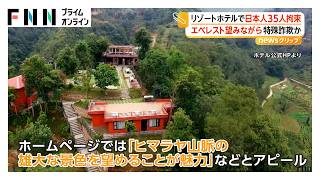
Nepalese police have detained 35 Japanese nationals and five Chinese nationals suspected of involvement in organized fraud operations at a mountain resort hotel near Kathmandu, where the group had allegedly established a sophisticated base equipped with a mock police station, photography studios and dozens of livestreaming booths.

A powerful surge of midwinter cold air is bringing heavy snow, strong winds and freezing temperatures to much of Japan ahead of the three-day holiday weekend beginning November 21st, with authorities warning of dangerous road conditions, possible landslides and traffic disruptions as snow and heavy rain continue along the Sea of Japan coast through the morning of November 22nd.

MEDIA CHANNELS
         

MORE Politics NEWS

Japan faces one of its most difficult diplomatic challenges in decades as US President Donald Trump pursues closer engagement with China and Russia, Prime Minister Sanae Takaichi struggles to repair relations with Beijing, and a changing international order raises questions about Tokyo's ability to protect its security and economic interests without being excluded from decisions made by the world's largest powers.

Japanese Prime Minister Sanae Takaichi held approximately 30 minutes of talks with Russian President Vladimir Putin on the evening of November 18 during her visit to China for the APEC summit, marking the first direct dialogue between the leaders of Japan and Russia since Moscow launched its invasion of Ukraine in 2022.

Japanese Prime Minister Sanae Takaichi held an unusually prolonged handshake with Chinese President Xi Jinping at the APEC summit in Shenzhen on November 19, speaking continuously for about 10 seconds as Xi nodded in response, while Japan sought to influence a historic three-way summit between the leaders of the United States, China and Russia scheduled for later in the day.

The Japanese government is considering setting the minimum annual income threshold for a new financial support program at around 560,000 yen, as it prepares to introduce payments for low- and middle-income workers alongside a planned consumption tax cut on food beginning in April 2027.

Japanese Prime Minister Sanae Takaichi's brief handshake with Chinese President Xi Jinping and subsequent 30-minute discussion with Russian President Vladimir Putin at the APEC summit in China on November 18th highlighted the extraordinary deterioration in Japan's relations with its two powerful neighbors over the past five years, a period marked by territorial disputes, military tensions, economic retaliation and an increasingly divided international order.

Japanese Prime Minister Sanae Takaichi shook hands with Chinese President Xi Jinping at the opening of the Asia-Pacific Economic Cooperation (APEC) summit in Shenzhen on November 18th, marking their first face-to-face encounter in approximately one year, although the brief exchange came after a noticeably subdued welcome for the Japanese leader compared with the elaborate receptions given to other visiting heads of state.

Princess Aiko, the only daughter of Emperor Naruhito and Empress Masako, expressed hope for stronger ties between Japan and Singapore during a luncheon hosted by President Tharman Shanmugaratnam on November 18th, acknowledging the suffering caused by Japan's wartime occupation and emphasizing the importance of remembering those who lost their lives.

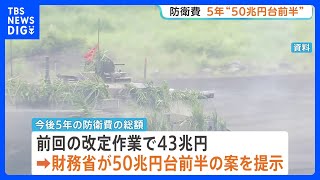
Japan's Finance Ministry has proposed setting defense spending at slightly more than 50 trillion yen over the five years beginning in fiscal 2027, drawing objections from ruling party lawmakers who argue that inflation and the weaker yen would effectively reduce the value of the planned expenditure.