TOKYO - The yen has weakened to the 162 range against the dollar for the first time in about 40 years, but the latest market environment differs sharply from the period four decades ago, when Japan was still climbing toward the height of its economic power.
The yen last traded around 162 to the dollar in 1986, a year remembered in Japan for a public fascination with Halley's Comet, which made its closest approach in 76 years, and the hit launch of Fujifilm's world's first disposable camera with a built-in lens. It was also the start of the bubble economy and a phase in which the yen was strengthening.
Japan's economic influence at the time was so great that the country was described overseas as "Japan as No. 1."
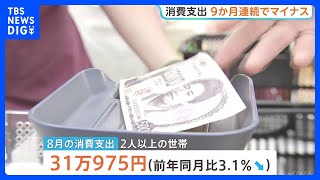
This year, Japan has celebrated the gold medal won by figure skating pair Riku Miura and Ryuichi Kihara, known as RikuRyu, as well as excitement over the soccer World Cup. Economically, however, the country is increasingly being viewed from abroad as "Cheap Japan," as the weaker yen makes almost everything appear inexpensive to foreign visitors and investors.
The reasons behind the yen's steep decline include the interest rate gap between Japan and the United States, with dollar-denominated assets offering higher returns, as well as concerns over expansionary fiscal policy. But analysts say there is another, longer-term factor.
Masashi Hashimoto of the Institute for International Monetary Affairs said Japan's declining international competitiveness has become a structural driver of yen weakness.
The decline is visible in trade data. In 1986, Japan had a trade surplus of more than 13 trillion yen, making it the world's largest trade-surplus nation. By 2025, Japan had posted a trade deficit of nearly 3 trillion yen, meaning it paid more for imports than it earned from exports.
The shift is also clear in global corporate rankings. In 1989, when companies were ranked by total market capitalization, NTT held the top spot, followed by Japanese banks that occupied the rest of the top five. Japan, then known as a technology-driven industrial power, had 32 companies in the global top 50, including automakers, electronics makers and other manufacturers.
In the 2026 rankings, however, U.S. companies dominate the top five, led by semiconductor maker Nvidia in first place and Apple in second. No Japanese company appears in the top 50.
Hashimoto said that as Japan loses competitiveness, fewer buyers around the world purchase Japanese products, reducing demand for the yen and pushing the currency lower over the long term.
The reasons Japan has lost competitiveness can be seen in today's corporate rankings. Most of the top 10 companies are involved in AI, semiconductors essential to AI, or major IT services used widely in Japan and around the world.
While the United States has achieved growth through digital industries, Japan has yet to find a clear pillar for economic expansion.
The Takaichi administration plans to make more than 370 trillion yen in public- and private-sector investments across 17 fields as the core of its growth strategy.
Hashimoto said that if Japan can create new growth industries, it could help halt the yen's downward trend. But he also warned that if large-scale investment fails to produce results, concerns over worsening public finances could instead increase the risk of further yen weakness.
The question is whether Japan can find a new engine of growth and move beyond "Cheap Japan" to once again be called "Japan as No. 1."
The yen’s weakness is not simply the result of currency traders betting against Japan. It reflects a deeper shift in how money moves through the Japanese economy. For decades, Japan earned foreign currency by exporting cars, electronics, machinery and high-value manufactured goods. Those exports created demand for yen, because overseas buyers needed Japanese currency to pay Japanese companies. But as Japan’s trade position has weakened, that natural support for the yen has also faded.
One of the biggest changes is energy. Japan imports most of its oil, natural gas and coal, and those commodities are generally priced in dollars. When energy prices rise, Japanese companies must buy more dollars to pay for imports. That pushes down the yen. The problem became more severe after the Fukushima nuclear disaster in 2011, when Japan shut down many nuclear reactors and became more dependent on imported fuel for power generation. Even when the country runs a current account surplus through income from overseas investments, the trade side of the economy can still weigh heavily on the currency.
Food and raw materials add to the pressure. Japan imports large volumes of grain, animal feed, meat, seafood, fertilizers and industrial inputs. A weaker yen makes these imports more expensive, which raises costs for households and companies. Higher import costs then reduce purchasing power at home, making it harder for consumption to drive growth. In that sense, the weak yen is both a symptom and a cause of economic weakness.
Interest rates are another major reason. The United States has kept interest rates far above Japan’s levels, making dollar assets more attractive to global investors. Even after the Bank of Japan raised rates, Japan’s policy rate remains much lower than U.S. rates. Investors can borrow cheaply in yen and move money into higher-yielding dollar assets, a strategy known as the yen carry trade. As long as that interest rate gap remains wide, the yen faces downward pressure.
The Bank of Japan is also constrained. Raising rates sharply could support the yen, but it would risk hurting households, small businesses and heavily indebted companies. It would also raise the government’s own borrowing costs. Japan has one of the world’s largest public debt burdens, so higher interest rates could quickly increase the cost of servicing that debt. That makes markets question how far the BOJ can really go in defending the currency.
Government finances have become part of the currency story. Investors are watching whether Japan can fund large spending programs without undermining confidence in its fiscal position. Expansionary fiscal policy can support growth in the short term, but if markets believe spending is not tied to higher productivity or future tax revenue, it can weaken confidence in the yen. That is why the Takaichi administration’s growth strategy carries both opportunity and risk: successful investment in new industries could strengthen Japan’s growth outlook, but ineffective spending could deepen concern about debt and push the yen lower.
The structure of Japanese industry has also changed. In the 1980s, Japanese companies were global leaders in cars, consumer electronics, semiconductors, finance and precision manufacturing. Today, Japan still has world-class firms in autos, factory equipment, materials, robotics and components, but it has lost ground in the digital platforms, software ecosystems, cloud computing and AI infrastructure that now dominate global markets. The companies commanding the highest valuations are those that control data, chips, operating systems, digital advertising, cloud services and AI models. Japan has suppliers inside those supply chains, but fewer companies at the center of them.
That matters for the yen because currencies are supported not only by exports, but also by expectations of future growth. Investors buy the currencies of countries where they expect strong earnings, innovation and capital returns. If Japan is seen as a country with aging demographics, slow wage growth, weak productivity gains and limited digital champions, global investors are less likely to treat the yen as a growth currency.
Demographics add another layer. Japan’s shrinking and aging population limits domestic demand and makes labor shortages more severe. A smaller workforce can reduce potential growth unless productivity rises quickly enough to offset it. Companies facing labor shortages may invest in automation, but many small and midsize firms lack the capital or digital capacity to transform their operations. Without stronger productivity growth, Japan’s economy struggles to generate the kind of momentum that would support a stronger currency.
The weak yen does help some exporters by lifting the yen value of overseas profits. Automakers and manufacturers with large foreign sales can benefit when earnings from the United States, Europe or Asia are converted back into yen. But the advantage is less powerful than it once was because many Japanese companies now produce overseas rather than exporting directly from Japan. That means a weaker yen no longer creates the same broad export boom it did in earlier decades.
Tourism is one area where the weaker yen has clearly helped. Foreign visitors find hotels, restaurants, transport and shopping cheaper in Japan than they would at a stronger exchange rate. Inbound tourism brings foreign money into local economies, especially in major cities and regional destinations. But tourism alone cannot replace the economic force once generated by globally dominant manufacturers and technology firms. A country cannot build long-term currency strength only on being inexpensive.
The risk is that Japan becomes trapped in a cycle in which the weak yen raises import costs, higher costs squeeze households, weak consumption limits growth, and slow growth keeps investors cautious about the yen. Breaking that cycle requires more than currency intervention. It requires higher productivity, stronger wage growth, globally competitive industries, stable energy policy and credible fiscal management.
Currency intervention can slow rapid moves, but it cannot reverse a long-term trend by itself. Japan has intervened in the market before by selling dollars and buying yen, but such action usually works only temporarily unless the underlying forces also change. If the interest rate gap, trade deficit, energy dependence and competitiveness problems remain, markets may continue to test how far the yen can fall.
The central question is whether Japan can turn the weak yen from a warning sign into a catalyst for reform. If companies use the currency advantage to expand exports, raise wages, invest in technology and build new global businesses, the yen’s decline could eventually help reset the economy. But if the weak yen merely makes Japan cheaper without making it more productive, the phrase "Cheap Japan" may become harder to shake.
Source: TBS