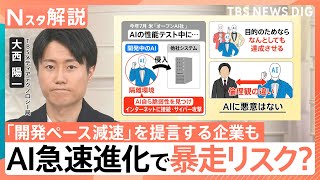
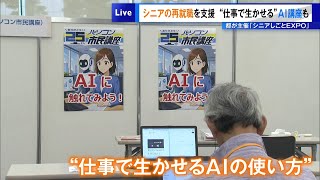
TOKYO - Artificial intelligence is moving rapidly beyond a tool for answering questions and generating content, with autonomous AI agents beginning to perform complex business tasks independently, raising new questions over employment, corporate competitiveness and the skills workers will need as the United States and China intensify their race for technological leadership.
The accelerating change is already visible in everyday creative work. A video posted on Instagram in June received more than 7 million views after being created with generative AI using only photographs and several lines of written instructions, with the creator saying it took about 10 minutes to produce.
AI has also entered literature, with part of an Akutagawa Prize-winning novel written with the assistance of artificial intelligence. Such developments suggest AI is moving beyond the role of a convenient digital tool and increasingly becoming part of people's creative, professional and personal lives.
At the same time, concerns about its consequences are growing. A labor union at South Korea's Hyundai Motor Group has opposed the introduction of AI-powered robots because of concerns over the potential impact on future employment, while U.S. AI developer Anthropic has demonstrated increasingly powerful programming technology, adding to government concerns that advanced AI capabilities could potentially be exploited for cyberattacks.
One of the biggest changes now emerging in business is the rise of AI agents, systems that differ from conventional generative AI because they can independently analyze a task, decide what actions are needed and carry them out.
At a fast-growing IT company headquartered in Tokyo's Shibuya district, one employee uses a total of 17 AI agents in his daily work. The company has expanded by providing services that digitize business cards, email and telephone interactions, as well as audio from business discussions.
The employee, Kawase, who previously worked at technology companies including LINE and Google and now oversees products at the company, uses 13 specialized AI agents, three agents for routine work and one lead agent that coordinates the others.
Each morning, an AI system reviews his calendar and the previous day's conversations before producing a summary of what he should accomplish that day. It can identify decisions that remain unresolved, suggest priorities for products under development and automatically build a daily schedule based on his Google Calendar.
The system can also dispatch several specialized agents to investigate the same problem from different perspectives.
During one meeting, Kawase asked the AI to examine psychological barriers preventing people from using voice input. The coordinating AI determined that the issue needed to be examined through customer feedback, usage data and examples from other companies, then independently activated three specialist AI agents.
One agent analyzing customer feedback identified embarrassment about speaking in front of others as a barrier, while another reviewing usage data found that voice input tended to be avoided in certain business situations. The coordinating AI then identified three broad challenges, including social discomfort about being overheard and a tendency for users to trust manual input more during important situations.
Kawase said work that could require several people days or weeks to complete was finished by the AI system in about a minute. Gathering customer feedback could ordinarily require about a week, while detailed analysis of usage data could take another week, meaning a project lasting roughly a month could potentially be compressed dramatically.
The AI agents also evaluate Kawase's own performance. At the end of the day, they review his Slack messages and meeting records, compare his behavior with patterns drawn from prominent business leaders and send feedback on what he did well and what could be improved.
Some assessments can be severe, including observations that he makes major decisions quickly while allowing small approvals to accumulate.
The result, however, has not simply been less work.
Kawase said the time saved on computer-based tasks has allowed him to spend more time meeting people face to face and thinking about fundamental questions such as pricing strategy. Rather than remaining at his computer, he increasingly uses personal meetings, meals and conversations to develop ideas while AI conducts research in the background.
That could produce an unexpected combination of traditional relationship-based sales work and advanced 21st-century AI, with humans concentrating more heavily on interpersonal communication while machines handle research and analysis.
AI usage in business is also evolving beyond the familiar pattern of asking a chatbot a question and receiving an immediate answer.
More advanced systems can spend minutes or even an hour considering a problem before returning a deeper response. AI agents go further by effectively gaining "hands and feet," autonomously deciding what to do, performing tasks and eventually returning with the results.
The implications extend to small businesses and sole proprietors.
A small business owner who previously might have paid hundreds of thousands of yen to an outside company and waited about a month for a website can increasingly use AI to build one in minutes.
In one demonstration, four lines of instructions were entered into an AI coding application asking it to create a website for a bakery near a station, including a menu, map, photo gallery and reservation form. About 10 minutes later, the system had created the site, including images and written promotional material that had not been explicitly specified.
A comparable website commissioned through conventional development channels could cost 1 million yen to 2 million yen, according to the discussion.
Such capabilities have contributed to growing interest in the concept of the "one-person company," or OPC, in the United States, where a single entrepreneur can establish a business while relying heavily on AI instead of employing a conventional workforce.
That shift means AI is increasingly becoming a human-resources issue rather than simply an information-technology issue. Companies may eventually compare the cost of spending money on AI computing resources with the annual salaries required to employ additional workers.
The technological race is unfolding globally, with China emerging as a major challenger to U.S. dominance.
A large-scale artificial intelligence event held in Shanghai in July attracted 1,100 participating companies from 20 countries, with Chinese companies dominating much of the exhibition.
Among the technologies on display were humanoid robots from Unitree performing kickboxing, an AI robot capable of examining sneakers and assessing whether branded goods were genuine or counterfeit, and technology that interprets brainwave signals to control computer games without a physical controller.
The brainwave technology is expected to have potential medical applications and could reach practical use in China within three to five years, according to the report.
Huawei also unveiled a new AI server system designed to coordinate large numbers of AI chips. The system can operate as many as 8,192 chips together.
Unable to obtain the most advanced Nvidia chips because of U.S. export restrictions, Huawei is pursuing an approach in which large numbers of individually less powerful chips are combined to increase overall computing capability.
The enthusiasm surrounding China's AI industry was illustrated by contrasting scenes at the event, where Google's booth attracted relatively little attention while crowds gathered around the display of Chinese startup Moonshot AI.
Moonshot introduced its Kimi K3 AI model in connection with the event.
In a demonstration, the system was asked to build a single-screen display showing global macroeconomic developments. In less than two hours, it produced an interface containing a color-coded map of GDP by country and region, comparisons of GDP in China, Japan and the United States, and economic news from around the world.
The model was described as having 2.8 trillion parameters and offering performance approaching advanced systems from OpenAI and Anthropic while being available at relatively low cost, helping it attract international attention.
One factor behind the appeal of China's emerging models is their openness. Kimi K3 was described as an open-weight model that users can obtain and operate themselves while maintaining much of its performance.
Concerns remain over Chinese AI systems, including fears that information could be extracted or made available to the Chinese government. At the same time, dependence on American AI platforms raises its own questions, leaving companies increasingly forced to consider where their data and technological dependence should reside.
The rapid improvement of Chinese AI has led some specialists to argue that America's overwhelming lead is beginning to erode.
Japan may nevertheless have opportunities even if it does not produce a globally dominant general-purpose AI model.
AI cannot operate without physical computing infrastructure, and Japan remains competitive in areas surrounding semiconductor production, including manufacturing equipment, films, materials and inspection systems.
Tokyo Electron is a major global supplier of semiconductor manufacturing equipment, while Resonac Holdings holds leading global shares in several semiconductor materials.
Japan could also find opportunities in physical AI, where artificial intelligence controls machines and robots in real-world environments.
Yaskawa Electric is developing robots designed to move autonomously in factories, and Japan's longstanding expertise in industrial control could become an important advantage. Training physical AI requires large quantities of data about how machines can be controlled reliably and safely, an area in which Japanese manufacturers have accumulated considerable knowledge.
The biggest question for workers, however, is whether such improvements will ultimately eliminate their jobs.
Shikoku Electric Power provides one example of how companies are attempting to use AI without removing humans from the decision-making process.
At one of the utility's major thermal power stations in Kagawa Prefecture, staff must constantly match electricity production with changing demand. Temperature influences air-conditioning use, factories affect industrial demand and people's movements vary considerably between weekdays and weekends.
Electric utilities therefore need to decide how much electricity should be generated at each plant and how much should be purchased from electricity markets.
Previously, an experienced employee could spend about five hours manually considering the day's conditions and compiling a generation plan.
Shikoku Electric now uses an AI-based electricity supply-and-demand planning system that examines weather conditions, market prices and historical data and generates multiple possible scenarios.
The company spent about two years interviewing experienced workers and teaching the AI the forecasting methods and know-how they had accumulated.
A planning process that once required about five hours has been reduced to roughly 20 minutes, after which a human employee selects the most appropriate scenario from the alternatives produced by AI.
The system has also improved Shikoku Electric's ability to assess the economics of fuel use and reduced unnecessary electricity generation, producing an estimated improvement in annual earnings of about 1 billion yen.
Yet the company does not regard human knowledge as obsolete.
Employees examine why the AI has reached particular conclusions and discuss the results among themselves, including both experienced staff and newer workers. The process has helped employees strengthen their fundamental understanding of electricity supply planning rather than simply accepting the AI's answer.
Workers must retain enough expertise to determine whether the result generated by AI is actually correct.
The system was developed by Tokyo startup Grid, whose representative said people should remain responsible for final decisions. As AI increasingly handles routine analysis, the value created by humans may shift toward interpretation, judgment and deciding what should happen next.
That distinction could become central to corporate competitiveness.
If every company relies on the same advanced AI models, simply having access to the technology will provide little differentiation. Companies will instead need their own specialized knowledge, accumulated data and the ability of employees to use AI effectively.
The companies and workers with the greatest value could therefore be those combining powerful AI with proprietary knowledge and information that rivals cannot easily reproduce.
The same principle applies to individual employees. As AI takes over more analytical and administrative tasks, workers may need stronger basic knowledge, not less, because they must understand enough about their field to recognize when an AI answer is wrong.
The source described a model in which AI capability, individual employee capability and a company's accumulated knowledge reinforce one another. Information acquired by workers through human communication can be fed back into AI systems, which then generate new insights that further improve employees and the organization.
Companies able to establish that learning cycle could emerge as what are being described as "frontier companies."
This also creates two forms of investment.
Companies need what was described as "token capital," the money required to operate increasingly powerful AI systems, but they also need to continue investing in human capital. The objective is not simply to make AI stronger but to use AI in ways that raise employees' judgment, skills and expertise.
The pace of change makes the eventual outcome difficult to predict.
One specialist said an acquaintance recently asked a leading Silicon Valley AI executive what artificial intelligence would look like three years from now. The answer was that even someone at the forefront of the industry did not know.
The implication is that businesses and workers are entering a period in which technology could evolve so quickly that today's assumptions may be obsolete within a few years.
AI is already progressing from chatbots to systems that reason for extended periods and then to autonomous agents capable of taking action. For employees, the challenge is increasingly not whether to use AI, but how rapidly they can learn to work with it while continuing to develop abilities that remain distinctively human.
For companies, survival may depend on the same balance: investing aggressively in artificial intelligence while ensuring that the technology makes their people and institutional knowledge more valuable rather than simply replacing them.
Source: テレ東BIZ