Artificial intelligence is opening new possibilities for digital creativity, allowing people to transform ideas into illustrations, animated characters and short films without the extensive technical skills or expensive production equipment traditionally required, with platforms such as Japan-inspired AI art service PixAI bringing these capabilities to a growing community of creators.
For anyone who has imagined creating an animated story, designing an original character or bringing a fictional world to life, the gap between imagination and production is becoming considerably smaller. What once required teams of illustrators, animators and video editors can increasingly be explored by individuals working from a home computer.
PixAI, an AI-powered creative platform with a particular emphasis on anime and illustration, offers tools for generating images, developing characters, editing artwork and producing animated sequences. Its appeal lies not simply in the technology itself, but in the opportunities it creates for people who have stories to tell but lack the traditional means to visualize them.
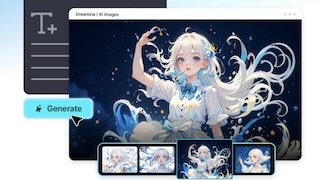
At the heart of the platform is a relatively straightforward concept. A user describes an idea in words, selects a visual style and allows artificial intelligence to generate an image based on those instructions. The resulting artwork can then be refined, altered or used as the starting point for further creative work.
The process encourages experimentation. A character might begin as a simple description before gradually acquiring a distinctive appearance, clothing, personality and surroundings. Different environments can be explored, from traditional Japanese streets and fantasy landscapes to futuristic cities and entirely imaginary worlds.
One of the more interesting possibilities is the ability to develop recurring characters. For storytellers, consistency is particularly important. A character appearing in one scene needs to remain recognizable in the next, even when viewed from a different angle or placed in a new environment.
PixAI provides reference-image tools and customizable models that help creators maintain continuity across multiple illustrations. Although achieving perfect consistency can still require considerable experimentation, these capabilities make more ambitious projects increasingly practical.
The potential extends beyond individual illustrations. A series of images can become a comic, a picture book, a visual novel or the foundation of an animated production. Musicians can experiment with artwork and animated sequences for their songs, while independent writers can explore how characters and settings might appear before committing to a larger project.
Animation adds another dimension to the creative process. PixAI's image-to-video tools allow still illustrations to be transformed into short moving sequences, introducing elements such as facial expressions, movement and camera motion.
A character standing beside a window might turn toward the viewer, for example, while a quiet landscape could be brought to life through moving clouds, changing light or the gentle movement of trees. These relatively simple effects can give an illustration a cinematic quality that would previously have required specialized animation software and considerable experience.
Short sequences can also be combined through conventional video editing to produce longer narratives, opening possibilities for independent animation, music videos and experimental filmmaking.
A significant development came in July 2026 with the introduction of PixAI Studio, a creative workspace designed to connect different stages of production. Rather than treating image generation, editing and animation as entirely separate activities, the system allows users to organize creative processes within a shared visual environment.
This approach is particularly promising for projects involving multiple scenes, recurring characters and a consistent visual style. A creator developing an animated story can build upon earlier work instead of repeatedly starting from scratch, making the production process more manageable.
Another attraction is the freedom to explore different artistic directions. Although PixAI is closely associated with Japanese anime aesthetics, its models and editing tools support a broader range of visual approaches, including semi-realistic illustration, fantasy art and stylized cinematic imagery.
For aspiring artists, such flexibility can make the creative process less intimidating. Someone with little drawing experience can experiment with composition, lighting, costume design and visual storytelling, gaining a better understanding of how different artistic choices influence the final result.
AI-generated artwork also introduces a new relationship between the creator and the tools being used. Rather than controlling every brushstroke or animation frame, users increasingly work by describing, selecting, refining and directing the results. Creative judgment remains important, particularly when deciding which images communicate an idea effectively and how individual scenes fit together.
The technology is not without limitations. Complex movements, detailed interactions and consistent character appearances can still present difficulties, while producing satisfactory results may require repeated attempts. More advanced animation also involves greater computing resources and can incur additional costs.
Nevertheless, these challenges are becoming part of an evolving creative process rather than insurmountable barriers.
Perhaps the most significant opportunity lies in the emergence of a new generation of independent creators. A novelist can visualize scenes from an unpublished manuscript. A musician can develop an animated interpretation of a song. An amateur filmmaker can experiment with characters and settings before undertaking a full production.
For people who have spent years imagining projects they lacked the resources to produce, these developments represent a substantial change.
Japan's long-established culture of manga, anime and character-based storytelling provides a particularly interesting context for this technology. The popularity of Japanese visual styles around the world has already encouraged countless enthusiasts to create their own characters and fictional universes. AI platforms such as PixAI offer another way to participate in that creative culture.
The broader significance of tools like PixAI may ultimately be measured less by the sophistication of any individual image than by the number of ideas they allow people to explore.
As AI image generation and animation continue to develop, the distinction between imagining a story and bringing it to the screen is likely to narrow further, giving independent artists, writers and filmmakers opportunities that would have been difficult to contemplate only a few years ago.