News On Japan

Anti-AI Tops Hit Product Predictions

TOKYO - Japanese monthly magazine Nikkei Trendy has unveiled its ranking of the top 30 products and services expected to become hits in 2027, with "anti-AI" emerging as the central theme as consumers increasingly seek ways to distinguish genuine human activity from artificial intelligence-generated content.

Taking the top spot in the magazine's 2027 predictions is a "human certificate," a digital verification system designed to prove that an individual is a real person and prevent impersonation online. The technology is expected to attract growing attention as advances in AI make it increasingly difficult to determine whether online content and interactions involve actual people or AI-generated identities.

The rankings also highlight products that combine everyday activities with entertainment, including claw machines stocked with fresh produce such as vegetables. By turning grocery shopping into a game, the machines offer consumers a new way to enjoy buying food.

Another predicted hit is edible cactus, which is attracting interest for its nutritional value and versatility in cooking. The plant can be incorporated into a wide variety of dishes, making it a potential new ingredient for health-conscious consumers.

Alongside its predictions for 2027, Nikkei Trendy also announced its ranking of the top 30 hit products of 2026, reflecting a year in which consumers increasingly sought affordable pleasures despite rising prices.

Among the products featured were decorative marker charms that can be attached to plastic beverage bottles and other personal belongings, along with Bonbon Drop stickers, known for their glossy, raised appearance.

The popularity of these relatively inexpensive accessories illustrates how consumers are finding small sources of enjoyment even as inflation weighs on household spending and discourages larger purchases.

Together, the two rankings suggest a shift in Japanese consumer preferences toward products that offer authenticity, entertainment, and everyday satisfaction, with concerns about AI shaping emerging trends while affordable personal indulgences continue to drive spending.

Source: テレ東BIZ

News On Japan
POPULAR NEWS

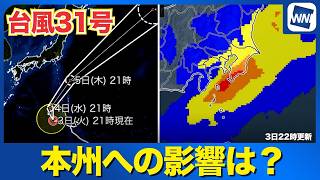
Typhoon No. 31 (In-Fa) was moving northwest over waters south of Japan as of 9 p.m. on November 3rd, regaining strong typhoon status with a central pressure of 970 hectopascals, while a rapidly developing low-pressure system associated with its northward movement is expected to bring more than 200 millimeters of rain to parts of the Kanto region and Izu Islands between November 4th and 5th.

Kyoto's popular Sagano Romantic Train is attracting large numbers of foreign tourists for its final autumn season, with the familiar red-and-black carriages set to retire at the end of 2026 after carrying a cumulative 30 million passengers, making way for new trains scheduled to enter service in 2027.

A king and queen dressed in elaborate traditional Ryukyu costumes appeared at Shuri Castle in Okinawa on November 2 as the annual Shuri Castle Restoration Festival celebrated the former kingdom's cultural heritage and built anticipation for the November 23 public opening of the reconstructed main hall.

Kyoto City announced plans on November 2nd to introduce tougher regulations on private lodging facilities, including a requirement for staff to be stationed permanently inside the properties or in nearby buildings, as complaints from residents continue to rise over noise and disruptive tourist behavior.

Spanish authorities have confirmed that a Japanese national was among the 69 people killed in a collision between two high-speed trains in central Spain on October 28, while Japanese officials are continuing efforts to establish the identities of victims following the disaster, which also left about 200 people injured.

MEDIA CHANNELS
         

MORE Web3 NEWS

Japanese monthly magazine Nikkei Trendy has unveiled its ranking of the top 30 products and services expected to become hits in 2027, with "anti-AI" emerging as the central theme as consumers increasingly seek ways to distinguish genuine human activity from artificial intelligence-generated content.

Six thousand yen. That's the charge a Japanese citizen, or a foreigner who lives in the country, will pay at the casino door of the resort now going up on Yumeshima, the reclaimed island in Osaka Bay that hosted Expo 2025.

The AI Film Festival Japan 2026, one of Asia's largest international film festivals dedicated to works created using artificial intelligence, held its awards ceremony in Tokyo on November 1, attracting more than 730 submissions from over 60 countries and regions, with short films and animation accounting for the majority of entries.

A visitor stands outside a small restaurant in Kyoto trying to work out three things. Whether the place takes cards. Whether they need a reservation. And whether walking in without Japanese is going to be awkward for everybody.

Japanese retail giant Aeon unveiled a logistics warehouse on October 30 equipped with "physical AI" robots capable of independently sorting and stacking products, allowing the company to automate approximately half of its warehouse operations while increasing loading efficiency to four times that of manual labor.

Artificial intelligence is opening new possibilities for digital creativity, allowing people to transform ideas into illustrations, animated characters and short films without the extensive technical skills or expensive production equipment traditionally required, with platforms such as Japan-inspired AI art service PixAI bringing these capabilities to a growing community of creators.

Building a TikTok presence on a limited budget means weighing every expense. For creators comparing paid follower, like, and view packages, the headline price is only part of the decision.

Japanese telecommunications giant KDDI announced on October 28 that it will invest 30 billion yen in physical artificial intelligence by fiscal 2030, aiming to deploy more than 1,000 autonomous robots across retail, logistics and manufacturing facilities as Japan searches for solutions to its worsening labor shortage.