News On Japan

As APAC Gaming Market Booms – What's Next?

The Asia-Pacific gaming market has been having a pretty serious moment.

There is plenty going on across the region, from established casino destinations to countries where large-scale gaming resorts are only just starting to appear. Add in the growth of digital gaming and online casino platforms, and you can see why there is so much attention on APAC right now.

Forecasts are for the market to roughly double in value by 2033, going from around US92billion in 2024 to approximately US185 billion. This combines both physical and online gambling, so opportunities for any reputable online casino to expand their business abound.

Japan Could Be a Big Part of It

Japan is probably the most obvious place to look.

The country's integrated resort plans have been talked about for years, but things are now moving from paperwork into actual construction. First up there’s the MGM Osaka, combine hotels, entertainment, restaurants, retail, conference facilities and a casino in one huge development, being developed on Yumeshima. This project officially started construction in April 2025 and is targeting for completion in autumn 2030.

That is important for more than just the gaming industry.

Japan already attracts enormous numbers of international visitors, and a major integrated resort gives Osaka another reason for tourists to stay longer and spend more time in the region. The project is also being presented as part of Osaka's wider tourism and economic development plans.

And there could be more to come.

Hokkaido and Nagasaki have been linked with possible future IR bids, meaning Japan's first project may not necessarily be the last major casino resort we see there.

Tourism Is Part of the Story

This is where APAC gets particularly interesting.

Casino resorts are not simply about casino floors anymore. The big developments are designed around the whole trip.

That creates a much bigger economic picture.

Tourism, hospitality, entertainment and gaming can all feed into one another. Japan is a good example of this approach, with MGM Osaka planned as an integrated resort rather than simply a standalone casino.

And Then There Is Digital Gaming

The other side of the APAC story is online.

With people across the region already used to doing more and more through their phones, gaming, entertainment, payments and shopping have all shifted towards digital platforms, and casino operators are watching that change closely.

It also means the future of gaming in APAC is unlikely to be purely about giant resorts.

There will be the huge physical developments, certainly. But alongside them you have online casino products, mobile gaming, live casino and increasingly sophisticated digital platforms.

The two worlds can even sit alongside each other.

A visitor might experience a major casino resort while travelling, then continue using digital entertainment products once they are back home, where local laws permit it.

So What's Next?

Probably more investment, more competition and a lot more attention on the region.

Japan's IR programme gives the market something very tangible to watch over the next few years. MGM Osaka is already under construction, while the wider tourism picture continues to develop.

Elsewhere across APAC, digital adoption is likely to remain a major part of the story.

The really interesting bit is that these trends are happening at the same time. More tourists. Bigger resorts. More technology. More online gaming.

If the forecasts are anywhere near right, APAC's gaming story is nowhere near finished. It may only just be getting started.

News On Japan
POPULAR NEWS

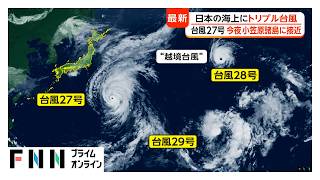
Three typhoons are now active in waters around Japan, raising concerns that the unusual cluster could affect the upcoming three-day weekend as Typhoon No. 27 approaches the Ogasawara Islands and two additional storms develop farther east. Satellite images from the Himawari weather satellite showed three distinct tropical systems around Japan on October 5. Typhoon No. 27 had a clearly defined eye and a broad cloud system, while Typhoon No. 28 was more compact but also had a distinct center. Typhoon No. 29 remained less organized.

A first-of-its-kind sleep competition was held in Tokyo on October 5, with contestants competing for a 2.22 million yen top prize by trying to achieve the deepest, fastest and most stable sleep during a 90-minute session.

Japan brought the Aichi-Nagoya Asian Games to a close on October 4 with a record 83 gold medals and 269 medals overall, finishing second behind China after 16 days of competition that produced historic victories in swimming, athletics, judo, wrestling, softball and other sports, while a closing ceremony in Nagoya marked the end of the first Asian Games held in Japan in 32 years.

A Tokyo court has recognized the commercial rights of performers over their voices for the first time, ruling that unauthorized use of AI-generated voices resembling those of celebrities can constitute an infringement of publicity rights in a landmark lawsuit brought by popular voice actor Kenjiro Tsuda against the operator of TikTok.

Eleven men were injured when a traditional danjiri festival float overturned while attempting to make a sharp left turn at an intersection in Sakai, Osaka Prefecture, on the evening of October 3, with all victims conscious when transported to hospitals and none suffering life-threatening injuries.

MEDIA CHANNELS
         

MORE Web3 NEWS

Panasonic Holdings is pushing ahead with one of the most sweeping restructurings in its 108-year history, cutting about 12,000 jobs, selling major businesses and reorganizing operations as the Japanese electronics group seeks to build new sources of growth around artificial intelligence, data centers and recurring service revenue.

A Tokyo court has recognized the commercial rights of performers over their voices for the first time, ruling that unauthorized use of AI-generated voices resembling those of celebrities can constitute an infringement of publicity rights in a landmark lawsuit brought by popular voice actor Kenjiro Tsuda against the operator of TikTok.

The Asia-Pacific gaming market has been having a pretty serious moment.

Tokyo Metro has launched a trial using artificial intelligence and floor projections to guide passengers toward less crowded train cars, introducing a new approach to easing congestion on subway platforms.

When a friend leans across a loud izakaya table to tell you something, where do your eyes go?

Japan’s character culture extends far beyond major anime studios and established toy manufacturers. Independent illustrators, small creative teams and dōjin artists also develop original characters for exhibitions, games, merchandise and personal projects.

Japan's robotics industry is stepping up development of "physical AI," combining artificial intelligence with machines capable of sensing, deciding and acting in the real world, as companies seek to turn the country's manufacturing expertise into an advantage against faster-moving rivals in the United States and China.

Suzuki plans to halve the time needed to develop new vehicles to two years by 2030, using artificial intelligence and simultaneous development processes to bring new models to market more quickly.