News On Japan

Regulators Crackdown on Sompo Japan over Big Motor Insurance Fraud

TOKYO - Japan's Financial Services Agency (FSA) is getting ready to tighten the screws on Sompo Japan by issuing a business improvement order within this month following the insurance fraud scandal involving false claims by used car dealer Big Motor.

The FSA has been conducting on-site inspections at Sompo Japan Insurance since September last year and at SOMPO Holdings since November, concluding that Sompo Japan Insurance's protection of policyholders was insufficient and that there were problems with the internal control system of its parent company, SOMPO Holdings.

The FSA intends to demand improvements in the management of both companies.

Source: TBS NEWS

News On Japan
POPULAR NEWS

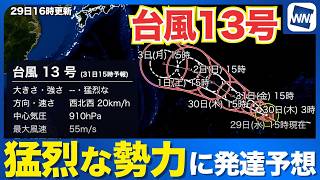
Typhoon No. 13 (Dolphin) is forecast to intensify into a violent storm before approaching the Ogasawara Islands early next week, while a possible westward shift in its track is raising concern over potential effects in western Japan and Kyushu.

Residents across earthquake-stricken Kumamoto Prefecture are enduring extreme heat without water, electricity or air conditioning as rescue teams continue searching collapsed buildings following the powerful earthquake that registered the maximum seismic intensity of 7.

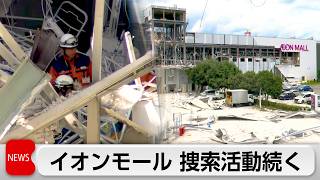
Three women have been confirmed dead, one person is in cardiopulmonary arrest and three employees remain unaccounted for after a powerful explosion devastated Aeon Mall Kumamoto following the magnitude 7.1 earthquake that struck Kumamoto Prefecture on July 28.

Typhoon No. 13 (Dolphin) continued to intensify over the Marshall Islands on July 29 and is forecast to become a violent typhoon by July 31 before approaching the Ogasawara Islands early next week, potentially bringing severe winds, high waves and other effects to Japanese territory.

Prime Minister Sanae Takaichi said on July 29 that 13 people had died following the powerful earthquake that registered the maximum seismic intensity of 7 in Kumamoto Prefecture, including cases still being investigated for a possible connection to the disaster.

MEDIA CHANNELS
         

MORE Business NEWS

Tokyo stocks diverged sharply on July 29, with the Nikkei 225 closing at 61,434.19, down 930.73 points, or 1.49%, as selling in artificial intelligence and semiconductor-related heavyweights continued, while the broader TOPIX rose as investors bought back banks, domestic-demand shares and selected value stocks.

Japan's national average minimum wage is set to rise by 55 yen, or 4.9%, to 1,176 yen per hour in fiscal 2026 after a labor ministry panel agreed on guidelines for this year's increase.

The Nikkei Stock Average plunged 2,566.27 yen, or 3.9%, to close at 62,364.92 on July 28 as a sharp fall in South Korean stocks and growing concerns over intensifying competition in the global semiconductor industry triggered heavy selling in artificial intelligence and chip-related shares.

Japan is unlikely to end its heavy reliance on Middle East crude oil, even as geopolitical tensions expose the risks of depending on the region for more than 90% of its imports, leaving the country to pursue a gradual mix of diversification, electrification, renewable energy and technological innovation.

Tokyo stocks rebounded on July 27, with the Nikkei 225 closing at 64,931.19, up 320.04 points, or 0.50%, as easing concern over the Middle East conflict supported broad buying across domestic-demand and value shares, although semiconductor weakness continued to cap the market’s recovery.

Honda Motor and Nissan Motor have entered final-stage negotiations to jointly develop an operating system that will serve as the core software for their next-generation vehicles, with an agreement targeted by the end of August.

Japanese investors may be starting to redirect money from semiconductor and memory-related stocks toward automakers and other value shares, as concerns grow that soaring memory prices, increased Chinese production and the search for cheaper suppliers could weaken the technology rally.

Japanese business leaders voiced concern over new additional tariffs imposed by the administration of U.S. President Donald Trump, warning that the measures could damage global manufacturing and undermine free trade.