News On Japan

Shizuoka's 200-Year-Old Company Expands into Aviation and Agriculture

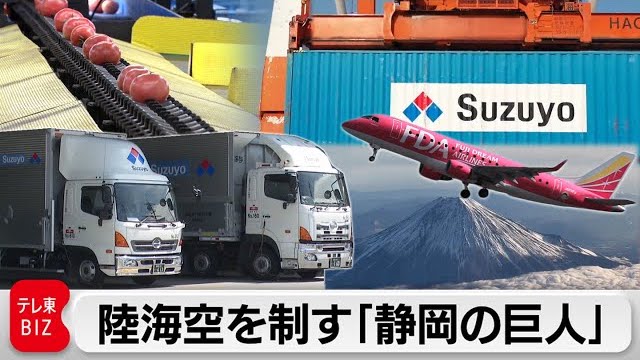
SHIZUOKA, Jun 22, 2024 (News On Japan) - Suzuyo Group, based in Shizuoka, is a multifaceted enterprise with a history spanning over 200 years. Known for its extensive involvement in logistics across land, sea, and air, the group also operates in sectors such as trading, construction, food, and regional development. The conglomerate comprises 139 companies.
Shizuoka's 200-Year-Old Company Expands into Aviation and Agriculture

Suzuyo's history dates back to 1801 when it started as a marine freight business in Shimizu Port. The company's founder, Chozo Yosuke, established a legacy that has been passed down through eight generations.

Central to Suzuyo Group's success is its guiding philosophy: 'Always be indispensable to society. Fear no change.' This ethos is deeply rooted in the group's core principle of 'Kyosei' -- a term signifying coexistence -- which has been passed down through generations of employees.

Suzuyo Group's commitment to 'Kyosei' has fueled its innovative approach to business, allowing it to adapt and thrive amidst changing market conditions. This philosophy has enabled the group to continually develop groundbreaking ventures while maintaining its foundational values.

Over the years, Suzuyo has ventured into various industries, including coal sales, tuna canning, and the development of fish-derived insulin.

In 2010, Suzuyo entered the agriculture sector, cultivating tomatoes for use in minestrone soup produced by its food company.

The group's recent forays into the aviation and agricultural sectors underscore its adaptability and forward-thinking strategy. As Suzuyo Group continues to evolve, it remains dedicated to creating value for society, ensuring its relevance and sustainability in the years to come.

Source: テレ東BIZ

News On Japan
POPULAR NEWS

A tropical depression near the Truk Islands, far southeast of Japan, was moving north-northwest at about 15 kilometers per hour as of 3 a.m. on September 15 and is expected to develop into a typhoon within 24 hours, potentially affecting a wide area from Okinawa through western Japan to the Pacific coast of eastern Japan as it strengthens and moves north.

Kajima Corp. has unveiled the construction site of KAJIMA TREE, a roughly 60-meter wooden tower being built for the International Horticultural Expo that will open in March 2027.

Climbers who get into trouble on Mount Fuji during the official closed season could be charged for rescue by disaster-prevention helicopters under new safety measures being considered by Yamanashi Prefecture.

Genta Koja, a former deputy mayor of Naha who accepts the relocation of the U.S. Marine Corps Air Station Futenma to Henoko in Nago, won the Okinawa gubernatorial election on September 13, defeating incumbent Governor Denny Tamaki and bringing an end to 12 years of prefectural administrations committed to blocking the project.

Roads around the Fushimi Otesuji Shopping Street in Kyoto's Fushimi Ward were flooded on the evening of September 13 after water began gushing from a nearby road, forcing authorities to close part of the street to traffic.

MEDIA CHANNELS
         

MORE Business NEWS

Rakuten Mobile said on September 14 that it has withdrawn a plan to forcibly cancel mobile service contracts for customers who fail to link their accounts to a Rakuten ID by the end of November.

Tokyo stocks were mixed on September 14, with the Nikkei 225 closing at 63,499, down 511.89 points, as selling in artificial intelligence and semiconductor-related shares weighed on the headline index, while the broader TOPIX rose 32.88 points to 4,061.18 on buying in value, defensive and domestic-demand shares.

Japan's major banks are intensifying competition for household money as rising interest rates revive the appeal of deposits, prompting lenders to launch new savings products, wealth-management services and point-based incentives.

Japan is facing growing pressure over its treatment and recruitment of foreign workers, with serious allegations of abuse emerging even as companies compete for a shrinking pool of overseas labor and some industries approach government-set limits on the number of workers they can accept.

Tokyo stocks fell sharply on September 11, with the Nikkei 225 closing at 63,442, down 2.8%, as oil prices above $108, renewed Middle East tensions, U.S. rate-hike fears and expectations for another Bank of Japan increase triggered a broad selloff led by artificial intelligence and semiconductor-related shares.

Japan's corporate goods prices rose 7.6% in August from a year earlier, remaining above 7% for a third consecutive month as escalating tensions in the Middle East pushed up prices for petroleum, coal and chemical products.

Business sentiment among Japan's large companies returned to positive territory in the July-September quarter for the first time in two quarters, supported by growing demand for semiconductor manufacturing equipment and AI data centers as well as improving conditions in hospitality, restaurants and finance.

Tokyo stocks fell sharply on September 11, with the Nikkei average at one point dropping more than 2,000 points as escalating attacks between the United States and Iran drove oil prices higher and intensified concerns about inflation and corporate earnings.