News On Japan

Japan's Summer Hottest on Record

TOKYO - The Japan Meteorological Agency convened an expert panel on Friday to analyze this summer's record-breaking heat. From June to August, the average temperature was significantly higher than last year, which had been the previous record, making it the hottest summer since records began.

According to the panel’s analysis, the extreme heat was driven by several factors: a strong high-pressure system extending over Japan, prevailing winds that made it easier for warm air to flow in, and elevated sea surface temperatures around the country.

Source: テレ東BIZ

News On Japan
POPULAR NEWS

Two typhoons are moving across the Pacific east and southeast of Japan, with both expected to change course around the weekend and remain well away from the main Japanese islands, though high waves and stronger winds could affect some areas. Typhoon No. 28, a strong storm, was moving west near Wake Island at about 45 kilometers per hour as of 3 a.m. on October 7, according to the Japan Meteorological Agency.

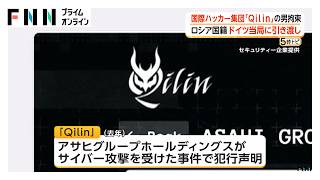
A core member of the international ransomware group Qilin was detained in Japan and handed over to German authorities, according to people familiar with the case, as Japanese companies and institutions face a growing wave of cyberattacks that has exposed nearly 15 million pieces of personal information this month alone.

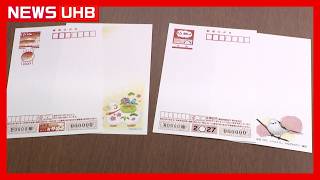
New Year postcards for 2027 arrived at post offices across Hokkaido on October 6, with designs featuring sheep for the upcoming Year of the Sheep as Japan's traditional New Year card market continues to shrink.

A first-of-its-kind sleep competition was held in Tokyo on October 5, with contestants competing for a 2.22 million yen top prize by trying to achieve the deepest, fastest and most stable sleep during a 90-minute session.

Japan brought the Aichi-Nagoya Asian Games to a close on October 4 with a record 83 gold medals and 269 medals overall, finishing second behind China after 16 days of competition that produced historic victories in swimming, athletics, judo, wrestling, softball and other sports, while a closing ceremony in Nagoya marked the end of the first Asian Games held in Japan in 32 years.

MEDIA CHANNELS
         

MORE Sci-Tech NEWS

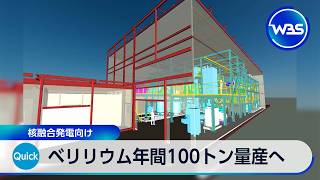
Miresso, a Japanese startup backed by trading house Mitsui & Co., has announced the start of construction of a facility to produce beryllium, a rare metal essential for nuclear fusion power generation, with plans to manufacture 100 tons annually, equivalent to about one-third of current global production.

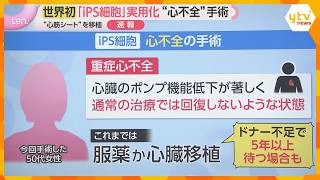
A woman in her 50s with severe heart failure underwent what was described as the world's first surgery using commercially available iPS cell-derived heart muscle sheets at an Osaka hospital on September 29, marking the first practical use of the regenerative treatment.

Japan's wild population of Oriental storks has exceeded 700 birds following decades of conservation efforts, with successful breeding across the country putting the population on track to surpass 1,000 within two years.

A rare pod of around 50 dolphins was spotted swimming through the Seto Inland Sea off Ozu, Ehime Prefecture, with dozens of dorsal fins repeatedly breaking the surface as the animals moved together.

Tesla unveiled its Cybercab in Japan for the first time on September 11, showcasing an AI-powered autonomous taxi designed without a steering wheel or pedals.

Large volumes of floodwater poured into the Metropolitan Area Outer Underground Discharge Channel in Kasukabe, Saitama Prefecture, following heavy rain on September 7, prompting the massive underground flood-control facility known as the "Underground Temple" to go into operation.

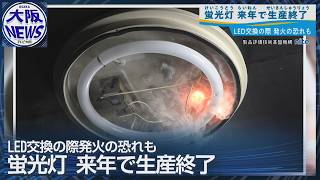
Fluorescent lamps that have illuminated Japanese homes and workplaces for decades are approaching the end of production, with Panasonic preparing to wind down a business it has operated since 1951 while experts warn that incorrectly replacing some fixtures with LEDs could create a fire risk.

Osaka-based spray nozzle maker IKEUCHI is expanding applications for its proprietary "Dry Fog," an ultra-fine mist that can cool, humidify and create visual effects without leaving surfaces wet, with the technology now being used in factories, livestock farming, crop cultivation and tourist attractions in Japan and overseas.