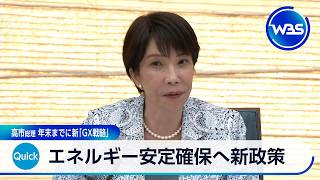
TOKYO - Former U.S. President Donald Trump took to social media to congratulate Japan following the selection of its first female prime minister, Sanae Takaichi, writing that "Japan has just elected its first female Prime Minister, a highly respected person of great wisdom and strength.” While Trump did not name Takaichi directly, his post came as she assumed leadership of the ruling Liberal Democratic Party (LDP) and was set to be formally elected as prime minister.
“This is tremendous news for the incredible people of Japan. Congratulations to all!” Trump wrote. He is currently arranging a visit to Japan from October 27th to 29th, during which his first summit with Prime Minister Takaichi is expected to take place.
On a political talk program the day after the LDP leadership election, where Takaichi was chosen as the new party president, opposition lawmakers from three parties appeared live to discuss the direction of future coalition talks. With the LDP now a minority ruling party, observers say alliances or policy agreements with other parties will be essential to secure a parliamentary majority.
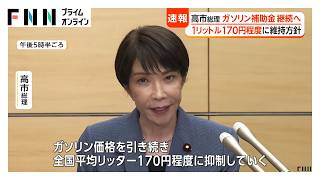
Democratic Party for the People leader Yuichiro Tamaki commented that while discussions of coalition formation are ongoing, “the key is to swiftly implement measures to ease the burden on the public, such as lowering gasoline prices and increasing the income tax deduction threshold to leave more money in people’s hands.” He emphasized the need for urgent action to address inflation and living costs, criticizing the government for delays since the July 20th upper house election.
During the same broadcast, it was reported that LDP Supreme Advisor Taro Aso and Democratic Party for the People Secretary-General Shinma held a 20-minute meeting in Tokyo earlier in the day, believed to focus on potential coalition expansion. When asked, Tamaki jokingly said, “Perhaps they were just returning borrowed manga books,” but added that prior inter-party agreements—such as reducing the gasoline tax and raising the income threshold from 1.03 million yen to 1.78 million yen—should first be implemented before any new pledges are made.
Japan Innovation Party (Ishin) co-leader Nobuyuki Fujita said his party’s stance had not changed: “If we are invited to the table for talks, we will naturally participate. But that doesn’t mean we’re rushing into a coalition.” He noted that the relationship between the LDP and Ishin should focus on policy cooperation rather than electoral coordination, stressing that the two parties could still “fight head-to-head at the polls” while collaborating on reforms such as social insurance and consumption tax relief for low-income households.
Constitutional Democratic Party lawmaker Kiyomi Tsujimoto, speaking remotely, took a sharply critical view of the LDP’s internal politics, saying, “Despite talk of reform, what we saw was a fierce power struggle led by Aso and remnants of the Abe faction.” Tsujimoto expressed respect for Takaichi as Japan’s first female leader but argued that she “has been carried by the old guard” and called for closer policy alignment among opposition forces, including Komeito, to counter the LDP’s dominance. “If the ruling party doesn’t truly change, we opposition parties must unite,” she said.
As the discussion turned to possible shifts within Komeito, several participants noted that the party’s future partnership with the LDP remains uncertain. Tamaki said his party shares certain policy priorities with Komeito, such as establishing an independent oversight body for political funding, and suggested strengthening cooperation if Komeito were to reconsider its alliance with the LDP. Fujita, meanwhile, doubted that Komeito would dissolve its partnership but acknowledged that “recent remarks by LDP leadership during the election may have offended Komeito, causing frustration.”
Source: TBS