News On Japan

Shinjiro Koizumi Mass Resignation Scandal in Kanagawa

TOKYO - A bombshell report has surfaced in Kanagawa Prefecture, the political base of Shinjiro Koizumi, where as many as 826 members of the Liberal Democratic Party aligned with the Takaichi faction were treated as having resigned from the party without their consent, according to an investigation by the weekly magazine Bunshun.

Former Lower House member Nobuhiro Nakayama disclosed under his real name that of the roughly 1,000 people he had personally encouraged to join the party, 826 were suddenly recorded as having left without any confirmation of intent. "Of those I asked to become members, the vast majority were stripped of their membership without being consulted," Nakayama said.

The revelation goes far beyond issues of mere campaign maneuvering or stealth marketing, raising questions of whether internal party membership rolls themselves were manipulated. If confirmed, such actions could strike at the very foundation of Japan’s democratic process.

Who authorized or orchestrated this sweeping removal remains unclear, and pressure is now mounting on both the Liberal Democratic Party leadership and Koizumi’s local camp to provide a clear explanation.

Source: 日本の声【政治・時事ニュース】

News On Japan
POPULAR NEWS

Fifteen days after the Kumamoto earthquake, restoration of electricity and transport infrastructure is progressing, but thousands of people are believed to remain outside official shelters, while rising construction costs and interest rates are creating new challenges for rebuilding homes and restoring livelihoods.

A mysterious red light stretching vertically across the night sky over Kanagawa Prefecture has been identified as a rare "sprite," a brief luminous phenomenon that occurs high above thunderclouds at roughly the same time as powerful lightning strikes.

Street performances began across Tokushima on August 12 as the city's Awa Odori festival entered its second day, with leading dance groups showcasing graceful routines after months of practice.

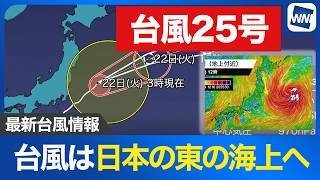
A large new typhoon formed near the Ogasawara Islands on August 12 and could approach Honshu around the end of the Obon holiday period, while the remnants of Typhoon No. 15 continue to bring unstable weather and a risk of heavy rain across a wide area of Japan.

Hiroko Saito was 19 years old when she left Japan for North Korea in June 1961 with her Korean husband and their one-year-old daughter, persuaded by assurances that they were heading to a "paradise on earth" and that she could return to Japan after three years. Instead, she would spend four decades in North Korea, enduring chronic hunger, the deaths of her husband and children and a desperate struggle to survive before finally escaping and returning home in 2001.

MEDIA CHANNELS
         

MORE Politics NEWS

Prime Minister Sanae Takaichi held a telephone call with Iranian President Masoud Pezeshkian on August 12, urging an early easing of military tensions in the Middle East while stressing the importance of free and safe navigation through the Strait of Hormuz without additional costs.

Prime Minister Takaichi said on August 10 that the government expects to apply the Disaster Victims' Livelihood Recovery Support Act across all of Kumamoto Prefecture, allowing households whose homes were completely destroyed in the Kumamoto earthquake to receive up to 3 million yen in assistance.

Nagasaki marked the 81st anniversary of the U.S. atomic bombing on August 9 with a memorial ceremony near the hypocenter, where Mayor Shiro Suzuki declared nuclear weapons an "absolute evil" and called on the Japanese government to uphold its Three Non-Nuclear Principles.

Prime Minister Sanae Takaichi’s economic strategy faced renewed pressure on August 7 as attention shifted toward the Bank of Japan’s September policy meeting, with central bank officials preparing a series of public appearances that could signal whether another interest-rate hike is becoming likely after recent yen turmoil and fiscal concerns.

Hiroshima marked the 81st anniversary of the atomic bombing on August 6 with a peace memorial ceremony at Peace Memorial Park, where Mayor Kazumi Matsui warned of the growing danger that nuclear weapons could be used and called for renewed action toward their abolition.

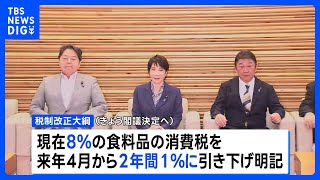
Prime Minister Sanae Takaichi’s government formally approved a plan on August 5 to reduce the consumption tax rate on food and nonalcoholic beverages from 8% to 1% for two years beginning in April 2027, setting the stage for a difficult parliamentary battle over how to cover an estimated 10 trillion yen revenue shortfall and whether the politically sensitive tax can be restored afterward.

Japan’s latest defense white paper has sparked controversy by presenting the country’s expanding military buildup not only as a national security necessity but also as a potential engine of economic growth, drawing criticism from China and raising fresh domestic questions over how far Prime Minister Sanae Takaichi’s government is prepared to link defense, industry and fiscal policy.

Prime Minister Sanae Takaichi’s food-tax cut plan cleared a major ruling party hurdle on August 5, intensifying debate over whether her government can deliver household relief without weakening fiscal credibility or drawing the Bank of Japan deeper into the administration’s economic agenda.