News On Japan

Cheap Peach Scam Spreads Online

Wakayama - A new type of fraud in which scammers pose as real farmers and advertise seasonal fruit at unusually low prices has been detected in the Kansai region, with police warning consumers to verify sellers through official websites before making purchases.

The scam has emerged as fruit prices remain high and involves social media accounts claiming to represent farms selling surplus produce at bargain prices.

In Kinokawa, Wakayama Prefecture, an area known nationwide for its highly regarded Arakawa peaches, Madoka Inagaki, who operates Marukoma Farm, received a phone call in late July alerting her that someone was using the farm's name to sell peaches online.

"I received a call saying that someone on social media was using the name Marukoma Farm to sell peaches," Inagaki said.

The social media account carried a message claiming, "The fresh peaches my parents carefully grew have produced a bumper crop, but we are having trouble selling them."

The post said the farm was located in Kinokawa and offered 12 peaches for just 1,000 yen.

A person who spotted the account contacted the purported seller and asked for the name of the farm. The person claiming to be a farmer replied, "Marukoma Farm."

However, even Marukoma Farm's lower-priced peaches for household consumption normally cost about 2,000 yen for 10. The informant became suspicious because the advertised price was less than half the farm's usual rate and contacted Marukoma Farm directly.

Inagaki said she was not using the social media account and had never authorized another business to sell her peaches online, leading her to believe the account was operated by a fake farmer.

Marukoma Farm contacted the person suspected of impersonating the business and asked for details about the proposed transaction, but communication then stopped.

"There are people who contact them because they genuinely want to buy peaches and then end up becoming victims," Inagaki said. "We put so much care into growing these peaches, so it makes me extremely angry that someone is impersonating farmers and committing fraud."

Marukoma Farm quickly issued a warning through social media, but similar suspicious accounts believed to be operated by fake farmers have also been found elsewhere.

Numerous posts on social media use similar photographs to advertise fruit for sale. Many carry almost identical claims, such as saying the year's harvest was unusually large but the seller was having difficulty disposing of the produce.

The posts typically offer fruit at unnaturally low prices while failing to clearly identify the name of the farm or other details about the seller.

Police said multiple cases have been confirmed in Osaka Prefecture since around late June, including one case in which a victim was defrauded of as much as 2.65 million yen.

"If you see a social media post where the price is unnaturally low or the identity of the seller is unclear, you should suspect that it may be a scam," said Shinsuke Inoue of the Osaka Prefectural Police's Community Safety Measures Division.

Police warned that the fraudulent scheme could also damage the reputations and businesses of legitimate farmers and urged consumers to always confirm sellers through official websites or other reliable channels before making a purchase.

Source: YOMIURI

News On Japan
POPULAR NEWS

Typhoon No. 18 remained a strong storm as it passed near Minamidaito Island on August 25, with Okinawa's main island and the Amami region expected to experience their most severe rain, winds and waves late at night through around midnight. According to the Japan Meteorological Agency, the typhoon was near Minamidaito Island at 9 a.m. on August 25 and was moving west-northwest at 20 kilometers per hour.

The Japanese government plans to reuse low-radioactivity soil generated by decontamination work after the Fukushima nuclear accident at government office complexes in Saitama and Sendai, marking the first such reuse outside Tokyo.

An 85-year-old couple have donated a combined 400 million yen to Osaka City with a request that the money be used to create a giant Myaku-Myaku statue about 20 meters tall at the former site of the Osaka-Kansai Expo, envisioning a landmark that could become a lasting symbol of the event and of renewed prosperity for Kansai and Japan.

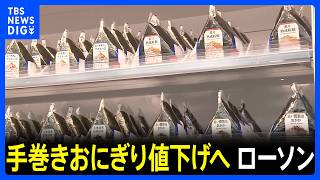
Lawson plans to cut prices on its main line of onigiri rice balls by 10 yen from September 29 as falling rice prices begin to feed through to retail costs.

Police have established a temporary police post in the whaling town of Taiji, Wakayama Prefecture, ahead of the September 1 opening of the annual drive hunt for whales and dolphins.

MEDIA CHANNELS
         

MORE Food NEWS

Lawson plans to cut prices on its main line of onigiri rice balls by 10 yen from September 29 as falling rice prices begin to feed through to retail costs.

Athletes competing in the Asian Games will be served around 370 dishes ranging from Asian-style curries and chicken dishes to Nagoya specialties such as chicken wings and kishimen noodles, with menus also designed to accommodate religious and dietary requirements.

A new type of fraud in which scammers pose as real farmers and advertise seasonal fruit at unusually low prices has been detected in the Kansai region, with police warning consumers to verify sellers through official websites before making purchases.

Shizuoka Prefecture has regained its position as Japan's leading producer of first-flush tea, overtaking Kagoshima Prefecture for the first time in two years as favorable weather and growing demand for matcha helped boost production.

Skylark Holdings is preparing to introduce "ghost restaurants" that operate without dining areas and specialize in delivery and takeout as Japan moves toward lowering the consumption tax rate on food.

Climate change is reshaping Hokkaido's fishing and agricultural industries, contributing to declining salmon and pink salmon catches while allowing crops such as sweet potatoes, once considered unsuitable for large-scale production in Japan's far north, to take root.

Japan's cat cafes, now numbering around 300 nationwide, trace their origins to Neko no Jikan in Osaka's Nakazaki-cho district, where founder Yoko Yoshida combined the quiet atmosphere of a manga cafe with the companionship of cats to create what is regarded as the country's first cat cafe in 2004.

We explore the streets around Nishiki Market, stroll through Teramachi and Shinkyogoku, take a sweet break, and slow down beside the Kamo River before ending the day with a bowl of ramen that is anything but ordinary.