
News On Japan

Hitachi Turns to AI to Ease Labor Shortages

TOKYO - Hitachi is stepping up the use of digital technology, autonomous robots and physical AI to address Japan's growing labor shortage, showcasing systems designed to automate factory work and maintain critical infrastructure at one of the group's largest technology exhibitions.

The Hitachi Social Innovation Forum 2026 JAPAN features more than 50 of the Hitachi Group's latest technologies, including robotic arms capable of gripping screws and moving them to designated positions, as well as autonomous transport robots in a variety of shapes.

Hitachi President and CEO Toshiaki Tokunaga said Japan is projected to face a shortage of 11 million workers by 2040. "Autonomously evolving digital infrastructure is the new form of social infrastructure that Hitachi is aiming to create," he said.

A major focus of the exhibition is technology intended to help overcome labor shortages and other challenges facing society.

One system creates a virtual environment that reproduces detailed information about nuclear power plants, including the positioning and distances between pipes and other equipment. The technology allows safety and other conditions to be examined without workers having to visit the site.

Hitachi said it eventually aims to combine the virtual technology with robots that can inspect locations when abnormalities are detected.

The company also demonstrated robots equipped with Hitachi-developed physical AI. The robots can handle cables with the appropriate amount of force and perform wiring work, tasks that require delicate physical control.

Hitachi plans to continue using digital technology and physical AI as it works toward creating what it describes as the social infrastructure of the future.

Hideki Minato of Hitachi's AI Services Promotion Department said production sites manufacturing many different types of products still depend heavily on communication between workers. "Our goal is to use AI's ability to think to optimize factory operations that have traditionally been developed through human experience, and to supplement workplaces suffering from labor shortages," he said.

Source: FNN

News On Japan
POPULAR NEWS

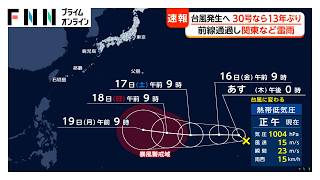
Japan experienced widespread thunderstorms, strong winds and sudden downpours on October 14 as a cold front swept across the country, while the Japan Meteorological Agency warned that a tropical depression south of Japan could develop into Typhoon No. 30 within 24 hours, marking the first time in 13 years that the annual typhoon count has reached 30.

Agriculture, Forestry and Fisheries Minister Yana submitted his resignation to Prime Minister Sanae Takaichi on the evening of October 14 over a controversy involving shuttle buses and other issues, prompting Takaichi to acknowledge her responsibility for appointing him and announce plans to name a successor on October 15.

Japan's first Disney cruise ship will be named "Disney Imagination," with Oriental Land and its partners planning to launch the service in spring 2029, offering a new Disney-themed travel experience departing from Tokyo.

Tokyo's 23 wards have decided to establish a new small-scale public crematorium to address rising fees at privately operated facilities and growing concerns that cremation capacity could become insufficient around 2040 as the city's aging population drives up the number of deaths.

Japan is facing a growing wave of cyberattacks as advances in artificial intelligence remove the language barrier that once made Japanese companies difficult targets for overseas hackers, with more than 68 million personal records potentially exposed in a series of security incidents over the past two weeks.

MEDIA CHANNELS
         

MORE Web3 NEWS

Seibu Railway demonstrated a trial of autonomous robots equipped with physical artificial intelligence (AI) at an electrical substation in Tokyo on October 14, testing technology designed to streamline maintenance operations and address anticipated labor shortages.

Artificial intelligence is entering a new phase of development, with systems capable of solving scientific problems that have challenged researchers for decades, collaborating autonomously and potentially improving their own intelligence, raising concerns over whether safety measures can keep pace with the technology's rapid advancement.

Online, nothing dies quietly. The digital graveyard never stays undisturbed. Domains bought and discarded, remnants from failed startups or abandoned blogs, often seem like ghost towns, harmless relics of forgotten ambitions.

Japan is facing a growing wave of cyberattacks as advances in artificial intelligence remove the language barrier that once made Japanese companies difficult targets for overseas hackers, with more than 68 million personal records potentially exposed in a series of security incidents over the past two weeks.

Japan is facing a sharp increase in cyberattacks, with experts warning that artificial intelligence is making it easier for criminals to steal and exploit personal information, while the growing sophistication of online fraud is exposing weaknesses in the country's cybersecurity defenses.

A series of cyberattacks has disrupted business operations and exposed millions of customer records across Japan, with a ransomware attack on a cloud service provider affecting 495 companies and local governments nationwide, while convenience store operator Lawson has disclosed a separate breach involving more than 2.15 million personal information records.

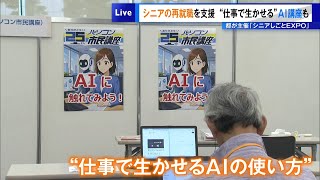
Tokyo hosted an employment support event for older workers on October 6, offering job consultations, interviews, hands-on work experience and training in artificial intelligence as the number of people aged 65 and over in the workforce continues to rise.

The ransomware group Qilin, accused of carrying out repeated cyberattacks against companies including Asahi Group Holdings, has warned that attacks targeting Japanese companies and government agencies could increase after a suspected core member was detained in Osaka and extradited to Germany.