TOKYO - Prime Minister Sanae Takaichi entered the final stretch before the Bank of Japan’s September policy meeting facing a new version of the currency problem that has shaped her summer: the yen is no longer collapsing, but its sharp rebound is now forcing her government to explain how far it is prepared to tolerate higher interest rates to restore market confidence.
The yen rose to a seven-month high against the dollar on September 8 as investors increasingly priced in a BOJ rate hike at the September 17-18 meeting. The move reflected growing expectations that the central bank will lift its policy rate by 25 basis points to 1.25%, following its June increase to 1% and its decision to hold steady in July.
The rally marks a striking reversal from July, when the yen fell to 40-year lows and Japan and the United States carried out a rare coordinated intervention to support the currency. That intervention bought Takaichi time, but the market is now delivering a different message: investors are no longer focused only on whether Japan can stop yen weakness through direct action, but whether the BOJ will be allowed to keep tightening even if higher rates complicate the government’s fiscal agenda.
Finance Minister Satsuki Katayama said on September 8 that Japan and the United States remain aligned on currency policy and will continue close communication to support orderly foreign exchange markets. She said the government’s stance had not changed since the coordinated intervention, signaling that Tokyo remains alert even after the yen’s recent rally.
Katayama’s comments show that currency stability remains politically sensitive. A stronger yen can help ease import-driven inflation by reducing the cost of food, fuel and raw materials. But a rapid move can also unsettle markets, particularly if it reflects the unwinding of large carry trades built around expectations that Japan would remain a low-rate economy.
Reuters reported that the yen’s sudden rise is already pressuring carry trades, with investors reassessing positions that had assumed Takaichi’s government would keep fiscal policy expansionary while the BOJ moved only gradually. The combination of expected BOJ tightening, possible capital repatriation and U.S. pressure has shifted the currency market sharply in Japan’s favor.
For Takaichi, the yen’s recovery is politically useful but not risk-free. It eases one of the clearest sources of household inflation, but it also raises the cost of her policy mix. Higher interest rates would make government borrowing more expensive at a time when the administration is preparing food-tax relief, record budget requests, defense expansion and a 370 trillion yen public-private investment roadmap through fiscal 2040.
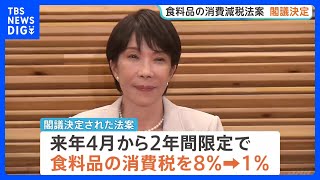
That is why the September BOJ meeting has become one of the most important political events of the autumn. A rate hike would help prove that Japan is serious about controlling inflation and stabilizing the yen. But it would also intensify scrutiny of Takaichi’s fiscal promises, especially her plan to reduce the consumption tax on food from 8% to 1% for two years from April 2027.
Takaichi adviser Takuji Aida, a member of the government’s key economic panel and a reflationist voice, said on September 7 that the BOJ is likely to raise rates in September and then continue hiking at a pace of roughly once per quarter until January next year. His comments suggest that even within Takaichi’s policy circle, acceptance is growing that the BOJ must tighten to prevent renewed yen weakness.
That shift is politically important. Takaichi has often been associated with active fiscal policy and a preference for supportive monetary conditions. If her own advisers now publicly accept further BOJ hikes, it signals that the administration may be trying to adapt to market reality rather than resist it.
But the government must still protect itself from the impression that fiscal policy is being corrected by the central bank. If the BOJ raises rates because markets doubt the government’s fiscal discipline, opposition parties can argue that Takaichi’s spending and tax-cut agenda forced the central bank into a harsher path. If the government appears to resist the BOJ, investors may question central bank independence and the yen could come under renewed pressure.
Katayama used her September 8 news conference to defend the government’s position on the food-tax cut, saying the administration has consistently maintained that funding will be secured without relying on special deficit-covering bonds. She said the government will pursue budget reforms and review large recent supplementary spending on inflation measures, including roughly 3 trillion yen in price-relief programs, as part of the broader funding approach.
That explanation is meant to reassure markets that the food-tax cut will not simply be added to Japan’s debt burden. But the challenge remains substantial. The planned reduction in the food tax is expected to create a major revenue shortfall, and the government still needs to show how temporary funding sources, spending reviews and non-tax revenue can cover the cost without weakening the social security financing base.
The policy also faces a timing problem. The tax cut is not scheduled to begin until April 2027, leaving households to cope with higher prices through the rest of this year and early next year. The government has described the measure as a bridge toward a fuller income-linked support system, but opposition parties are likely to argue that it is too slow and fiscally unclear.
The yen rally could slightly ease that political pressure if it helps lower import costs, but it will not remove the need for household relief. Food prices, energy costs and real wages remain central to voter judgment of the government. Real wage data and stronger revised growth figures have strengthened expectations that the BOJ can tighten, but households will judge the result by whether purchasing power actually improves.
Revised economic data added to the policy tension. Japan upgraded its April-June growth figures, with the economy expanding at an annualized 1.4%. That gives the BOJ more room to argue that the economy can absorb higher rates. But capital expenditure still fell, showing that the recovery is not strong enough for the government to ignore risks to business investment.
The bond market will now be watched closely. If investors see the BOJ hike as a sign of policy credibility, yields may stabilize despite higher rates. If they see it as the beginning of a faster tightening cycle while fiscal spending remains high, bond yields could rise further and increase the cost of financing the government’s agenda.
China added another major political pressure on September 8, announcing new measures against Japanese exports of a key chipmaking material. Japan protested the move, which comes after months of strained relations following Takaichi’s remarks that a Taiwan contingency could amount to a survival-threatening situation for Japan.
The China dispute strengthens Takaichi’s argument for economic security, supply-chain resilience and domestic industrial investment. Restrictions affecting chipmaking materials directly touch one of the government’s strategic priorities: building a stronger semiconductor base and reducing vulnerability to coercive trade measures.
But the dispute also exposes the economic cost of the administration’s harder security posture. If China continues using trade measures in response to Japanese security statements, companies linked to semiconductors, high-tech manufacturing and China-facing supply chains may face higher uncertainty. That could complicate Takaichi’s effort to present economic security as a growth strategy rather than a source of risk.
The timing is delicate because Takaichi is also seeking to position Japan ahead of possible talks with U.S. President Donald Trump, while Trump is expected to pursue economic gains in his own engagement with Chinese President Xi Jinping. Japan must keep close to Washington on security while avoiding being left exposed if U.S.-China talks shift the diplomatic balance.
For Takaichi, September 8 therefore brought together the three central tests of her administration: monetary policy, fiscal credibility and economic security. The yen rally suggests markets are beginning to believe the BOJ will tighten. Katayama’s comments show the government wants to preserve confidence in its currency management. China’s export measures show that security tensions can quickly become economic problems.
The central question is whether Takaichi can turn the yen’s rebound into political stability rather than a new source of pressure. If the BOJ raises rates next week and the government presents a credible funding plan for food-tax relief, the administration can argue that Japan is restoring confidence in both the currency and the economy. If higher rates push up borrowing costs, weaken investment or expose gaps in the tax-cut funding plan, the yen rally may become another reminder that markets are setting the limits of Takaichi’s agenda.
What To Watch Next
The BOJ’s September 17-18 meeting is the main event. Markets widely expect a 25-basis-point rate hike to 1.25%, but Governor Kazuo Ueda’s language on future increases will matter even more.
The yen’s movement after the recent rally will test whether markets believe Japan has shifted to a credible tightening path or whether the move is mainly a short-term unwind of carry trades.
Katayama’s handling of currency policy will remain important after she said Japan and the United States are still aligned following their earlier coordinated intervention.
The government still needs to explain how it will fund the planned food-tax cut without special deficit-covering bonds, especially as the autumn Diet session approaches.
Bond yields should be watched closely if rate-hike expectations continue to rise. Higher borrowing costs could sharpen scrutiny of Takaichi’s investment, defense and tax-relief plans.
China’s new measures against Japanese exports of a chipmaking material could keep economic security and Taiwan-related diplomacy near the top of the political agenda.
Takaichi’s diplomacy with the United States will matter as Washington manages its own relationship with China, raising questions over how much room Japan has to maintain a hard security line without suffering economic retaliation.