News On Japan

Japan Faces Growing Economic Strain as Long-Term Rates Climb

TOKYO - Rising long-term interest rates in Japan and the United States are increasing pressure on households and businesses, with more than 5,600 additional small and midsize Japanese companies at risk of falling into the red if borrowing rates rise by 0.5 percentage point.

Long-term interest rates, often described as a gauge of the economy's condition, can have both positive and negative effects. Higher rates can increase household income from savings and other interest-bearing assets, but they can also make borrowing more expensive and discourage the flow of money through the economy.

Data show that if long-term interest rates and related borrowing costs rise by 0.5 percentage point, more than 5,600 additional small and midsize companies could become unprofitable.

The Bank of Japan is scheduled to hold a two-day monetary policy meeting on September 17 and September 18 as persistent inflation continues to complicate the outlook for interest rates.

If the central bank is seen as moving too slowly to raise rates despite continuing price increases, concerns that delayed action could harm the economy may intensify, making long-term interest rates more likely to rise.

Without a clear message from the Bank of Japan about the pace of further rate increases, upward pressure on long-term yields could continue. Attention is therefore expected to focus on comments by Bank of Japan Governor Kazuo Ueda on September 18.

Long-term interest rates have already risen sharply in both Japan and the United States.

In Japan's bond market, the yield on the benchmark 10-year government bond temporarily returned to the 3% range.

In the United States, long-term interest rates briefly climbed into the 5% range, their highest level since October 2023, as rising crude oil prices fueled expectations that inflation could accelerate.

The increase in U.S. yields has also contributed to upward pressure on Japanese interest rates.

Expectations have strengthened that the U.S. Federal Reserve could raise interest rates to curb inflation, adding further upward pressure to long-term borrowing costs.

Source: FNN

News On Japan
POPULAR NEWS

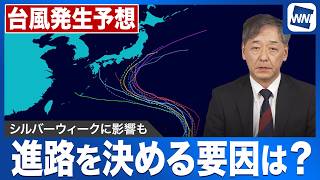
A tropical depression far south of Japan is expected to develop into a typhoon as early as the night of September 15, potentially approaching Okinawa during the Silver Week holiday period before changing course and bringing heavy rain to other parts of the country.

A Japan Air Self-Defense Force Global Hawk unmanned reconnaissance aircraft went missing over international waters about 50 kilometers north of Tottori Prefecture on September 15, with floating debris and oil later found in the area where communications were lost.

GO, Waymo and Nihon Kotsu said they aim to launch Japan's first commercial fully driverless taxi service in Tokyo during 2027, using Level 4 autonomous vehicles that can operate without a driver on board under specified conditions.

Kajima Corp. has unveiled the construction site of KAJIMA TREE, a roughly 60-meter wooden tower being built for the International Horticultural Expo that will open in March 2027.

Climbers who get into trouble on Mount Fuji during the official closed season could be charged for rescue by disaster-prevention helicopters under new safety measures being considered by Yamanashi Prefecture.

MEDIA CHANNELS
         

MORE Business NEWS

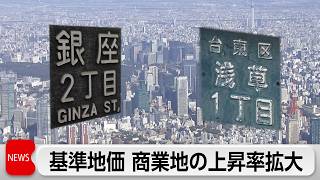
Japan's benchmark land prices rose for a fifth consecutive year on average, with commercial land posting stronger gains as demand for hotels and other properties remained firm in major cities, according to figures released by the Ministry of Land, Infrastructure, Transport and Tourism.

Tokyo stocks ended almost unchanged on September 15, with the Nikkei 225 closing around 63,485, down about 8 points, as a rebound in SoftBank Group and selected artificial intelligence-related shares offset caution over oil above $107, rising bond yields and this week’s Federal Reserve and Bank of Japan policy meetings.

The Osaka prefectural and municipal governments said on September 14 that they have set a minimum sale price of 92.113 billion yen for the second-phase development area on Yumeshima, the site of the Osaka-Kansai Expo.

Rising long-term interest rates in Japan and the United States are increasing pressure on households and businesses, with more than 5,600 additional small and midsize Japanese companies at risk of falling into the red if borrowing rates rise by 0.5 percentage point.

Rakuten Mobile said on September 14 that it has withdrawn a plan to forcibly cancel mobile service contracts for customers who fail to link their accounts to a Rakuten ID by the end of November.

Tokyo stocks were mixed on September 14, with the Nikkei 225 closing at 63,499, down 511.89 points, as selling in artificial intelligence and semiconductor-related shares weighed on the headline index, while the broader TOPIX rose 32.88 points to 4,061.18 on buying in value, defensive and domestic-demand shares.

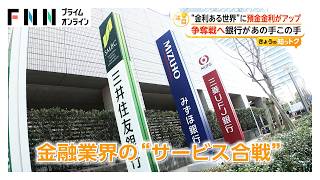
Japan's major banks are intensifying competition for household money as rising interest rates revive the appeal of deposits, prompting lenders to launch new savings products, wealth-management services and point-based incentives.

Japan is facing growing pressure over its treatment and recruitment of foreign workers, with serious allegations of abuse emerging even as companies compete for a shrinking pool of overseas labor and some industries approach government-set limits on the number of workers they can accept.