TOKYO - Japan's transition toward an economy with higher interest rates is creating sharply different outcomes for households, with younger generations facing rising mortgage repayments while older savers stand to benefit from increased deposit interest, following the Bank of Japan's decision to raise its policy rate by 0.25 percentage points to 1.25%.
The central bank's latest move comes as many households continue to struggle with rising prices and have yet to experience a meaningful improvement in their living standards. However, controlling inflation remains one of the BOJ's primary responsibilities, and officials must balance the need to stabilize prices against the risk of slowing economic growth.
The decision also reflects lessons from Japan's asset bubble in the late 1980s and the prolonged economic stagnation that followed its collapse. Economists have long debated whether earlier interest rate increases could have prevented the bubble from expanding to such dangerous levels and whether more appropriate monetary policy could have reduced the severity of the subsequent downturn.
Japan's experience began with the Plaza Accord of 1985, when Japan, the United States, Britain, France and West Germany agreed to coordinate foreign exchange policies to address currency imbalances. The yen subsequently appreciated sharply, strengthening from around 241 yen to the dollar to approximately 150 yen within a year.
The stronger currency reduced the profitability of Japanese exports, particularly automobiles, contributing to an economic slowdown in 1986 and 1987. To stimulate economic activity, the BOJ lowered interest rates to 2.5%, making borrowing cheaper and encouraging businesses and households to increase spending and investment.
The resulting expansion helped fuel extraordinary increases in stock and property prices. Japanese companies purchased prominent buildings in New York and internationally renowned artworks, while soaring land values generated unprecedented levels of speculative investment.
Tokyo land prices tripled over five years, and property became so expensive that comparisons were made suggesting the land within Tokyo's Yamanote Line could be worth as much as all the land in the United States.
The Nikkei Stock Average climbed to a then-record 38,915, reflecting the extraordinary scale of Japan's financial boom.
However, the BOJ eventually raised interest rates to restrain the overheating economy, contributing to the collapse of the asset bubble. Stock prices fell by approximately half within about 10 months, major financial institutions subsequently failed, and Japan entered a prolonged period of weak economic growth.
Unemployment eventually reached 5.5%, more than a decade after the bubble burst, while the economy endured years of deflation and exceptionally low interest rates. The prolonged stagnation became known as Japan's lost three decades.
One criticism of the BOJ's monetary policy during this period concerns the timing of its interest rate adjustments. Some analysts argue that raising rates earlier, before asset prices reached extreme levels, might have prevented the bubble from expanding so dramatically and reduced the economic damage that followed.
The central bank's recent policy decisions can be viewed against this historical background. Although many Japanese consumers still feel little improvement in their purchasing power, the BOJ is moving to normalize interest rates rather than waiting until inflation or other economic imbalances become more difficult to control.
A central question is how much further interest rates could rise.
The BOJ estimates Japan's neutral interest rate, the theoretical level at which monetary policy neither stimulates nor restrains economic activity, at approximately 1.1% to 2.5%.
With the latest increase bringing the policy rate to 1.25%, borrowing costs have entered the lower end of that estimated range. The possibility of further increases toward 2%, or potentially as high as 2.5%, has consequently become an important consideration for households and businesses.
Higher interest rates, however, do not affect everyone equally.
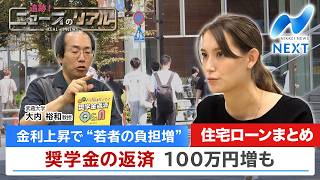
Younger households, particularly those who have purchased homes with variable-rate mortgages, face the prospect of increasingly expensive monthly repayments. Because variable mortgage rates generally move in response to changes in the BOJ's policy rate, additional increases could place substantial pressure on household budgets.
Older generations may experience the opposite effect. Many elderly homeowners have already repaid their mortgages or have relatively small outstanding balances, leaving them less exposed to rising borrowing costs.
At the same time, older households often hold more savings, allowing them to benefit from higher interest payments on bank deposits.
During Japan's bubble era, for example, some time deposits offered annual interest rates of around 5%. With compound interest, savings held for 10 years could increase to approximately 1.5 times their original value.
Although current deposit rates remain well below those historical levels, the return of higher interest rates could provide additional income for retirees and other households with substantial savings.
Even elderly people who do not own property or have significant deposits could benefit if higher interest rates successfully curb inflation.
A stronger yen, which can result from higher Japanese interest rates, could also reduce the cost of imported goods and ease pressure on consumer prices. Such developments would be particularly important for pensioners living on fixed incomes.
Nevertheless, monetary policy alone cannot resolve the financial pressures facing Japanese households. Encouraging companies to direct more of their accumulated earnings toward employee wages and increasing workers' take-home pay are among the other measures that could improve living standards and strengthen confidence in the economic outlook.
The potential impact of higher interest rates is particularly significant for prospective homebuyers.
For a household borrowing 50 million yen over 35 years with a variable-rate mortgage, a rise in the interest rate from approximately 1.2% to 2% would increase monthly repayments from around 146,000 yen to approximately 166,000 yen.
That represents an additional burden of roughly 20,000 yen a month, or 240,000 yen annually.
Some buyers may consider switching to fixed-rate mortgages to protect themselves against further interest rate increases. However, the security of a fixed interest rate comes at a substantial additional cost.
At an illustrative fixed rate of approximately 3.5%, monthly repayments on a 50 million yen mortgage over 35 years would rise to around 207,000 yen.
Compared with a variable-rate mortgage at 2%, the difference would exceed 40,000 yen a month, adding approximately 500,000 yen a year to household expenses.
The decision between fixed and variable rates therefore involves balancing the certainty of future repayments against the potentially substantial cost of protection from further rate increases.
Existing mortgage borrowers face additional challenges.
Households that secured variable-rate mortgages several years ago may have initially paid interest rates of just 0.3% to 0.4%. On a 50 million yen loan, monthly repayments at those rates were approximately 125,000 yen.
As interest rates have increased, repayments have climbed toward 140,000 yen a month. If borrowing costs continue rising, monthly payments could eventually reach approximately 160,000 yen.
For families that have already purchased their homes, these increases are particularly difficult to avoid, since selling a property or substantially restructuring household finances may not be practical.
Prospective buyers who remain uncertain about purchasing a home have the option of postponing their decision for six months or a year. A period of weaker demand could put downward pressure on property prices, while waiting may also provide greater clarity about how far the BOJ intends to raise interest rates.
Buyers who have found a property that meets their requirements may nevertheless decide to proceed, depending on their financial circumstances and tolerance for interest rate risks.
For existing homeowners struggling with rising repayments, consulting their bank or mortgage provider is an important first step.
Financial institutions have an interest in preventing borrowers from defaulting and may be prepared to discuss changes to repayment arrangements or other possible solutions before financial difficulties become unmanageable.
The broader transition toward higher interest rates marks a significant change for Japan after decades of unusually cheap borrowing. While the policy could support savers and help stabilize prices, its immediate financial consequences are likely to vary considerably according to household debt, savings and stage of life.
Source: YOMIURI